Posts Tagged ‘film adaptation’
Wicked, A No-Spoiler Review of the Novel (Not the Musical)
WICKED, a huge Broadway hit from the last couple of decades, is coming to film. I recently learned that WICKED (the musical, on which the film is based) debuted at the Curan Theater on May 28 of 2003. The Curan Theater lives at 445 Geary Street in San Francisco. Berkeley is my old home, stomping grounds for 27 years. The Curan Theater was a 20 minute walk, plus a 20 minute BART ride away from my doorstep. I saw Les Miserables at the Curan, and the Phantom of the Opera, and probably a couple of other shows before my life of parenting got very busy in the East Bay.
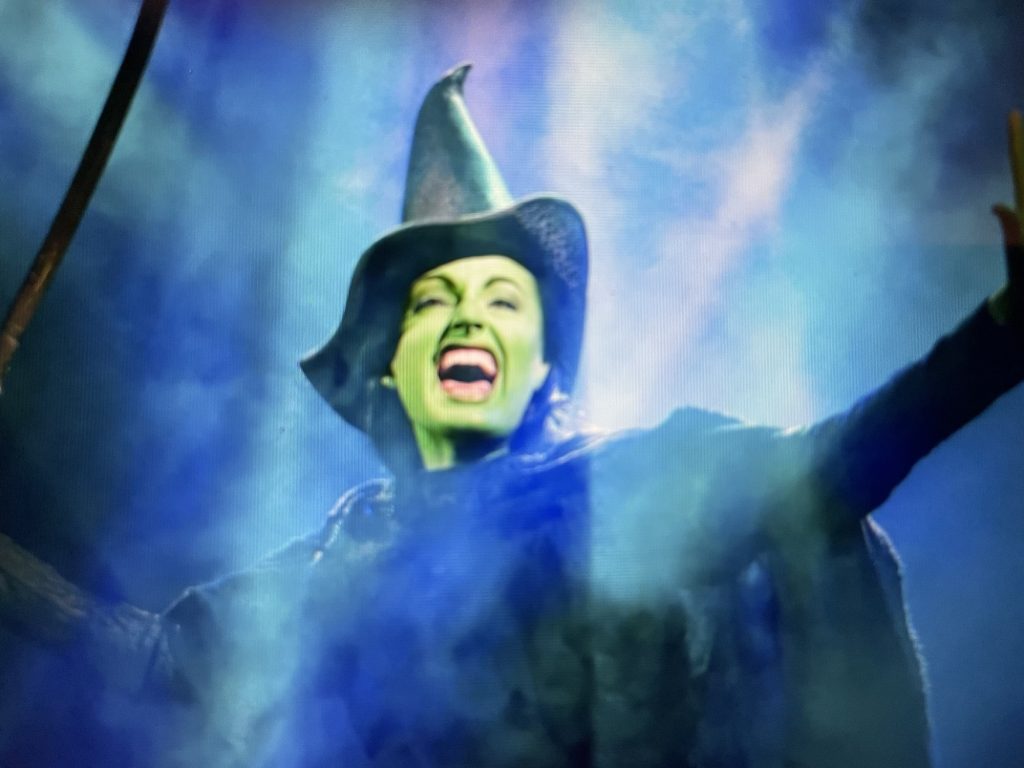
WICKED, the musical became a huge hit, took Broadway by storm and delighted the musical theater world with its interesting take on Oz, as well as the compelling music based on the life and times of the Wicked Witch of the West. This all emerged from Gregory Maguire’s novel.
I recently read the novel for the first time. Here is my short review:
5 Reasons I Recommend the Novel, WICKED (With Reservations)
- The musical does not follow the story of the novel closely, so if you’ve already seen the musical, expect to be surprised/disappointed by the novel.
- The novel is an entertaining story, but beware educators, this book is rated “R” in terms of sexual content. Gregory Maguire wrote female characters with active sex lives and he is explicit in describing their sex lives
- I appreciated the take on an alternative narrative regarding the famous villain of The Wizard of Oz. The world is other. Today, we might call Maguire’s novel fan fiction. It’s also interesting to remember that all villains in any fairytale are more complex people when their surface is scratched.
- While the world is other, the characters are relatable, which is why I think Maguire’s novel took flight
- Maguire took the world inhabited by Dorothy and Toto and broadened it. That brings pleasure to many fans of The Wizard of Oz
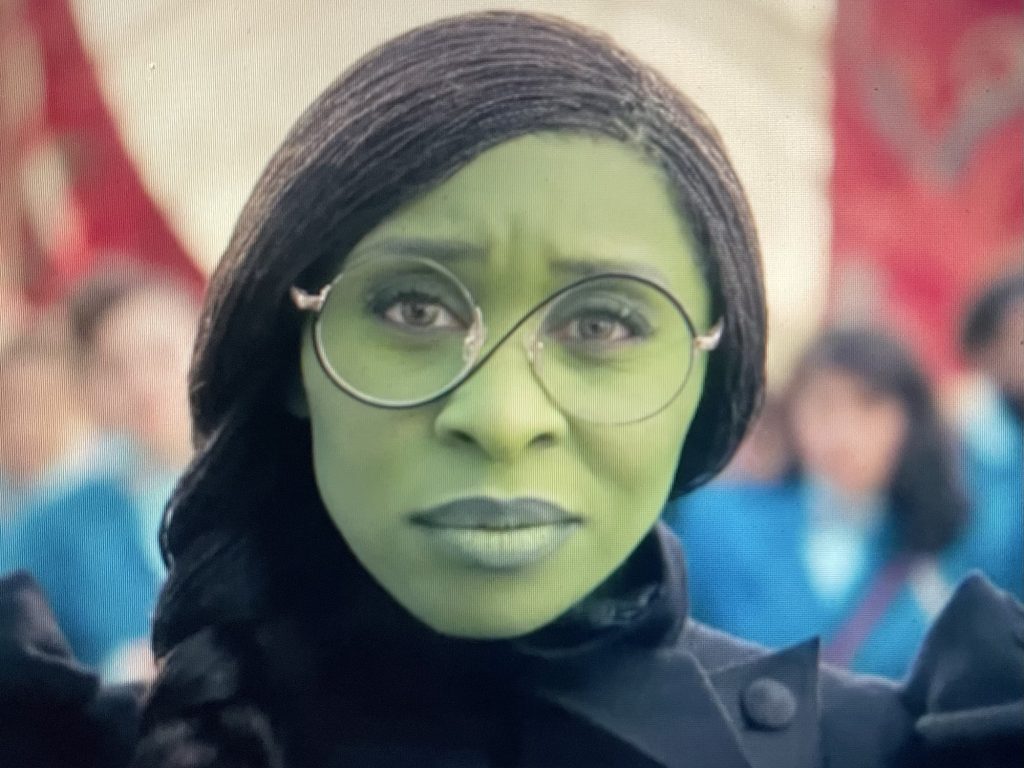
The Long Review: (tiny spoiler in below content)
I don’t have too much to add here…only that a good friend told me that as a child, she was a huge fan of the musical and listened to the songs all the time. Her grandmother heard this and bought her the novel. My friend, a pre-teen child at the time, started reading the novel and was somewhat traumatized by the sex in the book. She set the novel aside for another time.
To be honest, because I am a writer, I ponder this middle-aged male author writing about women and their relational lives (not simply their sex lives, but more broadly…their relational lives). His characters often felt more male to me than female. Their sexual habits was one area where I began to wonder, but also Ephalba (the Wicked Witch of the West) struck me as disturbingly non-maternal. She is cruel in her neglect of the child of her lover. She hardly claims him. She feels empathy for some others, and in a broad sense seems to care for weak folks in her society, but she feels almost zero maternal compassion for her son. That struck me as odd and made her less relatable. Could a woman have written this character? I’m not sure, and maybe Maguire was working out his angst regarding horrible mothers. 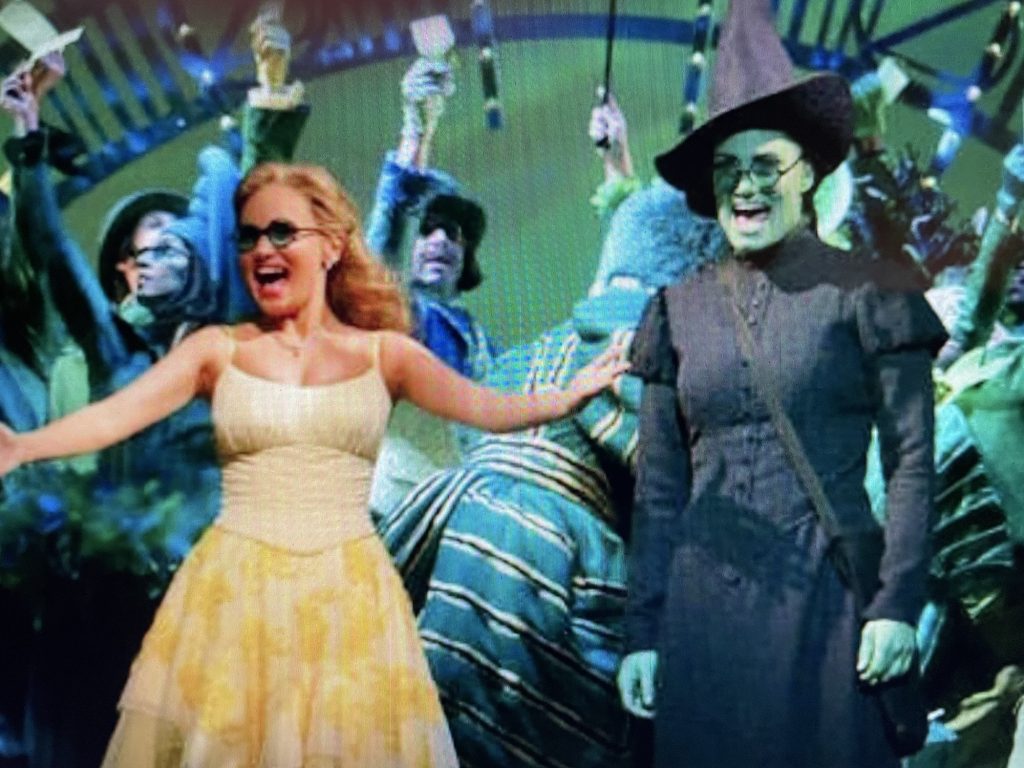
In short, this book was an entertaining read, but don’t feel like you have to read it to enjoy the musical. In fact, you may enjoy the musical (and now the musical film) more without knowledge of the book.
This audiobook is a fun one, so if you love listening to quick-paced novels, and don’t mind the sexual content, WICKED would probably entertain.

The Progression of a Brilliant Story:
It all starts with L. Frank Baum’s Wizard of Oz, which inspires Metro-Goldwyn-Meyer Wizard of Oz, a musical. In the 70s, Charlie Smalls and William F. Brown created The Wiz. That played on Broadway, then was eventually turned into a musical film starring Diana Ross and Michael Jackson. Then, Gregory Maguire writes WICKED. Stephen Schwartz and Winnie Holzman love the story and create Wicked, the musical. Now, Winnie Holzman, Dana Fox write, and John Chu directs Wicked, the musical film, with Schwartz’ music from the stage, of course!
That’s great story after great story emerging out of one novel. So, I can’t say I loved WICKED as a novel, but in the spirit of The Wizard of Oz and The Wiz, it certainly inspired amazing music!
THE ANDROMEDA STRAIN, A No Spoiler Review
 THE ANDROMEDA STRAIN, by Michael Crichton, was the first novel published by Crichton under his actual name. He had published previously under a variety of pen names. His reason for publishing under other names…he was a medical student at Harvard and was actually thinking he might practice medicine someday and didn’t want his patients to know that he was writing on the side. This must have been a “thing” in that era because it strikes me that wouldn’t phase anyone now.
However, Crichton soon after became a best-selling author and gave up the idea of practicing medicine.
I read this novel because of a recommendation by a friend during Covid19…
Do I recommend this novel? No, I don’t and here are 5 reasons why:
- The novel puts forward an interesting premise, but not fully baked (I am pretty sure this novel would never get published today)
- Bland main characters. It’s hard to keep them straight, they all seem like the same guy (except they attended different Ivy League schools and have slightly different occupations)
- So-so tension, but nothing like one of his better books, Jurassic Park, for example
- Characters are all white dudes in lab coats and even the non lab-coat characters are all white dudes. *note…when THE ANDROMEDA STRAIN was turned into a film in 1971, the screenwriter changed one of the dudes to a female…even in the 70s the character line-up was thought to be way too monochromatic.
- Too much data and exposition and not enough heart. I felt nothing for all the people (except for the infant…who seems to be completely neglected)
Longer Review…
Crichton, who passed in 2008
So…this novel became a best-seller and gave rise to a film that bears the same title. Both were hits/made a lot of money. In fact, this book catapulted Crichton’s career. I can only surmise that there was a great hunger for techno-thrillers at the time and that Crichton scratched an itch that had be itching for a long time.
The funny thing is, immediately following this read, I’m consuming Philip K. Dick’s, DO ANDROIDS DREAM OF ELECTRIC SHEEP and I am so wowed by the writing and how different it is from Crichton’s. Dick knew how to flesh out a character. Crichton did not, at least he didn’t yet. He got much better at it in subsequent novels, many of which I have enjoyed.
So, let me just nit-pick a little…
If I was ever to teach a writing class on the development of a writer…I might choose Crichton and force my class to read this book and then give them the pleasure of Jurassic Park as examples of how one gets better at the craft. THE ANDROMEDA STRAIN almost feels like a “freshman novel”, that novel written by an aspiring author who has one great idea, but can’t quite figure out how to tell the story.
In that class, I would also ask the students to read DO ANDROIDS DREAM OF ELECTRIC SHEEP, by Philip K. Dick, written in the same era.
There is a reason that BLADE RUNNER, a brilliant film and subsequent franchise, emerged out of Dick’s novel, published in 1968, one year before THE ANDROMEDA STRAIN.
The character of Rick Deckard is brilliantly written, fleshed out. The reader feels his pain, his angst, his story as he/she reads. Not only that, the secondary characters are complex, mysterious and full of emotion even when Dick writes about androids. His androids seem more human than Crichton’s actual human characters.
I do believe that Crichton saw his errors and improved immensely, but it will be a mystery to me for a long time that this book, THE ANDROMEDA STRAIN, was published and was sold and was read by so many, including me!
If for some reason you want to buy this book, click here.
To watch the film via Amazon Prime, click here.