Posts Tagged ‘novel’
Wicked, A No-Spoiler Review of the Novel (Not the Musical)
WICKED, a huge Broadway hit from the last couple of decades, is coming to film. I recently learned that WICKED (the musical, on which the film is based) debuted at the Curan Theater on May 28 of 2003. The Curan Theater lives at 445 Geary Street in San Francisco. Berkeley is my old home, stomping grounds for 27 years. The Curan Theater was a 20 minute walk, plus a 20 minute BART ride away from my doorstep. I saw Les Miserables at the Curan, and the Phantom of the Opera, and probably a couple of other shows before my life of parenting got very busy in the East Bay.
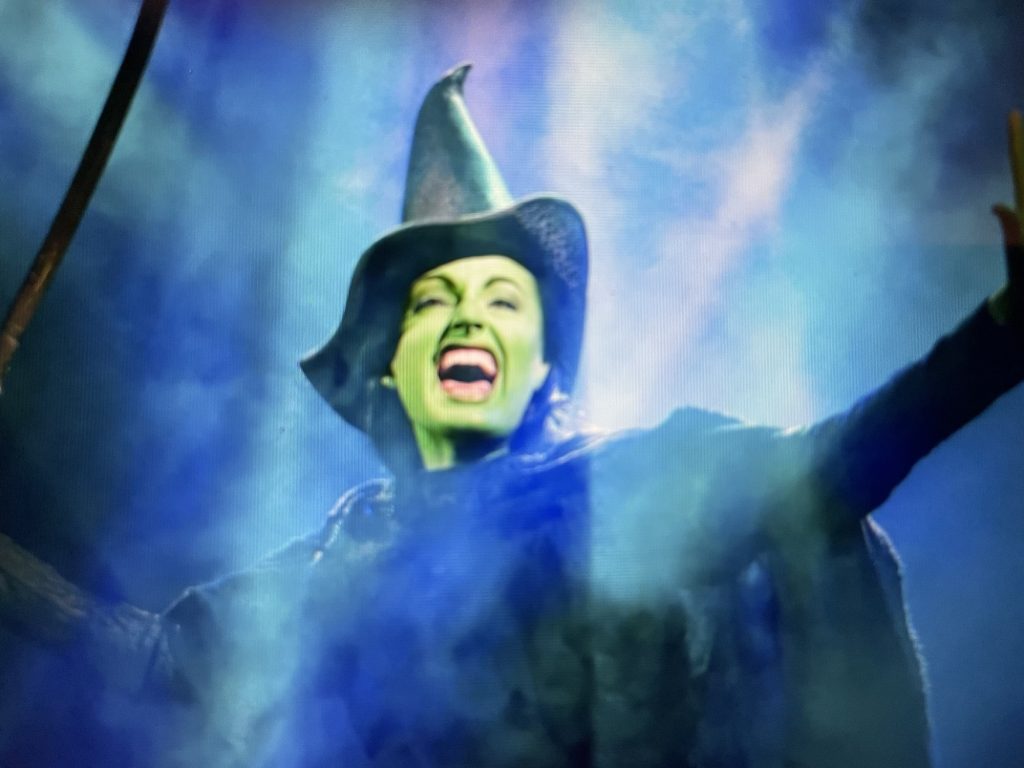
WICKED, the musical became a huge hit, took Broadway by storm and delighted the musical theater world with its interesting take on Oz, as well as the compelling music based on the life and times of the Wicked Witch of the West. This all emerged from Gregory Maguire’s novel.
I recently read the novel for the first time. Here is my short review:
5 Reasons I Recommend the Novel, WICKED (With Reservations)
- The musical does not follow the story of the novel closely, so if you’ve already seen the musical, expect to be surprised/disappointed by the novel.
- The novel is an entertaining story, but beware educators, this book is rated “R” in terms of sexual content. Gregory Maguire wrote female characters with active sex lives and he is explicit in describing their sex lives
- I appreciated the take on an alternative narrative regarding the famous villain of The Wizard of Oz. The world is other. Today, we might call Maguire’s novel fan fiction. It’s also interesting to remember that all villains in any fairytale are more complex people when their surface is scratched.
- While the world is other, the characters are relatable, which is why I think Maguire’s novel took flight
- Maguire took the world inhabited by Dorothy and Toto and broadened it. That brings pleasure to many fans of The Wizard of Oz
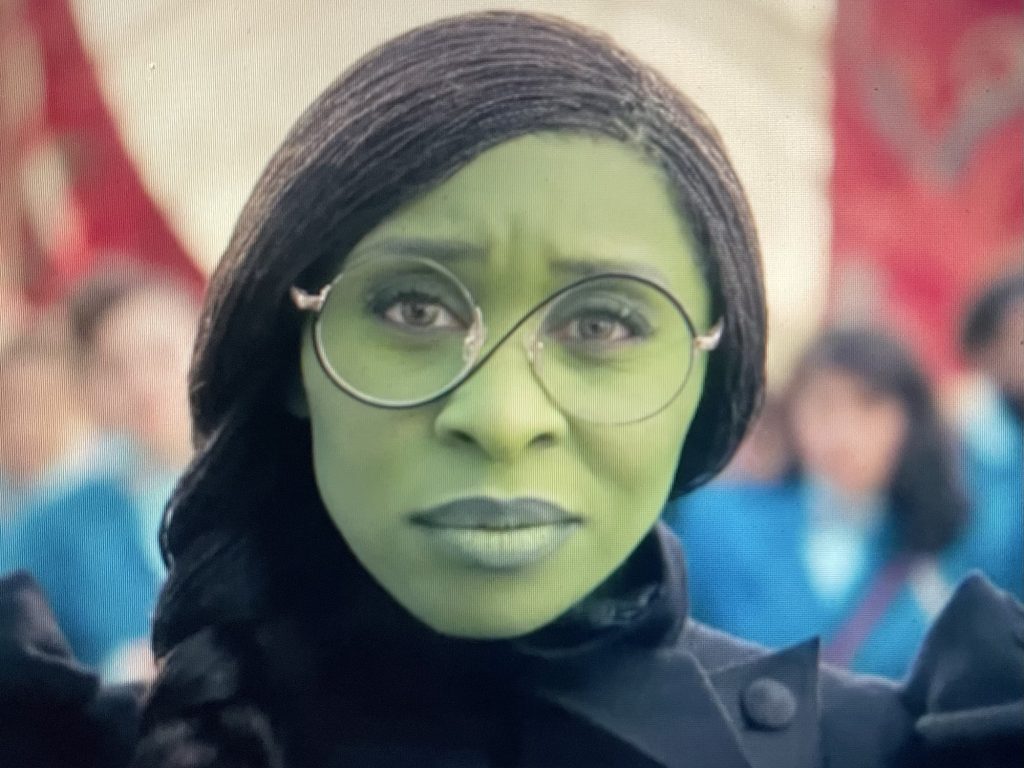
The Long Review: (tiny spoiler in below content)
I don’t have too much to add here…only that a good friend told me that as a child, she was a huge fan of the musical and listened to the songs all the time. Her grandmother heard this and bought her the novel. My friend, a pre-teen child at the time, started reading the novel and was somewhat traumatized by the sex in the book. She set the novel aside for another time.
To be honest, because I am a writer, I ponder this middle-aged male author writing about women and their relational lives (not simply their sex lives, but more broadly…their relational lives). His characters often felt more male to me than female. Their sexual habits was one area where I began to wonder, but also Ephalba (the Wicked Witch of the West) struck me as disturbingly non-maternal. She is cruel in her neglect of the child of her lover. She hardly claims him. She feels empathy for some others, and in a broad sense seems to care for weak folks in her society, but she feels almost zero maternal compassion for her son. That struck me as odd and made her less relatable. Could a woman have written this character? I’m not sure, and maybe Maguire was working out his angst regarding horrible mothers. 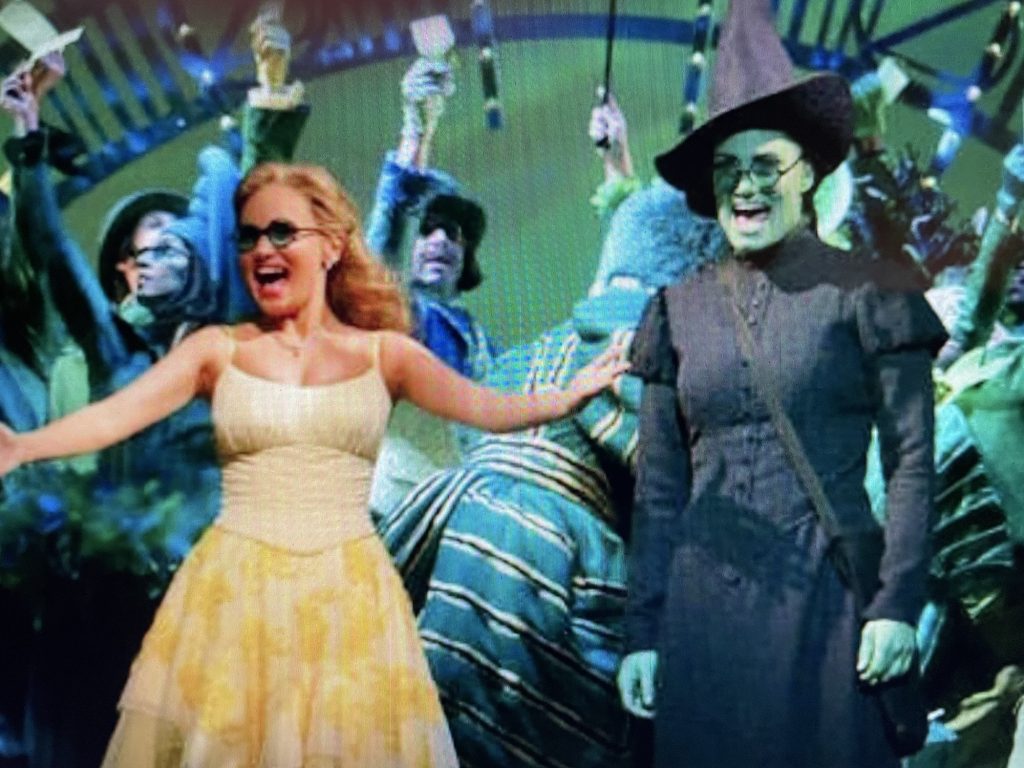
In short, this book was an entertaining read, but don’t feel like you have to read it to enjoy the musical. In fact, you may enjoy the musical (and now the musical film) more without knowledge of the book.
This audiobook is a fun one, so if you love listening to quick-paced novels, and don’t mind the sexual content, WICKED would probably entertain.

The Progression of a Brilliant Story:
It all starts with L. Frank Baum’s Wizard of Oz, which inspires Metro-Goldwyn-Meyer Wizard of Oz, a musical. In the 70s, Charlie Smalls and William F. Brown created The Wiz. That played on Broadway, then was eventually turned into a musical film starring Diana Ross and Michael Jackson. Then, Gregory Maguire writes WICKED. Stephen Schwartz and Winnie Holzman love the story and create Wicked, the musical. Now, Winnie Holzman, Dana Fox write, and John Chu directs Wicked, the musical film, with Schwartz’ music from the stage, of course!
That’s great story after great story emerging out of one novel. So, I can’t say I loved WICKED as a novel, but in the spirit of The Wizard of Oz and The Wiz, it certainly inspired amazing music!
OUT OF THE SILENT PLANET, A No Spoiler Review

OUT OF THE SILENT PLANET, by CS Lewis came about as a result of a coin toss between JRR Tolkien and CS Lewis in the 1930s. The understanding between the two men; one side of the coin would mean writing a science fiction novel, the other side would mean writing a time travel novel. The coin was tossed, Lewis was assigned the scifi novel. Tolkien was assigned the time travel novel. Tolkien never wrote his. Lewis did, published in 1938, twelve years before Narnia. In fact, he wound up writing three books of science fiction. OUT OF THE SILENT PLANET, which I will review here, was the first. This story is sophisticated, but there is no reason a YA reader or a very learned middle grade reader cannot take on this story. For educators thinking about assigning this book to a young person, a solid discussion on the story would make the experience a profound one.
The Short Review: 4 Reasons to Read OUT OF THE SILENT PLANET
- Superb writing and because this is CS Lewis, when you’re finished reading, your brain will have expanded
- Scintillating ideas that awaken the conscience…Plunge yourself into the mindset of a WWI veteran and a brilliant observer of history and soak in Lewis’ crucial critique of pre-WWII Europe
- Absorb Lewis’ Christian concept of God/Creator…the beauty and the moral implications
- Gain a vision for the power of fiction (imaginative science fiction in particular) as a way to change hearts and minds.
A Few More Details:
When Lewis and his friend and colleague, JRR Tolkien, both veterans of WWI, decided to toss that coin, they had been musing together about the sad state of fiction. They believed that the godless universe theory unleashed to some degree by Darwinists and proponents of the Hegelian superstate/superman, was giving rise to real beliefs (like eugenics which both understood as dangerous and evil) inside academia and government. More troublesome, these theories were making their way into fiction and infecting the broader population through story.
Americans fought in WWII and helped to defeat Hitler, so my nation (I am a US citizen) often forgets how the eugenics movement in the US was accepted and backed by some of our highest state actors, like President Woodrow Wilson. We in the US forget, maybe conveniently so, that we too were traveling on a similar road as the Nazis. This is how pervasive these ideas were and back in that day, they were considered progressive. It turns out, anything can be labeled progressive. A cautionary and hopefully humbling reminder to us in the 21st century.
Marxist ideology was also suspect in Lewis’ eyes. Both Marxism and Fascism preached an exercising of power where the end justifies the means. That idea was an abomination to Lewis and Tolkien, the rejection of which made its ways into the Lord of Rings trilogy, as it did into all of Lewis’ writings. As Christians (Lewis, an Anglican, Tolkien, a Catholic), they challenged the idea that the state has permission to sacrifice an individual for some greater good, not without that individual willingly giving up her/his life, soldiers willing to fight to defeat the existential enemy of a free state being one example of this proper sacrifice, something both of these men witnessed first hand.
In regard to reading OUT OF THE SILENT PLANET, knowing a little 20th century history and philosophy definitely helps the reader enter into the world of Elwin Ransom, the hero of the story, but even without that knowledge, this is a fascinating and well written tale. Ransom, a philologist, is on a walking tour of rural England. He is kidnapped and taken to Malacandra (the planet Mars). What unfolds is a story about relationship and curiosity (Ransom’s journey) versus dominance exercised by violence (the journey of his kidnappers). The narrative provides a resolution that exemplifies the idea that there is a standard of justice that is literally universal.
This is my third time reading OUT OF THE SILENT PLANET (notice my beat-up copy in the image above…not sure it will survive another read-through) and after finishing the book this round, I found myself dreaming about grace and kindness and goodness while I slept…something that doesn’t often happen for me after reading science fiction before bed.