Posts by Susi Jensen
The Rise of the Audio Book, Part I

Do you listen to audio books? I do (and my family does) and word on the street is, there are a lot of book-listeners out there.
Here’s what Forbes’ Media and Entertainment writer, Adam Rowe reported last year:
“In 2017, digital content subscription service Scribd’s fastest-growing segment was audiobooks. Primary audiobook subscriber numbers for Scribd grew by more than 20% in 2016. The rise isn’t unique to Scribd: Audiobooks are also up about 20% year over year across the publishing industry for the first eight months of 2017, according to the Association of American Publishers’ data reports from 1,200 publishers. In the same time period, print books rose just 1.5%, and e-books dropped by 5.4 %.”
Who is listening to audio books?
Commuters, the home parent who is cooking a meal each night, families on a road trip, dog walkers, endurance athletes who have to train for hours at a time, the gym rat with a literary bent…many are listening. There is evidence to suggest that those who listen to audio books are also avid readers and audio books simply allow these readers to consume more books than their average number, but I suspect, some folks who don’t like to sit still in order to read are consuming books anew, like they haven’t since college or high school.
Where do you fall on the spectrum?
I confess, I don’t often listen to audio books while walking my dog, but use it as a time to be quiet and enjoy nature, but on a long road trip, whether alone or with family, I’m huge fan of audio entertainment, books and podcasts. I live in the Western US, where getting places often requires a long car voyage. A visit to my parents and brother, 12 hours. A visit to my son at the university he attends, 8 to 10 hours depending on traffic. If my daughter decides to go to grad school, we will drive 15 hours to help her move. These are all one-way trips I’ve delineated, so double the car time and I end up with a whopping number of hours spent in a car.
That’s a lot of productive time…or entertainment time…or time to check one or two books off your to read list. You will find that the hours it takes to get through a book vary, but on average, 12 hours will get you to the final chapter. The roundtrip to my daughter and back, for example, is at least 30 hours of drive time, that is about a 2-novel voyage…or we could take on something very long, like Herbert’s DUNE.
That’s the math for the road tripper, but what about the gym rat?
For the gym rat: 5 hours per week, for 4 weeks…that is about one extra book per month.
For the commuter in urban America, the average car time or train time to work is 30 minutes. That is 1 hour per day, 20 hours per month, about 1 to 2 extra books consumed per month.
If you are a business person, imagine reading one dynamic leadership book per month for a year and how that might impact your career. This becomes a fairly compelling model when one thinks about taking in new information that could improve your life coupled with entertainment.
I’m usually buying a science fiction audio book when I listen, but every now and then, a great non fiction book like THE POWER OF HABIT, gets onto the listening list. It turns out, habits do impact a writer like me, sort of a no-brainer, but the book lays out what happens in the body and brain when we establish positive (or negative) habits of life and work. I’m glad I listened to that book. I listened with a group that was on a road trip. My husband, a couple of college-aged kids and I were driving down to pick up my son from college. We ended up engaging in great discussions around the topic of habit that lasted the entire weekend…all while picking up a kid from college and helping him move back home for the summer…a time when college kids can fall into habits, good or bad. Am I a scheming parent to have thought of this? No…We really just stumbled upon the book.
So…it’s important, if you are choosing a book for the driving/riding community, to think about the character of the group that will be listening. Do aim for a book pleasing to all, but also, provocative. Spur those discussions that will happen at In n Out Burger or Grandzella’s or wherever you end up pausing for a meal.
This is part I of a two-part post.
See my post, The Rise of the Audio Book. Part II where I explain the appeal of audiobooks and perhaps entice the skeptic to try them out.
THE LEFT HAND OF DARKNESS, A Book Review

THE LEFT HAND OF DARKNESS is one of the greatest scifi stories of all time and it’s not a difficult read. There is a simplicity to the prose as the main character narrates in the first person, yet profound ideas flow out of this tome like rivers from a mountain spring. I highly recommend this book to any interested in science fiction, but also to the average reader who enjoys smart characters and deft storytelling.
The GREAT Ursula K. Le Guin wrote this novel in 1969. Many feel this novel to be her magnum opus. I have read the novel twice in the last couple of years, once because my child (who also graduated from Berkeley High as did the author) told me I had to read it, but also because my science fiction book group decided to read and discuss it at one of our monthly meetings. To understand the development of science fiction as a genre and its stream of ideas, Le Guin must be read and if you have to pull one book off her author shelf, I recommend THE LEFT HAND OF DARKNESS.
For more biographical info on Le Guin, there are a number of beautiful tributes to her that emerged after her passing this past January. This tribute from the New York Times is lovely, but there are many others. A google search will do the trick.
First, the short review…
Three reasons why I recommend this novel:
- THE LEFT HAND OF DARKNESS was written by a female author writing at a time when men dominated the genre. Ursula K. Le Guin was never really in “the club” with Asimov, Heinlein, Bradbury or Philip K. Dick. She was an outsider, as much as Margaret Atwood and yet she won the Hugo and Nebula Awards for this novel.
- This book is pleasure to read. The writing is tight and beautiful. The characters are other-worldly in a way that stretches the reader, yet both main characters, (including the alien character) are relatable.
- The ideas about politics and sexuality echo beyond the story. They provoke thought about our own culture’s morphing views on both topics and more.
Now for the longer review…
THE LEFT HAND OF DARKNESS tells the story of a man called Mr. Ai, who has traveled to a planet called Winter (or Gethen by its inhabitants). His aim is to woo the planet to join an intergalactic civilization of which he is an emissary and of which Earth is a part. The average temperature of Gethen is cold, which is why the visiting emissaries call it Winter.
The problem Mr. Ai encounters are many, but include the fact that the inhabitants of Gethen are not only suspicious of one another (rooted in tribal affiliations), they are suspicious of Mr. Ai, in part because of his sexual perversion…that Mr. Ai, as a human man, will be a male and remain a sexually-presenting male at all times and not just during courting or mating. On Gethen, inhabitants choose and change their gender. Their reproductive organs and energies are limited to those times when they morph. Their spouse/partner will be a sexual partner for a time or for a few seasons, maybe even for life, but the partnership is rooted in friendship and the male/female roles don’t exist in the same way they do on Earth.
This is a fascinating idea and in a way, it makes sense that Le Guin would think up Gethenian sexuality during the Modern/Western sexual revolution, when the society around her was contemplating gender roles. And still, Le Guin was more prophetic than she might have realized to delve into cultural assumptions around sexual identity. It is possible that this is one of the reasons there has been a resurgence of interest in this story as our society grapples with ever-changing, ever-new gender ideals and ideas. I find THE LEFT HAND OF DARKNESS to be an important touchstone in the public discourse that is taking place today.
An excerpt from the novel: My Landlady, a voluble man, arranged my journey into the East…He was so feminine in looks and manner that I once asked him how many children he had. He looked glum. He had never borne any. He had, however, sired four. It was one of the little jolts I was always getting. Cultural shock was nothing much compared to the biological shock I suffered as a human male among human beings who were, five-sixths of the time, hermaphroditic neuters.
Le Guin did not always want the moniker of science fiction or fantasy writer. She knew she was more than that. She wanted to provoke her reader into new thought. Observe how she deftly weaves politics into this early exchange between the two primary characters about patriotism.
Mr. Ai says: “If by patriotism you don’t mean the love of one’s homeland, for that I do know.”
The Gethen called Estraven replies: “No, I don’t mean love, when I say patriotism. I mean fear. The fear of the other. And its expressions are political, not poetical: hate, rivalry, aggression. It grows in us, that fear. It grows in us year by year. We’ve followed our road too far. And you, who come from a world that outgrew nations centuries ago, who hardly know what I’m talking about, who show us the new road…it is because of fear that I refuse to urge your cause with the king now…”
Estraven emerges as a forward-imagining Gethen and a friend to Mr. Ai. Their friendship and the adventure they undertake together make up the meat of the story.
To order the THE LEFT HAND of DARKNESS, click here.
The Phantom Tollbooth, Twenty Possible Discussion Questions for Educators
The art of a good question is always to draw out the thoughts and feelings of the one being questioned…(and for the most part…to avoid yes/no answers).
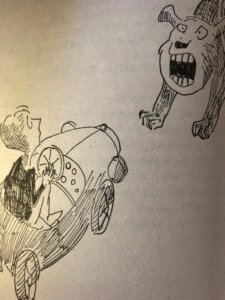 Here are 20 questions to get your student chatting up a storm (of course the student must have read the book closely in order to answer them, so you’ll find that out too.)
To read a review of THE PHANTOM TOLLBOOTH, click here
To order THE PHANTOM TOLLBOOTH, click here.
- What is Milo like in Chapter 1. How would you describe him?
- Would you want to be Milo’s friend, the Milo of Chapter 1? Why or Why not?
- When Milo sees the mysterious gift, he makes a big effort to put it together (the tollbooth) and then decides to use it. Does this surprise you? Why or Why not? Would you make that effort if you were in Milo’s place? Why or why not?
- In Milo’s initial travels, he gets stuck in the Doldrums. Who helps him get out? What does Milo have to do to get his car moving again?
- How would you describe Dictionopolis?
- In chapter 6, we learn about two Princesses. What are their names and how did they get banished?
- Milo starts thinking about the idea that he will rescue the Princesses. Where are the Princesses being held and what hardships will Milo face if he tries to rescue them?
- How would you describe the banquet in Dictionopolis? Did any of the foods make you laugh? Which one(s)?
- Chapter 9 introduces us to a boy called Alec and the idea of Point of View…How would you define “point of view” based on the discussion Alec and Milo have?
- In Chapter 10, the chapter that features Reality, Milo realizes “…the many times he’d done the very same thing; and, as hard as he tried, there were even things on his own street that he couldn’t remember…” What was Milo’s mistake? How has he made the same mistake people in Reality made long ago?
- Alec tells Milo in Chapter 11: There’s a lot to see everywhere, if only you keep your eyes open. What do you think Alec means when he says this to Milo? What is Milo supposed to see?
- Are noises and sounds important to you? Which ones and why? What do you think it would be like to live in a place where there was no sound?
- Milo steals a sound from the Soundkeeper…How does he do it and what are the results?
- Is the Island of Conclusions a good place to jump to? Why or why not?
- Who helps Milo reaches Digitopolis (see Chapter 14)?
- How does Milo outsmart the Mathemagician?
- What does the Demon of Petty Tasks and Worthless Jobs, Ogre of Wasted Effort and Monster of Habit ask Milo, Humbug and Tock to do?
- What are the demons that protect Ignorance? Come up with a list of the demons in this book, to the best of your ability (hint…end of Chapter 16 to middle of chapter 19)
- Which demon scares you the most and why?
- Look back to your Chapter 1 answer…How has Milo learned from his adventure? How would you describe him now? Would you want to be Milo’s friend, the Milo of Chapter 20?
The Phantom Tollbooth, A Review for Parents and Educators (with a few spoilers)
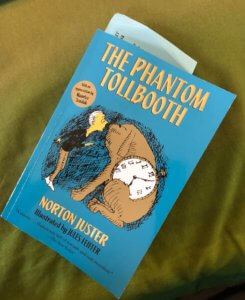
THE PHANTOM TOLLBOOTH is a Gateway Book for Digging into a Values Discussion with your Children or Students
To order this classic, click here.
To access 20 questions on the book, click here
This post is especially (but not only) for folks who have kids or teach kids. I loved my re-read of THE PHANTOM TOLLBOOTH. Here are four reasons why you ought to read this book with a child today (or tomorrow if the child is already asleep). And, for the record, this story does NOT fall into the category of sci-fi…more aligning with fantasy than science fiction.
- The story introduces ideas that unearth values we have (or need) about education and learning.
- The main kid character starts out flat and plain, but makes simple choices that thrust him into hero status…In many respects, he reacts to problems in a childlike way…he is very relatable…he also wants to do what is right. He discovers that doing what is right will require courage. He relies on his friends to accomplish the heroic task. These are all important values put forward by THE PHANTOM TOLLBOOTH.
- Imaginative characters, whose names reflect an aspect of their character, that you can discuss with your child, thus leading to more thorough discussions on everything from friendship to politics. This is a timely story for our kids. (No, really…you CAN talk with your kids about politics after reading this book…In fact, you should!)
- Lovely illustrations by Jules Feiffer scattered throughout.
Now for the longer review and musings about stories that provoke discussions…which is a very old way to teach deep lessons.
How does one discuss serious real-time issues with kids? Stories help a lot. I remember showing our children (and at a pretty young age) the Star Wars trilogy…at the time it was episode 4, 5 and 6. Star Wars is an archetypal good versus evil narrative. It features a character, Darth Vader, who though evil, still has the potential for redemption. This was an idea my husband and I wanted our 6 and 8-year-old kids to understand. The story raises the issues: What is evil? The Empire shows what evil looks like in a variety of ways. What is good? The rebellion shows us good and what it’s like when good battles evil. The force is a neutral entity in the universe, but seems to be used most powerfully (ultimately) by those who are good. Star Wars also raises this important question: Can a person be pure evil without the possibility for reform? This story tells us about Luke, Darth Vader and the deep power of love (sometimes love that costs us our lives, as it did for Anakin, Darth Vader) and how that love counters evil…(not to mention the sacrificial love of the friends, Han, Leah, R2-D2, C-3PO and Chewie.) This is a friendship story as much as it is a family story.
For me and my husband, the above ideas were important to us in particular because of our values that also have to do with our faith. We wanted to discuss the reality of evil with our kids, but also help them understand that people ALWAYS have the possibility of breaking free from the evil that grips them and as they do so, help themselves and others achieve goodness…much as (spoiler alert) Darth Vader does at the end of Return of the Jedi.
THE PHANTOM TOLLBOOTH is definitely less scary than Star Wars, but the reader still finds a good versus evil narrative. Milo, a boy, disinterested in life and education is our protagonist. This is how the reader sees him in Chapter 1.
“It seems to me that almost everything is a waste of time,” he remarked one day as he walked dejectedly home from school. “I can’t see the point in learning to solve useless problems, or subtracting turnips from turnips, or knowing where Ethiopia is or how to spell February.” And since no one bothered to explain otherwise, he regarded the process of seeking knowledge as the greatest waste of time of all.
Milo is given the gift of a magic tollbooth that takes him into an imaginary world, a place that will transform him. While there, begins to develop curiosity and engages with the strange world around him. He learns that words sustain life. He learns that numbers are essential to life and he learns that the conflict between two brothers (the king of words and ruler of numbers or the Mathmagician) cannot be solved until he helps them bring back their sisters from banishment. They are the Princesses Rhyme and Reason. In the world Milo is visiting, there is currently no rhyme nor reason to anything that takes place and it that has caused much misery across both kingdoms.
Milo isn’t a bad kid…initially, he’s just bored and disengaged…In today’s world…Milo might be a tv junkie or video game addict, but in the 60s…he was simply lethargic, lying around and doing nothing because nothing seemed interesting to him. In the new world where he travels, he is confronted with an adventure that captures his passion. Milo then begins to appreciate and notice the world around him, including the importance of education and learning. Milo’s transformation is an example of a child who decides to be curious and walks toward/into an adventure. That little step opens him to a world of learning. He even gains friends along the way.
A key for Milo is that he figures out his purpose. He decides to rescue the two princesses. He persists until he achieves the goal, despite many challenges.
The evil characters (Juster calls them demons) in this story resonate with today’s evils and dare I say…some of our current events. The demons live on the Mountain of Ignorance and include monsters such as Compromise, Hopping Hindsight, the Gorgons of Hate and Malice, Overbearing Know-It-All, Gross Exaggeration and Threadbare Excuse. Each creature described on the mountain could spur a conversation about values. Parents, consider yourself primed for a discussion of politicians, ad agencies, media or news organizations and grownups, in general…We adults could all use a refresher course on the “demons” that dull our wits in postmodern society. Good lessons for all.
Milo is a relatable kid character, even for kids today. He starts out bored and boring until he accepts the invitation to enter the tollbooth. His curiosity spurs him. He emerges into the new world and continues to wonder about its strangeness. He learns along the way that he must engage his senses and make friends. He slowly grows in appreciation of beauty around him and all the goofy characters he meets who are passionate about one thing or another. However, Milo’s own passion is not fully engaged until he decides to rescue the princesses. Then, his journey takes on a new vitality and without being fully conscious of it, he has stepped into the hero’s journey. His purpose, which has become his passion enables him to persist.
Through his determination and action, Milo is healed of his boredom…At the close of the story, Milo grieves that he (spoiler alert) no longer has access to the tollbooth, but he notices that
…the sky was a lovely shade of blue and that one cloud had the shape of a sailing ship. The tips of the trees held pale, young buds and the leaves were a rich deep green. Outside the window, there was so much to see, and hear, and touch–walks to take, hills to climb, caterpillars to watch as they strolled through the garden. There were voices to hear and conversations to listen to in wonder, and the special smell of each day.
*For a suggested list of questions for teachers, see my post on THE PHANTOM TOLLBOOTH, discussion questions for educators.
Lost In Space, 2018 Netflix Series, a Review

Danger Will Robinson?
Let’s say you’re a single male/female scifi fan or no-kids couple and both of you are scifi fans. I say…YES, watch this. Let’s say you’re a family that likes scifi or even…you just like great stories, I say…ABSOLUTELY, YES! Watch LOST IN SPACE together. This series is totally fun and so far, it is blowing my socks off.
I couldn’t wait to give this review. I confess, I have not watched the entire first season of LOST IN SPACE, but I’ve watched enough to give an initial review.
In particular, I want parents to see this review early in the summer. It’s fun to find a tv series that the entire family can watch together. Summer is the perfect time to take on such a community watching experience. I’ve seen five episodes of season one and feel confident this one is worthy of our attention. If you’re comfortable with a PG-13 rating, LOST IN SPACE is fantastic and here’s why…
This series contains:
- Action packed storylines, kid-centric in a good way, but still entertaining for adults.
- Deft story-telling, internal family tension, external forces that threaten the family and their survival…characters that are smart, but also clunky in their own ways and real-seeming (ok…those kids are all brainiacs, but they were chosen for the journey because of their intelligence).
- Perfect villains. Two main villains so far: Parker Posey as Dr. Smith and the robot(s). Posey plays a great devil within. Is she a time bomb waiting to go off, or is she on the road to becoming a more balanced human being? Stay tuned for that one. The great thing is, she creates tension in the system and has potential to draw out the best or worst of the characters around her.
- The robot character is wonderfully mysterious and yet lovable. Its relationship with Will is going to win over children of all ages not only because it is super cool, with the strength of a super hero and the loyalty of a dog, but she/he/it is also a mystery. The robot truly feels obliged to protect young Will…the relationship emerges in the pilot (first episode).
- Non-stop adventure. Thousands of potential storylines exploring a new world and learning how to survive…plus characters that have the potential to grow and in doing so, grow on us.
Congratulations to Netflix for re-imagining this beloved series in a way that honors the original and surprises us with the new. The stories are imaginative, the characters feel real and the special effects are soooo much better than the original!
Operation Goose Trap (Original Speculative Fiction) by Susi Pritchett Jensen
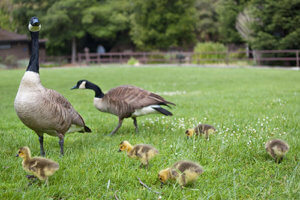
Former Army Sergeant, Moe Chen, sent a message drone to Santiago Debussy and Geraldine Falcon on a scorching Sunday in late May 2062 offering each a job in the government sanctioned goose trapping operation. They were promised Japanese Yen as well as fuel coupons for the travel. They were to report to Lake Merritt, in the City of Oakland on the first Tuesday in June. The vets returned the drone along with their digital thumb prints, accepting the contract. Jobs were scarce in the post-war economy, especially cash paying ones. Currently, they were trading labor for room and board on a cattle compound in Moraga. They had not been paid with paper money since being discharged from the military.
The night before the trip, they laid out their gear, including body armor, though Santiago knew Geri’s preference for riding without.
“Can’t we just wear our leathers?”
“No.” Santiago lit a second candle for their reading hour. “You never know who might be lurking in the junk.”
Geri picked up the tattered copy of Heart of Darkness she had borrowed from the ranch library. She decided not to argue. Her boyfriend’s tendency to err on the side of caution was one of the reasons she had survived the war. Her reckless spirit needed to be checked periodically…she just hated that it had to be that way.
At zero six hundred hours, in the predawn darkness, they rolled their motorcycles onto the road, wheels crunching over gravel. The night watch swung open the compound’s gates and waved them through. They straddled and started their bikes, flipped on their high beams and began the descent into the ruins of Lafayette.
They arrived on Mt. Diablo Boulevard just as the Eastern sky was beginning to glow. There was no breeze in the low-lying area, so Geri slowed her motorcycle and unbuckled her neck guard. She was straddling a Yamaha XT250, an enduro bike, a souped-up cavalry leftover. Santiago, with his towering frame needed a much larger ride. He traveled by Harley, an Iron 1200, from the early 21st century. Following the war, he had paid for it in gold after negotiating for weeks with a Japanese collector. Santiago loved that motorcycle. More than half his free time went to tinkering with the engine, searching the local junk yards for spare parts, polishing the chrome. As far as vehicles were concerned, there was little left in the United States of the Pacific to match the beauty of Santiago’s Harley.
Rounding the newly repaired onramp, they pointed their bikes West on Highway 24. The air was unusually fresh this morning, free from soot and smog. Geri let out a howl and juiced her engine.
“Don’t get too far ahead,” Santiago said.
Geri gave him the thumbs up, stood on her pegs and took off. The light had quickened behind them, so she turned off her headlight and set her eyes to the forward field, scanning from the left to right. She watched for motion, 50 to 100 yards ahead, a cavalry instinct she would likely never shake. Overall, she liked what she saw, an actual path through the junk and no movement in the wreckage. For the first time since the middle of the war, the way into Oakland might be characterized as clear. Burned out trucks and autos still cluttered the thoroughfare, but road crews had worked to move enough debris to make a narrow lane for travelers. A small success of the new government, hiring a competent enough crew to move shit and pave over some of the melted asphalt. By no means was the ride perfect, but it was a damn improvement over the last time they had traveled the highway.
After a healthy rainy season, beauty was remerging. Set against natural grasses, lavender lupine, wild mustard and orange poppies blanketed the hillsides. She had seen traces of color around the ranch, though the cattle did a number on most of the foliage. Here, the wild flowers had multiplied undisturbed. She found herself feeling light-hearted, even joyful.
“…like Persephone emerging from Hades,” she mumbled.
“What?” said Santiago. “I couldn’t hear you. You want to slow down, so I can catch up?”
Geri down-shifted and slowed to 5 mph. She adjusted the microphone fitted inside her helmet. “I said, aside from all the scrap, it’s kind of pretty.”
“The flowers. Yeah, I noticed. Looks like the gov did some road clearing too. I wonder how the ranch will be impacted when the traffic starts flowing like the old days? Might need some more fire power to protect the cattle.”
When Santiago drew even with her, Geri sped up again. They continued for a few miles at her pace, making good progress toward the Caldecott grade when Geri noticed movement in the wreckage on the opposite side of the highway. She flipped up her visor and pointed. “Scavengers.”
Santiago lifted his binoculars. “Two males. Grade school age.”
Geri snorted. “Like they’ve ever seen the inside of a learning institution.” The boys stood atop a tipped-over 18-wheeler, circling their stick arms overhead.
“They must have heard the motorcycles. What do you think?” Geri slowed to a crawl. “Should we see if they need help. We could give them our lunches.”
“Hell no. We need those calories if we’re gonna work all day.” Santiago passed her on the left, waving her forward. “Plus, it could be a trap.”
She rode up on his flank and held him in her stare. “They’re war orphans.”
“They may be orphans, but we have no idea who or what lurks behind that rig.”
“Look how skinny they are. They have no energy to set a trap.”
“We do not stop. We leave them behind. We keep our appointment or we may not get paid.”
Geri watched the boys grow smaller in her bar end mirror. “Fuck.”
“We can consider stopping on the way back,” said Santiago.
For the next few miles they did not see another soul. This was the way of things in New California, a state with a population of fifty million, shaved down to four. And four million was a likely exaggeration, an attempt by the government to stem public despair.
As if reading her mind, Santiago mused, “You know, we might see crowds today. You gonna rescue all of them too?”
Geri flipped up her middle finger.
He laughed. “What’s that for?”
“For being anti-social.”
“I just want you prepared for the onslaught of need.”
“My armor is intact,” she said.
“Nope,” said Santiago. “Never has been and never will be.”
Geri kicked her bike into high gear and leaned forward.
She was fast approaching the detour in the highway where the tunnels had caved. She down-shifted and weaved between what looked like a few recently stranded vehicles. The route, unpaved but smooth enough for two wheels, followed Old Tunnel Road up and over the top of the Caldecott Grade. Geri revved her Yamaha and shot up the hill, her knobbies kicking back a spray of pebbles and dust.
Santiago took to the road more carefully and well behind to avoid the dirt-storm. He caught up with her at the summit. She had parked near a favorite overlook and climbed a boulder jutting out from the hillside. She sat, dangling her legs above the drop off.
Santiago took in the view from atop his Harley.
The Oakland Port teemed with tankers, waiting to be filled with California oil. Nearly all of it was being shipped to East Asia to pay off war debt. To the north, the Golden Gate bridge, half rebuilt and not yet painted, gleamed silver and beyond it, offshore rigs dotted the horizon. The new Bay Bridge lay in front of them, functional, but ugly. Maybe in another 50 years, the government would have enough money to rebuild the old beauty.
Santiago removed his helmet and pulled off one glove to scratch along his jawline. He had recently shaved his beard for Geri because she preferred him without. He was still not used to the feeling of whiskers growing back.
“The city is filled with people and some of them are hungry, like those orphans. How are you going to handle that?”
Geri scrambled off the ledge and returned to her bike. “I’m not going to handle anything? I don’t handle people, but I hate when kids suffer for what our fucking politicians decided ten years ago around a bottle of Kentucky Bourbon. And I will feed those boys on the way back,” she said, “You can’t stop me.”
They arrived at Lake Merritt at 8:20 AM. The lakefront was overflowing with war vets. A cloth banner, tied between two newly planted Oaks, bore the words: Operation Goose Trap.
Geri sputtered a few chuckles into the mic. “Got to hand it to the military—they know how to brand an event.”
“We are the military,” Santiago said.
“Which is why I have the right to criticize their stupidity.” Geri pulled a rag out of her pocket and wiped the dust off her visor. “It’s okay to make fun of your own fucking family.”
“Speaking of family—the brothers are here.” Santiago kicked the Harley onto its stand.
Clement and Oscar Everett, two of their cav buddies, stood along the shore unfolding a giant net. When Santiago broke into a stiff jog, Geri knew she might not see him for a while. He called over his shoulder. “Gonna say hi. I’ll be back in a few.”
Despite the early hour, the lakefront buzzed with a festive vibe, maybe due to the promise of food, maybe because the sun was love bombing the city with warmth and light. Men and women in uniform were herding hundreds of civilians away from Lakeside Park toward the ruins of the Catholic cathedral, where a flea market of sorts had sprung up.
The cityscape was slightly improved. Crumbling high-rises and torched apartment buildings still dominated the landscape, but some degree of demolition and cleanup had taken place. Empty lots prepped for new construction was the most encouraging sign. It was slow-going, this post-war recovery, particularly with the population depleted and food so scarce.
Geri leaned her Yamaha against a tree and unclipped her armor. Nearby, a patchy lawn was parking lot to a smattering of vehicles, civilian and military. A circus-sized tent had been erected beyond the lawn. Guards stood at each entrance to the tent indicating to Geri that it was somehow crucial to the operation and off limits to the public. She shaded her eyes and saw a woman waving a floppy hand. The woman stood in front of a brick-colored pickup, one of those large-cabbed versions. She shouted Geri’s name.
Geri lifted her arm high to acknowledge her old friend, Soledad Chamorro.
During the war, Soledad, or Soli, as her friends called her, rode with the First Cavalry as head cook. She was fearless, hard-working and absolutely gorgeous. In fact, Soli had won a local beauty contest in Santa Cruz before the world went to hell, not that she would have made claim to the title now. Most of the beautiful women still alive in the United States of the Pacific were trying to downplay their looks. Life was dangerous enough without such allures. Earlier that month, on Santiago’s urging, Geri had cut her hair as short as a man’s. She wasn’t vain, but she hated the fact that freedoms had been taken from her, like the freedom to wear her hair as long as she damn well pleased.
“It will be cooler, easier to care for,” Santiago had said, while buzzing the hairs at the base of her neck.
“You tired of picking nits,” she had replied, “my lazy ass boyfriend?”
The haircut in question had taken place about five weeks before. She fluffed the matted thickness atop her scalp. A few brown ringlets were beginning to coil around her ears. They had almost become an annoyance.
Geri yanked off her gloves and shoved them into her helmet.
Soli was filling pots at the water truck. A muscular man stood at her side.
Geri walked toward them, calling as she approached. “Hermanita…” She took the final steps with her arms outstreached wide.
Soli shut off the water and threw her one good arm around Geri.
“Geraldine!” She held on for a long while, then stood back. “Oh, my God. I love your hair. It suits your tough bitch image.”
“Just an image?” Geri raised an eyebrow.
Soli belted out a laugh while pulling Geri over to the man at the water valve.
“I’d like you to meet my husband, Donovan.”
Donovan stood at least 6′ 5″. His face was clean-shaven. He wore his blond hair long, tucked behind his ears. At closer inspection, Geri noticed his deformed left ear, a slice off the top. He also bore three scars across his left cheek, diagonal zebra stripes on an otherwise perfect face.
“Nice to meet you.” Geri held out her hand. “I served with your wife for three years in the cav. She’s a damn good rider and a more brilliant cook.”
Donovan smiled showing a number of silver capped teeth. He tapped them with his index finger.
“Deformed tongue,” said Soli, “the bastards made him gargle the acid. He was a spy for our side.”
A string of curses spewed from Geri’s lips, something unintelligible. She grabbed Donovan by the arm and held on. She bowed over and stared at his enormous boots, though her focus wasn’t really on them. She felt her hair follicles tingle across her scalp as a wave of rage overwhelmed her. That rage had taken on a graphic quality in recent months, scarlet and gray, a thick goopy substance, splattered across a blue-black canvas, an image so distinct, she could study it in her mind’s eye and in viewing the image, hear the accompanying soundtrack of an airplane, a barrel smashing to the ground, then the groaning of those who lay dying. And with the soundtrack, came the smells–blood, flesh and smoke. The terror and the horror of those acid drops stayed tucked into the soft folds of her brain tissue. Unlike so many others more badly damaged than she, who had moved on from trauma, Geri’s body refused to forget.
Donovan patted her shoulder. He wanted to say something to her.
He moaned the phrase I’m okay. His eyes expressed a sense of calm. Then, he lifted the full pot of water and carried it effortlessly to a butane-powered line of burners already loaded with covered pots.
“Are you having a flashback?” Soli said. “You sort of went AWOL there for a few.”
For the millionth time, Geri pulled herself together for the sake of remaining socially viable within the human family. “I get really fucking pissed sometimes. I can’t believe we did this to each other. Can you?”
Soli sidled up to Geri and reached for her hand. She wove her fingers through Geri’s and raised the sun-speckled back to her lips. This kiss, a mark of deep friendship and camaraderie, helped Geri relax. Soli was that kind of person. Her parents, who had died late in the war, had named her well.
Soli pointed to Donovan with her elbow. “Look at him. As strong as a bull.”
“He’s got a great chin, though looks won’t automatically get you Santiago’s approval.”
Soli did not object to Geri’s steering the conversation back to banter, nor did she object when Geri pulled her hand away. “You’ll both approve when you get to know him. He’s a good man. Plus, he can’t talk back at me.” And then, Soledad laughed, her sweet, choppy cackle of a laugh.
Geri allowed herself a smile feeling somewhat buoyed by Soli’s joy. “So how is your arm? Does it still ache?”
“Not as much as it used to. It’s inconvenient. It’s ugly, but the real bum is not being able to ride. I miss it.”
Geri gazed across the park. “How many are here from our division?”
“Hard to say. Maybe 25.”
“That many…” The scene around them was pastoral and calming. It was odd to think they were about to go on a massive killing spree, even though the victims were only water fowl.
“Have you and Santi already been assigned?” Soli asked.
“We haven’t seen the Sarge yet,” Geri said.
Soli tipped her head toward the large military tent. “He’s in there. No longer Sarge. Promoted to First Lieutenant. He’s leading this show.”
“I figured,” said Geri. “Did he contact you too?”
“Yeah,” Soli said. “He looks good, by the way. His prosthesis is robotic, so he must be doing well for himself. His daughter is working with him today. I think she’s government.”
“You always know the scoop, Soli.”
“This is the moment I would rub my hands together and tell you the real gossip, but that’ll have to wait.”
“You don’t have two hands to rub together.”
Soli laughed again. “Aw…that’s low. Don’t expect to get away with that shit around Donovan. Anyway, you better get your name in, so they’ll know what to pay you. We’re on the clock.”
“You need anything while I’m over there?” asked Geri.
“Just you and Santi.”
Geri parted with her friend and made her way toward the tent. She recognized dozens of vets along the way, acknowledging them with a smile or a wave. Eventually, she saw Santiago.
He lounged on the grass with a group of veterans. but was too busy talking to notice her approach. “We live in our own private trailer, a nice one. We eat protein every day. It’s safe and the boss is looking to expand…I’m sure some of you would be welcome if you wanted the work.”
“And…The place smells like shit and blood,” Geri added, having come up behind him.
Santiago smacked her calf, across the back of her leathers. “Damn, woman. You’re ruining my pitch.”
Oscar jumped up from sitting to give her a hug. Clement followed, though more slowly, given that his right foot was a clunky prosthesis. The conversation kept on, a lot of chatting around where they had been living and working. At a lull in the conversation, Geri tapped Santiago, “We need to get our asses registered. The sooner we get on their list, the sooner we get paid.”
Moe Chen could not have been more happy to see them and introduced them to his daughter as, two members of my division who didn’t lose a limb. As per their request, both of them were assigned to Soledad.
Santiago threw his arm around Geri as they walked back toward Soli’s truck, but when he saw Soli from a distance, he let go and started toward her at a jog. When Santi reached her, he lifted her off the ground and spun her around. Soledad laughed and laughed until Santi let her out of his bear hug.
“Well, that was something,” said Soli. She beamed at them both, “and now my apron is untied.”
“Hey Geri, not only is my apron a mess, my freakazoid hand is getting in the way. Can you tuck the sleeve into my belt and fasten it. Some things are impossible to do with one hand.”
“Sure.” Geri moved closer to Soli, pulled her friend’s sleeve tight, and threaded the cuff through her silver-studded belt, tucking the end into one of the belt loops.
“That’s a lovely piece of leather,” Geri said. “Where’d you get a thing like that?”
“I got it off that dead fashionista—we were outside of Napa, defeated a thousand foot soldiers that day? Remember?”
Geri stared at the studs, trying to access the memory. “I don’t…” She shook her head. “Outside of Napa? You mean the Yountville Massacre?”
Toward the end of the war, the East was so broke and desperate for fighters, DC had forced its newly drafted soldiers to outfit themselves. They arrived dressed in everything from skinny jeans and hoodies to designer blazers and Nike trainers. It didn’t take long for Sarge to realize that the East’s new recruits were mostly untrained, easy kills….and that there was loot to gather off their corpses.
Geri had plundered her fair share, but to a large extent, she was able to put out of her mind which of her possessions had come from bodies. In the final months of the war, Geri and her comrades walked through battlefields in the same way her grandparents had meandered through shopping malls. Certain soldiers became experts at spotting treasures, Santiago and Soli among them because, unlike Geri, they felt no misgivings about taking wealth off the dead.
Justifications were made, like: If we don’t, someone else will or You think their side didn’t do the same? or What good is a gold band to a dead man?
Santiago had paid for his Harley in gold bands—gold pulled off and sometimes cut off the fingers of fallen soldiers. He had collected about 50 rings by the end of the conflict. The smith who melted them down hadn’t blinked an eye when Santiago brought them into the shop. The stack of 10,000 yen notes had been astonishing.
As if reading her mind, Soli said, “I say a prayer for this lady every time I pull down my pants.”
“You’re a damn Santa Maria,” Geri said. She positioned herself behind Soli and tied the strings. “So what are the pots for?” It was time to change the subject.
“Plucking and brining,” Soli said. “Some of the birds will go to people alive and kicking, but for those who want to eat their bird on the sooner side, we’re offering a plucked, gutted and brined goose, wrapped in plastic, ready to transport.”
“So all these pots of water have something to do with the process?” said Geri.
“You’ve never plucked a bird before?” Soli said.
“I try to stay out of the kitchen,” Geri said.
“It can’t be too different from slaughtering and skinning cattle, can it?”
Geri shrugged. “How long will a brined bird last in the heat?”
“I don’t know…probably 24 hours…”
“I want one of these geese…or maybe half a goose,” Geri said, “for those orphans we came across.”
What orphans? There’s an orphanage over the hill? If so, I know of some kids who could use a place…”
“No orphanage. That’s not what I meant…” Geri said.
“She saw a couple of kids…” Santiago had been connecting the butane tanks to the camp burners nearby. He had been content to let them converse, but no surprise to Geri, he wanted to chime in now. “They were crawling in the junk along the highway. We have no idea if they’re on their own or what. You know her, Soli. She would like to deliver a care package to every poor fuck in this godforsaken country.”
“Oh, Geri, Geri, Geri,” Soli said. “I love your heart, you know I do, but hungry people…they can be dangerous.”
“I’m aware.” Geri said. She picked up an armful of salt boxes and walked toward the burners. She carried them to the furthest pot and lingered there. She would not let them talk her out feeding those children.
A horn blew. The goose hunt was on. Everyone shifted their gaze to the lake.
Most of the pluckers were from their division, but the Cavalry Second and a few other random vets were to take on the trapping. Santiago, Geri and all their buddies had to wait for the first set of birds to get caught, so they temporarily abandoned their posts to watch events on the lake. Teams floated out into the water, four vets per boat while shore teams covered the lakefront, eight vets holding a net and waiting for the geese to flee the water. One individual threw out cracked corn, while the boats attempted to herd the geese to the shore. Initially, the gaggle resisted moving toward the nets. In the early attempts, most of the birds escaped, swimming or running, taking violent aim at any and all on the shore. The First Cavalry Division roared and catcalled as they watched their fellow war heroes running up and down the beach, the birds biting at their heel, wings flared, necks straining and hissing like demons.
“Whoa,” Geri said. “Why aren’t they flying away?”
“They’re molting,” Soli said. “They can’t fly in this season.”
Santiago bellowed. “Funniest show I’ve seen in years.”
After observing the chaos for half a minute, Soli ran to her truck. When she returned, she was carrying an old cell phone. She swatted Donovan. “Get down so I can sit on your shoulders.”
Santiago held out a hand to steady Soli as she swung her leg around Donovan’s neck. Donovan raised himself slowly, un-phased by the extra weight.
She held up the device and began recording. “This time round,” she said, “our descendants will be able to watch the taming of the Wild West.”
On the muddy shore, stage left, two female MPs moved in to help with the capture. They had wrapped jackets around their hands, had snuck up on a honking gander and begun wrestling the bird into submission. The gander did not go down quietly.
Santiago whistled out his teeth. “Not sure I want my descendants to see this.”
The geese never fully cooperated with the original plan, but the Second Cavalry was adapting their methods. Within 40 minutes, they had landed a few respectable catches.
Soli tapped Donovan, who lowered her to the ground. “Time to get going.” She motioned for the others to follow.
All their equipment was sterile, Soli had seen to it. She was now patrolling the various work areas making her last check. Santiago and Donovan were stationed at the pots of boiling water, waiting to dip the first birds that were bleeding out in the cones. Sixteen vets lined either side of a long wooden table. They would be receiving the birds from Santiago and Donovan. The first eight had been assigned to pluck the goose down for later sale.
Geri along with two others stood at the gutting block. Their job was to receive the plucked goose and extricate the innards, chop various parts off and seal the edibles into plastic bags. Bags of innards, minus the livers, would go to the second level ticket holders. The livers were being sold off to a Korean wholesaler at a premium.
Once the geese were gutted, they were set into brining vats, then rolled into a refrigeration truck where they would remain overnight. It was a complex operation. There were more plucking and gutting stations than just Soli’s. Over 300 vets were working at their site and supposedly five other locations around the San Francisco Bay, were attempting the same operation. Poor fucking geese.
Geri gutted and chopped all morning without a break. Right when she was pining for lunch, at about 14:00, Lt. Chen shut down the hunt, his voice crackling over the PA. Enough geese have been caught. We are not to endanger the remainder of the population, a future food source for New California.
The trapping had come to an end, but that didn’t mean Soli’s crew could stop. Their work went on for another hour or so until every carcass was plucked and gutted.
At 15:20, Geri pulled off her apron and stepped out of her rubbers. She wandered over to Donovan and Santiago at the truck. Clearly, the two of them had hit it off. Santiago was him asking yes/no questions. Donovan was nodding or shaking his head. Santiago had managed to figure out who Donovan had fought with and where he had done his spying.
Geri sat on a wooden block nearby and massaged her forearms. About a half hour later, Soli found them eating lunch in the sun.
“If it isn’t the queen plucker herself,” Santiago said, smiling at Soli.
“Team effort,” Soli said, though she made a point of bowing to the one who had praised her.
“What about you,” she asked Geri, “Did you have fun?”
Geri lifted her shoulders.
“Damn, you’re hard to please,” Soli said.
“Tell me about it,” Santiago said.
Geri threw a pebble at Santiago. They all laughed.
Soli wrapped her hand around Geri’s sore fingers. “Hey,” she said, “I know we didn’t talk about this before, but Donovan and I are putting a shell over the truck bed and sleeping here tonight. There’s enough room for one person to stretch out on each of the bench seats in the cab. I was thinking of inviting you to stay with us…but…” said Soli. “I mean…I’m serious. You should stay here tonight.”
“What do you think?” Santiago looked Geri’s way.
Geri studied Soli’s face. “You sure?” She did not doubt her friend’s sincerity, but understood the challenges of hospitality in this environment.
“Positive,” Soli said.
“It’s probably too late to outride the dogs,” Santiago said. “For sure, we couldn’t stop to look for your orphans if we left now.”
“It would be a death sentence for those kids,” Soli said. “Fresh meat would draw every hungry beast in the area.”
And of course, they were right. “Okay,” Geri said, “we’ll stay.”
“Anyway I’ll need baggers tomorrow,” added Soli, “and you’ll earn a bit more cashola.”
Donovan grunted and pointed to the truck.
“Oh yeah, babe,” Soli said and smiled mischievously at Geri. “Donovan’s reminding me about the sake. Moe gave us a bonus for the work, a good bottle of sake. We’d love it share it.”
The four of them spent the early evening at the mess, eating goose stew and drinking fresh orange juice from the orchards of Bakersfield, as fine a delicacy as the army had to offer, but in the late afternoon they heard the first howl. The dogs were on the hunt and would be upon them by dusk.
Little by little, the vets exited the tent, leaving its flaps opened and tied up to the poles to allow the animals to roam in and out without damaging the canvas. Most soldiers knew the pattern. The dogs would find their way to the camp, fight over any food scraps that remained. A few soldiers would find a high perch somewhere. At some point, they would shoot a dog or two for sport. The carcass would of course be eaten immediately by a rival pack. Geri had no stomach for this diversion anytime, much less after slicing into geese all day. The whole wild dog thing had always disturbed her. She headed toward Soli’s truck.
“Why hasn’t the government gotten rid of them?” Geri asked Soli, who had just showered and was setting up the cab for sleeping.
“Are you asking why the government hasn’t organized, Operation Kill Puppies?” Soli said.
Once she finished with the setup, she pulled the bottle of sake out of a duffle marked: Pots and Pans. “You’re sensitive, Geri and I wish I could comfort you with stories of goodness. But, it seems our idiotic civil war has set us back 200 years. With that said, I’ve heard that one of the government agencies is re-taming the choice animals and the rest of the packs are actually helping to enforce curfew. So…maybe we would be brutalizing one another more if it weren’t for the dogs.”
“So, we’re using the dogs to keep us from slaughtering one another? That’s pitiful,” Geri said.
“Desperate times…you know the saying…” Soli said.
The four of them sat in the cab, drinking sake while the shadows grew long. Soli told Donovan’s story, about his assignment with the National Army, how he had been planted by the Alaskan secret service.
“It was easy to hide his intelligence gathering initially, because there were actually a number of National draftees who were from western states, but eventually the Nationalists caught on. To prove your worth, they made you shoot secessionist POWs, against the Geneva conventions, I might add. Those National soldiers who refused were tortured as spies. Those who pulled the trigger got promoted.”
“Promotion in the Army ain’t all it’s cracked up to be,” Geri said, swirling her third shot and downing it.
Donovan grunted his assent.
A growl sounded outside the cab. The four of them went silent. Another growl and a rush of movement rocked the vehicle. Geri’s arm hairs pricked up.
In the dimming light, they watched two alpha dogs enter the slaughter area. Soon after, dogs came from every direction. One small pack was devouring remnants of the innards near Geri’s station. Another couple of opportunists had jumped onto the chopping block and were licking feverishly. Within seconds, more dogs entered the area, some unattached to packs, a few, too sickly to do more than cower at the periphery. On this evening, most of them would get a little something to eat. They all seemed to know that.
“Why don’t they kill the live geese?” Santiago asked Soli.
“They do,” she said, “but for the most part, when the birds are not molting, they fly away. When they cannot fly, they swim to the center of the lake. Look there.” Soli pointed toward Lake Merritt. It was difficult to see anything in the near darkness, but Geri could make out a number of geese bobbing in the water.
“I watched a dog take down a fat one last night,” said Soli, “but damn, that old bird put up a fight. I wonder if the meal was worth it.”
A growling match between two alphas had broken out near the mess. The growling became snarling as they circled one another. A thick-breasted Wolfhound lunged at a dark-haired German Shepherd. The Shepherd moved left and snapped at the hound’s front leg. He bit quickly, then retreated to the safety of his pack. Geri noticed a lanky female behind him. The bitch stood ready to defend, matted long hair and markings that reminded her of a Great Pyrenees, similar to one she had owned as a girl.
The Wolfhound curled around the Shepherd, trying to bite him in the flank, but the Shepherd spun left and bit again, this time taking out his rival’s other front leg. The hound hobbled and yelped, but lunged one last time and took a hold of the scruff of the Shepherd. The Shepherd let go of the leg and shook him off. The hound, fell sideways, stood shakily, then backed away. Geri heard the vets cheering, urging the animals on. She pulled two cotton balls out of her jacket pocket and plugged her ears. She closed her eyes and sank into her sleeping bag. She hated this violence. She hated what humans and animals had done to survive this war. She hated the fact that dying creatures would fill her dreams tonight and always.
Santiago cried out twice in his sleep and when asleep herself, Geri dreamt of her Great Pyrenees, fighting ocean waves and eventually drowning in the deep waters at Stinson Beach. On top of that, the sake hadn’t agreed with her.
She woke way too early feeling as though someone had rammed a spike through her temple. She needed coffee, which meant heading to the mess tent. She stumbled out of the truck and just as her feet hit the ground, she threw up. As she inhaled, the scent of dead animals and putrid lake water overwhelmed her. She heaved another few times, then shuffled to the latrine. Finding a stray tube of Crest in the john, she squirted a line of paste into her mouth, rinsed and spat. She splashed water on her face and felt a little better.
At the mess, she poured herself a coffee. Other vets appeared to be just as desperate for their morning cup, but damn the coffee was terrible, like dirt or that blasted yerba shit the army always mixed into the grounds. She poured another cup and carried it toward Soli’s truck. Santiago was emerging from the cab, stretching his arms overhead. His face was pale, but he appeared rested.
“Good morning, darlin’,” she said, handing him the cup and lifting her face to him.
He bent down and kissed her.
“The coffee sucks,” she added.
“Umm…and you brushed your teeth.”
“Sort of,” she said.
Santiago drank a long swig and swallowed hard. “That’s some terrible coffee.”
Geri laughed. “You ready for the next phase?”
He nodded. “Then we get the hell outta here.”
“My thoughts exactly.”
Geri was to man the industrial-sized shrink-wrapper. Santi was the muscle.
He carried the brined goose from the refrigeration truck to the shrink-wrapper. Geri turned the crank that folded the plastic over the bird, then melted and sealed the edges. The geese weighed about 20 pounds and were slippery as hell, so Santi’s job was not an easy one.
Geri figured that they had wrapped about 50 birds before he started complaining that his hands were going numb.
Fortunately, there were others working at the same task and the overall job was about finished. Those who had received a wrapped bird bagan to disperse. Citizens who had received nothing were brought into the mess to eat the leftover stew. Some of them were handed bags of innards. Most of the vets had departed that morning and those remaining were beginning to pack up. Geri and Santiago cornered Soli who was busy cleaning equipment. She stopped and nodded toward a sheet that had been thrown across one of the mess tables.
“I thought you’d get a kick out of that,” she said to Geri.
It was the Army banner, Operation Goose Trap, only someone had crossed out the T and written a C in its place.
Santiago elbowed Geri. “You’re not the only one who thought the branding lacked creativity.”
“To think someone had enough foresight to bring black paint,” said Geri, “Genius.”
Geri drew a map of how to get to the cattle compound.
“It might be a while before a truck like yours will be able to reach Moraga, but the government seems to be making some headway. Santi and I were surprised at their progress. When you do wind up at the front gate someone will open for you if you yell the magic phrase. Live free. Destroy DC, Geri said.
Soli smiled. “Very catchy.”
Soli and Donovan gave them long hugs as they said their final goodbyes.
After suiting up, Santiago tied the shrink-wrapped and brined bird to the Harley. They left Oakland at approximately 13:00. By 13:30, they were heading down Old Tunnel Road. Geri rode ahead at cruising speed. She eventually slowed to 40 mph when they reached the portion of the highway where they had seen the orphans. Santiago was a half mile behind her.
The flowers on the hillside did not capture her attention this direction. She was watching for people, taking note of hazards along the way. This was a terrible place for children, a playground from hell…at which point her mind wandered, but for only a second, not that it would have made a difference. She felt a tug and then a sting at her chest. Something yanked her backwards off her bike. She hit the ground hard as the Yamaha went careening into an automobile carcass.
Pain was shooting up her right side. She got to her knees and tried to stand, but a scrawny boy appeared out of nowhere and rammed her.
“What the…” She stumbled, landed on her arm. She cried out in pain.
There were two boys. The larger of them was kicking her in the gut. The younger was kicking her from behind. Thankfully, her armor protected her against the worst of their blows. She remained on the ground, guarding her injured arm as best she could.
The next thing she knew, she heard Santiago blaring his horn and screaming threats. Thank God for the Harley. It did make a hell of a lot of noise.
The boys backed off.
“Geraldine,” Santiago yelled. “I’m here.”
She must have been crying because her visor was fogged. She flipped it up and rolled to her good side. She made eye contact with the older boy and whispered. “Don’t piss him off any more than you already have. He’ll kill you.”
The boys ran and crouched behind a burnt out sedan about ten yards away.
Santiago was at her side now, still on his bike, but with one boot on the ground for balance. “That’s a bad thing you did,” he shouted at the boys, “Downright evil.” He leaned over and picked up the snapped wire the boys had rigged.
He looked down. “What kind of injuries?” he said gently.
“Maybe a broken collar bone, arm, possibly ribs…” Geri managed to get to her feet.
The younger boy was holding his knees and rocking back and forth. He was in bad shape. The skin of his face was cracked and blotchy from scabies and he was whimpering like a cornered animal.
“Do not scare them, Santi,” Geri said
The older boy smacked the younger one. “Shut up, you piece of shit,” he screamed.
“Wait,” Geri said to them. She raised her left arm. “I have food, something for you to cook and eat.”
Santiago uncocked his gun. “They could have killed you.”
“They’re starving.”
Santiago put the Harley on its stand and got off. The movement caused the older boy to retreat further, but the younger one stayed put, cowering.
Santi cocked his weapon.
Geri flinched. “Don’t shoot them. They’re children. Don’t…”
Santiago kept his firearm raised. “They’re worse than vermin…”
She shuffled to Santiago’s Harley and began untying the goose, a longer ordeal with only one useful hand. “I’ll ride on the back,” she said.
“You’ll ride in the front,” Santiago said, “between my arms.”
“Fine,” she said. She pushed the bird to the ground and rolled it toward the boys. The plastic must have gotten punctured because the bird’s juices were leaking onto the soil. “We go now,” she said to Santiago. She swung her leg over the Harley. Pain flared across her back. She tried to breathe evenly.
Slowly, Santiago holstered his weapon. He saddled up behind her and revved Harley’s engine. They drove about 50 feet away, then stopped and turned.
“We should probably walk for a while and check for other wires,” Santiago said.
“Not sure I can walk. I might be going into shock,” Geri said.
Santiago removed his jacket and carefully wrapped it around her as they witnessed the boys, ripping the plastic, then tearing at the flesh. They were eating the bird raw.
Santiago moaned, exhaling dark, low sounds. It was his habit when expressing anguish whether awake or asleep. This spectacle, the spectacle of the boys eating the raw goose like animals…it would stay with both of them for many weeks. And, it would turn out, despite her physical injuries, that Santiago would suffer more than she. Sometimes, that was the way of things in war. Not all memories were easily forgotten. No drug, no booze, no fantasy could make the vision disappear.
“The meat won’t help them,” she said finally, “they’re so far gone.”
“The protein will sustain them for a time,” said Santiago.
“That’s not what I meant,” Geri said.
“Ok then,” he said. “We’ll go nice and we’ll go slow until we’re off the highway. We’ll get you home and take care of that arm.”
Geri leaned back into him and closed her eyes.
ANNIHILATION, Book Review

Book 1 of the Southern Reach Trilogy
ANNIHILATION, Review of the novel
By Jeff VanderMeer
“When you see beauty in desolation it changes something in you. Desolation tries to colonize you.”
The above observation comes to the reader early in ANNIHILATION and is a good representation of the reflective narration of this creepy science fiction novel, a book I highly recommend to the scifi lover.
Here’s the short review on why I recommend the novel. If you want to read the longer review…it follows immediately after the list.
To buy this book, click here.
- This is an all-female cast for a change
- A Biology-centric alien mystery
- Eloquent narrator/main character. Gorgeous writing overall.
- Very creepy vibe and tension all the way through to keep you reading
- Short and sweet, but not too short. (Plus, if you love it, there are two novels that follow. See The Southern Reach Trilogy).
ANNIHILATION tells the story of an all-female expedition into an alien eco-system that has planted itself on a stretch of coastal Northeastern US. The reader learns quickly that most of the people within previous expeditions have disappeared into this anomaly, a place labeled by the government as Area X. Only a few have returned, including the protagonist’s husband, who was on the 11th expedition and died from cancer soon after his return.
The primary narrator, also the protagonist of the story, writes the account in her journal. She is the biologist and is never named. None of the primary characters are named, but exist in the story via their function. We see all of Area X through the biologist’s eyes. In addition to her, this 12th expedition into Area X is made up of a psychologist, a surveyor (former military) and an anthropologist. The story opens with the expedition already underway. The four women are hiking to a basecamp that had been established by previous expeditions.
There are two prominent story-lines woven together artfully by author, Jeff VanderMeer.
One is the slow-building and always tense journey into the center of Area X, where a tunnel (or as our protagonist insists on calling it, a tower) and a lighthouse need to be explored. Discoveries are made about both, as well as the environment which is filled with strange hybrid vegetation and creatures. Those discoveries deepen the mystery.
The second storyline, which gave me much pleasure, was the unveiling of the main character. As a narrator, the biologist’s observations are keen, and her attempt to understand what happened to her husband lends itself to a natural telling of her backstory. There is a love tale here, subtle, but steady. It progresses with the first storyline, marching toward the climax and a revelation on par with a religious epiphany.
In writing this review, I did want to understand the word itself, Annihilation. In part I kept looking it up because I was always misspelling it. (I was forgetting that second “n”).
Annihilate comes from two Latin roots: an and nihil, annihilare means: to bring to nothing. In Middle English and later within the church, you find the same roots in the word annulment. An annulment was a legal/religious term that ended a marriage (in essence, turned the marriage into nothing, as if it never existed).
However, the coolest definition of the word is found in physics. Annihilation is the reaction in which a particle and its antiparticle collide and disappear. Energy is then released. I’m not a physicist, so when I started reading articles on annihilation and saw the terms Higgs Boson and Quarks…I realized I was out of my league. However, it would be safe to say…that when the process of annihilation takes place there is destruction and creation. I’m assuming VanderMeer, the author of ANNIHILATION, knows exactly how this definition frames the narrative.
THE THREE BODY PROBLEM: For Educators
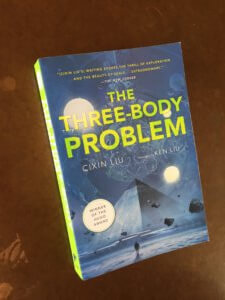
by Cixin Liu
Worthy of a Physics/Calculus Teacher’s Attention particularly high school and particularly for AP or IB Physics students
ALSO instructive for discussions in philosophy and ethics (see bottom paragraph)
High school physics instructors or calculus instructors…this novel would make a great summer reading assignment before your class begins in the Fall. One, the story is entertaining. Two, the story portrays historically some of the greatest physicists to walk planet Earth. Three, The Three Body Problem itself, the actual physics problem, this engages the physicist’s and the mathematician’s mind, Newtonian physics and all that jazz…Not that I understand it all, but I believe these the guys who write on the website: askamathematician.com. The excerpt below is from their website
The Three Body Problem is to exactly solve for the motions of three (or more) bodies interacting through an inverse square force (which includes gravitational and electrical attraction).
The problem with the 3-body problem is that it can’t be done, except in a very small set of frankly goofy scenarios (like identical planets following identical orbits).
The unsolvability of the 3-body problem, rather than being an embarrassing hole in physics, an obvious but unsolved problem, is actually the norm. In physics, the number of not-baby-simple, exactly solvable problems can be counted on the fingers of one hand (that’s missing some fingers), and that includes the 2-body problem.
The dynamics of one body is pretty straight forward, in as much as it travels straight forward.
The dynamics of two bodies, while not trivial, can be reduced by pretending that one body is sitting still, and then restricting all of your attention to the other body. Using that technique, you find (or, at least, Newton found) that the motion of a body under gravity is an ellipse. The same idea can be applied to the quantum mechanics of electrons and protons to find the exact structure of the electron shells in hydrogen (1 proton + 1 electron = 2 bodies). In that case you’re not talking about actual orbits, but the idea is similar.
But, for three bodies, there doesn’t seem to be a fancy trick for finding solutions. As a result, the exact behavior of 3 or more bodies can’t be written down. The exact energy levels and orbital shell shapes in anything other than hydrogen is impossible to find. Even deuterium (hydrogen with one extra neutron)! Can’t be done.
Despite that, we do alright, and happily, reality doesn’t concern itself with doing math, it just kinda “does”. For example, quantum field theory, despite being the most accurate theory that ever there was, never involves exactly solving anything. Once a physicist gets a hold of all the appropriate equations and a big computer, they can start approximating things. With enough computing power and time, these approximations can be made amazingly good. Computer simulation and approximation is a whole science unto itself.
The main actors in THE THREE BODY PROBLEM are almost all physicists and/or mathematicians and they’re nerdy, but not dweebs. Read chapter 5, A Game of Pool if you want a taste of what the novel offers. Then, there is the virtual reality, which unfolds as a puzzle/game and is played often by nanotechnology researcher, Wang Miao. Wang is compelled to understand the mystery introduced in the early chapters of the novel and realizes that the game is key to the revelation he seeks. In the game world, Wang walks through the history of physics with virtual characters like Confucius (our earliest physicists were primarily philosophers…a helpful connection for students to make), Newton and Einstein. Trisolara happens to be grappling with the three body problem. It is a planet in a solar system where there are three suns. The game players, along with the philosophers and physicists throughout history try again and again, in a systematic way, to solve the problem of the planet’s impending destruction. To go through each game level, Wang encounters physicists who have furthered the thinking regarding the problem. It’s like taking a course called The Intro to Physics…all this learning while the reader hurtles toward the big reveal at the end of the novel. Ah…to be entertained while learning…tis a wonderful thing. At the very least, THE THREE BODY PROBLEM ought to raise the curiosity level of your students and give them a glimpse of the relevance of physics and math to their everyday lives.
For the ethicist/philosopher, THE THREE BODY PROBLEM raises interesting issues about elites thinking they know best for all. The Cultural Revolution in China drives the narrative in the early chapters. Many elites are driven out of their positions of authority, killed or exiled by the communist party as it takes power. The author calls this a madness. (Chapter 1’s title is: The Madness Years). However, within the communist party, a new breed of elites rise to the top. Later, toward the final chapters of the novel, a group of environmental activists, along with men and women Liu specifies as elites across the globe, use their power to set in motion what they hope will be Earth’s salvation (knowing that saving the planet may come at the expense of most or all human lives). This small group of people have become judge, jury and executioner for humanity. Moreover, their hope for saving the Earth might not evolve the way they imagine. The stage is set for a discussion about power, elitism, environmental degradation and what might be ways to stem our self-destructive/planet-destroying tendencies.
To read a No-Spoiler review of this novel, click THREE BODY PROBLEM, Book Review
To buy THE THREE BODY PROBLEM, click here.
FEED, For Educators
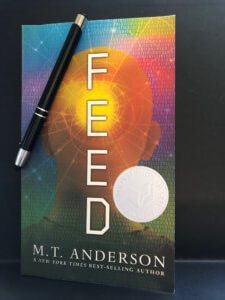
Discussion Questions for Educators
Appropriate for Middle Schoolers and High Schoolers
What a potent book and an important topic. If you are an educator, please assign this short novel to your kids. I have tested it on more than a few middle and high schoolers and they liked it, even felt captivated by it and knew there was truth in the story that they needed to pay attention to.
Five discussion questions for your students
- How is the feed similar to the way we connect to our devices?
- How is the feed different from the way we connect to our devices?
- How would you describe Titus and his friends?
- How would you describe Violet?
- Who is more of a hero? Violet or Titus? Explain why…
To read a no spoiler review of the novel, click here.
To buy, FEED, click here.
FEED, A No Spoiler Book Review
 Feed
Feed
By M.T. Anderson

A Book Review Without Spoilers
My daughter took a Dystopian Young Adult Literature class at her university a few years back. She took it for fun because though she was an architecture student, she loved to read fantasy, science or dystopian fiction. FEED was on the syllabus and after reading it for class, she handed it to me. “Mom, you have to read this book.”
When your kid hands you a book with that recommendation, you ought to respond, so I began to read…The first line of this novel grabbed me. It has to be one of the best EVER in the history of YA or scifi…
We went to the moon to have fun, but the moon turned out to completely suck.
However, after that first line, I almost didn’t make it past the first chapter. The narrator grated on me. The story is told from the first person point of view of a spoiled and entitled older teen male. Initially, I wasn’t sure I wanted to read his story, but I kept on, finding a glimmer of hope for this character as I pushed through my angst. I saw how MT Anderson was using this vantage point to get under my skin…after all, much of the western world falls into the category of entitled, wealthy and spoiled. I decided that rather than distancing myself from this character, I ought to learn from his journey.
FEED is mostly a YA dystopian novel, but spills over into science fiction because of the futuristic tech and those initial scenes on the moon.
In recent months, I have recommended this story to more people than any other book I have read in the last 10 years. Why? FEED is good enough to hand over to a 13-year-old and a 52-year-old and if you are a parent, please read it and discuss it with your teen. Talk honestly about how we are connected to our devices.
FEED projects a future where children are connected to the web via the brain at a very early age. In the story world, the connection is called the feed. The practical science of how this takes place is never detailed, but it becomes clear that those with the feed maintain major economic, educational and social advantages. The story also shows the consequences of our planet devastated by greed and consumption. Oceans are dead, meat is genetically grown without the need for an actual animal and those who have money spend it on pure entertainment.
Titus, the teen protagonist and the narrator, lives at the top of this food chain. Initially, Titus seems utterly narcissistic. He and his friends battle boredom by pursuing short bursts of entertainment in whatever form available (almost always for purchase and provided by the feed). Titus slowly emerges as a deeper character, as someone hoping for authentic intimacy and friendship. Within his social class, it seems there are no guides to help him. Even his family is devoid of warmth and affection. For example, Titus never calls his little brother by his name, but refers to him throughout the story as Smellfactor. He treats his brother as an object of inconvenience, someone to ignore and avoid. Within Titus’ social circle, there is every indication that his family is normal.
While on the Moon, Titus meets Violet. Initially, physical attraction drives his desire to be with her, but when an event disconnects Titus, his group of his friends and Violet from the feed for a few hours, their bond takes on a deeper hue. Violet is not from his social class and was not connected to the feed at the earliest age possible. Her hippy, intellectual parents resisted putting the feed in her brain for as long as they were able, homeschooling her for a time (since education happens via the feed). As a result, Violet knows about the world in ways Titus and his friends don’t. She has developed critical thinking skills and keeps current on news, including the broad unrest that is taking place across the globe.
Violet isn’t lost without her feed like Titus. She asks questions, she makes observations, she opens Titus’ eyes to the way the feed manipulates, limits and traps those who are connected. Titus finds her views compelling and true, yet he resists her as well. Titus is less of a hero than we might hope, but he does attempt in his own way to move toward knowledge and depth. This makes for a potent story.
FEED poses so many questions that are worth asking. I won’t spoil the finale, but there is a poetic vision that lends itself to pondering and, as I said…a great discussion.
This book is a quick read. Do hand it out to your children and grandchildren. Do give it to your nieces and nephews. Do read it yourself, so you can draw out the conversation that needs to take place in our society…TODAY if not yesterday.
If you need questions for starting a discussion, see my post FEED, by M.T. Anderson Discussion Questions for Educators
To buy this amazing book, click here.