Multicultural Protagonists
SHIFT, Book Two of the SILO series, A No-Spoiler Review
SHIFT is book two in a trilogy, so beware of spoilers as you read this in regard to book one or in regard to the first season of the tv series. I may mention details that will spoil book one/season 1, so stop reading now and click on WOOL to read my review of book one of the SILO series. This novel, like the first is rated PG/PG-13.
SILO is currently showing on Apple tv+. You can view the first and second season now. I recommend the first season for sure, but am still wading through the second…it’s excellent so far, but I’ve only watched the first couple of episodes.
I’m guessing this series would make a great audiobook. It’s not so complex as a story, follows few characters and takes place primarily in the silo, a setting that becomes very familiar by the middle of book 1.

The Short Review: 4 Reasons I Recommend SHIFT
- If you liked WOOL and are curious about how the world fell apart and the silos were conceived of and created, you’ll want to read this novel. It contains a lot of backstory.
- While some questions are answered, there are many unknowns and therefore more page-turning tension
- This story follows two characters, two different narrative voices who so far have not met/do not interact. One of the characters was a peripheral character in WOOL and one is new (almost) to the reader.
- All the characters are flawed in different ways, but relatable and trying against many odds to do good…or at least to make things right
Note: If you loved Juliette as a character, know you’ll see very little of her in this novel, but based on how this book ends, I have the feeling she will take center stage again in book 3. It’s a guess, but an educated one.
The Longer Review:
The SILO series so far has been a fast read, despite the number of words. Don’t let size fool you. If you’re like me, you’ll be turning pages quickly and staying awake too late at night so you can figure out what is happening. Also, I skimmed less of the text in this novel, but still read it quickly.
Regarding the order in which you do this…reading first or viewing first, one thought: I watched the first season of SILO without knowing about the books. Once I posted my review, I did receive notes from some of you encouraging me to read the books. Just know, that the series follows the books very closely, so some of the tension and mystery (either when you read or when you watch) may be diminished because you will know in advance what takes place. It changes the experience a little, though I am determined to do both and realizing the tension will come one way or the other, either on the page or on the screen. I do like the combo though. I like seeing what the screenwriter chooses to put into the script, what to leave out, or what to change. So far the series SILO, has few deviations from the novels, but there is one BIG ONE. At the end of season 1 of the SILO series, Juliette has been sent out to clean and the audience does not know what will happen as she refuses to clean, then walks over a hill and disappears from sight.
It’s a perfect season-ending cliffhanger that the screenwriter exploits, so I don’t blame him for constructing the story in this way. However, in the novel, Juliette’s next hours and days are right there in the last chapters of WOOL. So…it could be strategic to watch season 1 and 2 on Apple+ before even reading the first book, WOOL. The mystery might be more satisfying that way.
Whatever, the case, the series is fun and I’m enjoying reading it. The writing is not perfect, but it’s perfect enough to engage me (and I’m really picky) and fan the flames of my imagination. I can’t comment on the overall themes and human story yet because I’m still figuring out what Hugh Howey is saying about humanity. Maybe the third novel will give me a window into his worldview.
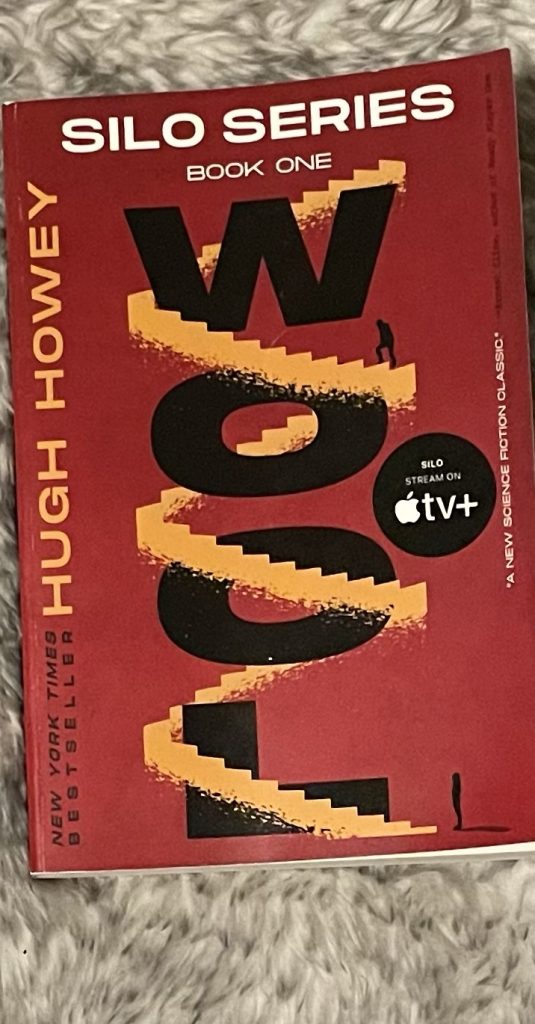
SILO, A Review of Novel #1
SILO is an Apple+ series that is about to release a second season. Recently, I began reading the novels. The first installment is called WOOL, and follows pretty closely the first season of the Apple+ version. This novel is rated PG-13 for adult themes. There is little or no explicit violence and no explicit sex scenes.
Hugh Howey first wrote this novel as a series of short stories/novellas. He put those stories together and indie published WOOL as a novel around 2012.
First, The Short No-Spoiler Review
Three reasons I recommend this novel, and one reservation:
- WOOL puts forward an interesting concept of post apocalyptic human existence that feels unique within the dystopian genre
- well-drawn characters overall
- enough mystery to keep the reader turning pages
My one reservation, some parts of this novel are too long and boring.
The Longer Review:
A potential issue with self-published novels is that the editing process is not well done. The author cannot afford to hire a top-notch editor and the consequence is either lots of typos or poor writing.
Overall, Howey did an amazing job self-publishing…could not find any typos, but he overwrote parts of the novel. As a reader, I sense this when I start skimming text. There is too much nitty gritty detail about everything that is transpiring. These are details the writer might need to know, but the reader does not. All that detail slows down the action, the excitement. In the worst case scenario, the reader stops reading. I did not stop reading because I actually cared about the characters and wanted to know the outcome of the story because Howey did not give me the answer to my questions until the end. So I needed to skim a few parts, but I did read until the final page.
Toward the end of the novel, when there are a couple of events that involve long scenes where I actually knew what the outcome would be, I skimmed the equivalent of about 50 pages of text.
I think most readers will know when they hit those sections. There is just too much detail and when the reader in essence already knows what is going to take place, we want to get to the next part of the action ASAP, so we skim. I have skimmed text while reading indie published novels, but I have also skimmed tradtionally published novels a few times. In theory, the great editor will catch these slow spots and help the writer edit them out. In practice, this is not always the case.
Regarding WOOL, the core of the story is good enough that most readers will overlook the overwritten parts. And the Apple+ TV people are certainly tightening everything up in a ways that is not boring. Season 2 just began (Jan of 2025)…and looks promising.
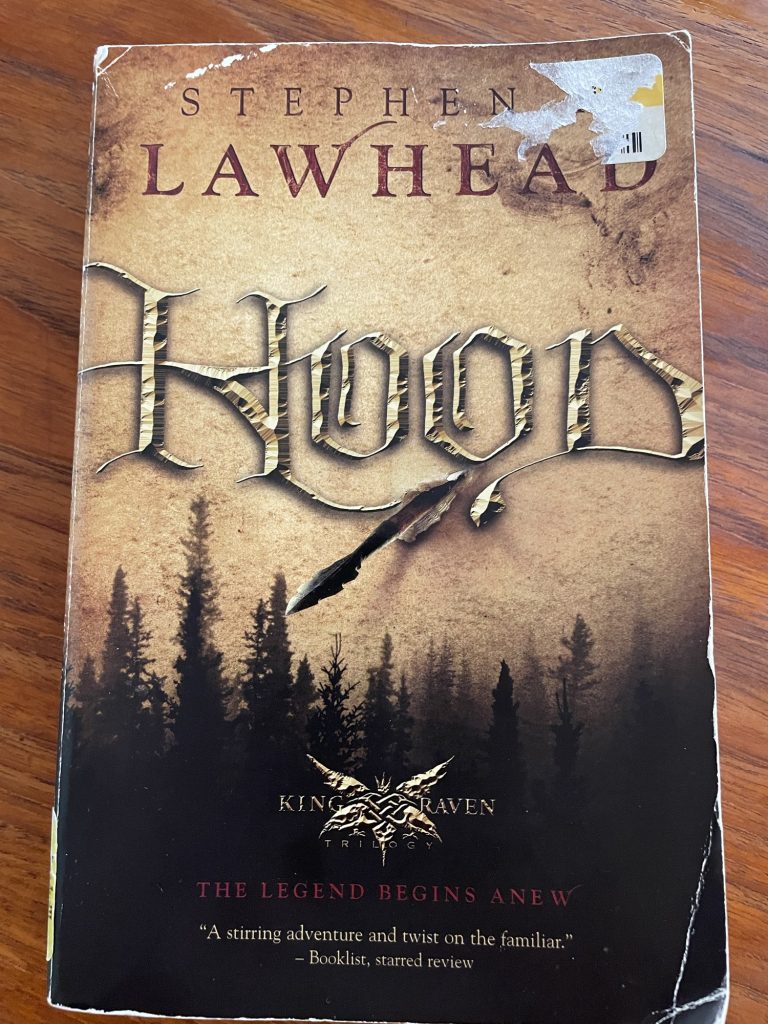
HOOD, by Stephen Lawhead, A No-Spoiler Review
Last fall, I needed to restock my Little Free Library, so headed to the local Goodwill to see what sci-fi, fantasy or dystopian fiction they had on hand. (My LFLibrary is filled with these genres only). I did find some great treasures, including this Stephen Lawhead book that I had never heard of. I began reading it sometime in the winter and got hooked. I knew of Lawhead because of reading the Pendragon Cycle sometime in my 20s. HOOD is book one in
HOOD is the first book in the King Raven Trilogy, a story that follows a character based on the Robin Hood myth/legend.
Short Review of HOOD
I highly recommend this novel. Here’s why:
- Stephen Lawhead (author of The Pendragon Cycle…a version of the Arthurian Legend) is an accomplished writer who knows how to capture the voice of medieval and pre-medieval Brits.
- His world-building feels rooted in history, authentic
- The language engages…everything from the quirky colloquialisms, to the names of characters
- The characters are well developed, even the evil ones, and draw you into their world of struggle and heroism
- Woven into the story are Christian themes and prayers, which some won’t like, but I absorbed as authentic
- Rated PG (for medieval violence, think swords and bow and arrow…but no graphic sex or sexual violence)
The Longer Review:
If you’re reading this novel, I recommend flipping to the back of the book and reading his essay: Robin Hood in Wales? It’s past the epilogue (don’t read the epilogue or you will spoil the story).
In this essay, Lawhead discusses why he sets HOOD in Wales, playing with the idea that the legend of Robin Hood had been around and circulating through the British Isles for a very long time before the general population associated him with Sherwood Forest. Here is a bit of that essay:
It will seem strange to many readers, and perhaps even perverse, to take Robin Hood out of Sherwood Forest and relocate him in Wales; worse still to remove all trace of Englishness, set his story in the eleventh century, and recast the honourable outlaw as an early British freedom fighter. My contention is that although in Nottingham, the Robin Hood legends found good soil in which to grow, they must surely have originated elsewhere.
The character we now know as Robin Hood can be traced as far back as the early 1260s. By 1350, the Robin Hood legends were well-known, if somewhat various, consisting of a loose aggregation of poems and songs plied by the troubadours and minstrels of the day. These poems and songs bore little relation to one another. The first written references to and carried titles such as “Robin Hood and the Potter,” “Robin Hood’s Chase,” “Robin Hood and the Bishop of Hereford,” “the Jolly Pinder of Wakefield,” The “Noble Fisherman,” “Robins Whood Turned Hermit”…
So, Lawhead poses the possibility that Robin Hood (or Rhi Bran Hud, as he is called by his Norman enemies) is a deposed Prince/King who is rallying his people to push back against the Norman Invasion? He fights a guerilla war with long bows and hides in the wild forests of the March, attacking and tormenting the French who cannot defeat this clever and courageous rival.
A comment about the Christian themes in this novel. The church and state are intermingled throughout Europe during this time in history. The Norman Kings are closely aligned with church. In 800 CE, Charlamagne is crowned by the pope as the Holy Roman Emperor. Kings are seen and dubbed as God’s holy vessels to lead the people. The church holds much power in this system and therefore becomes the vehicle for distributing blessing but also horrible injustice. Lawhead has been careful to look at source material as he weaves church and state together in his books. He also doesn’t sugarcoat the evil that was perpetrated by the church.
If you can enter into the world Lawhead has created and withhold judgment, realizing how different most of Europe was from the Post-Modern West, you can begin to understand something of the mindset of those who lived in this time period. Why did kings, for example, pay the church from their own treasury to atone for their sin of killing enemy soldiers and potentially damning them to hell? Why did priests go out with fighters to give them last rites before a battle? Reading Lawhead will put some of these questions into context. The link between the church and the king cannot be understated in a book that is attempting to portray authentic medieval culture.
Therefore, when I read HOOD I felt like I was reading historical fiction. It’s a kind of escape into fantasy, but not quite. Lawhead is so fluent in the language and history of this time period in Britain, that he transported me back a thousand years. This is an aspect of world-building that felt extremely enjoyable to me, which is why I recommend this book to readers of all ages.
RED MARS, by Kim Stanley Robinson, A No-Spoiler Review of the Classic Scifi Novel
The Short Review
5 reasons RED MARS is a must-read for the scifi fanatic and anyone remotely interested in planetary geology:
- RED MARS is a KSRobinson classic, published in 1992 and winner of the Nebula and the first of his acclaimed Mars Trilogy
- The story imagines life on Mars in a way that feels scientifically viable and compelling, therefore relevant to the current and growing conversation around Mars exploration
- Scientists are the narrators of this story. They are also the heroes, sometimes the villains, the problem solvers and the work horses. I was especially drawn to the “builder” character, Nadia
- The planetary geology content, naturally integrated into the story, is breathtakingly fun
- Despite being over 170K words long, KSR does not get bogged down in the “how would that ever be possible” science scenarios, but drives the story forward through characters and the politics that pressure a budding Martian community

The Longer Review
RED MARS tells the story of the first 100 scientists sent to Mars by a multi-national Earth entity called UNOMA, United Nations of Martian Affairs. The story PG-13 (for some sexual content) follows about 10 of those scientists closely, though many others are referred to and are part of the action in direct and indirect ways. The novel is broken up into eight parts and each of the parts has a different primary narrator. I do think Robinson’s choice on point of view works in a novel this long, adding a level of complexity and depth to the very audacious idea that Mars might be “tamed” by human beings. Robinson plays with themes around the idea that really smart people might be able to build a better civilization from scratch, and form some kind of utopia, but does not make the task easy on the idealogues within his story.
Various characters, all of whom are scientists in one discipline or another, give voice to ideas of alternative governing and living environments. The sharing of abundant resources is the initial reality for the first 100, but eventually, when new groups arrive on Mars, the corporations who have funded the exploration and building, come calling for the planet’s vast natural resources.
The conflict that arises is somewhat predictable and draws out the best and worst of the people in charge who are trying to manage a fragile, but quickly expanding human presence on Mars.
Meanwhile, Earth is falling into total chaos. Robinson does not spend any time showing the reader Earth itself, but shows it via news stories viewed by the inhabitants of Mars. Earth’s chaos is also a reason why many thousands of migrants are streaming to the new world. Robinson does lean left in his politics (proudly so) and sees corporate giants as the villain, though the villain is also amorphous in the story. Robinson’s ideas don’t come across as preachy to me. He’s a deep thinker and a thoughtful writer, so he understands the grittiness of governing and the probable impossibility of building that utopia even if one does start with 100 brilliant scientists.
Many science fiction readers will not mind the length of RED MARS, but at times, I confess to being a bit bored and wondered…Where is this story going? However, I did stick it out and the payoff was decent. It stands alone as a novel, without the kind of cliffhangers that drive you to the second book. Will I read the next two books in the trilogy? Probably yes, but not this summer.
OKJA, Your Next Family Movie Night? My No-Spoiler Review
OKJA, directed by Bong Joon-ho, written by Joon-ho and Jon Ronson (from a story by Joon-ho) is yet another example of Korean film genius. This film is set in a speculative future (despite the film’s timestamp of 2007)…the scifi aspects of the story have to do with genetics. First, the short review.
6 Reasons OKJA Will Delight
- Streamable for free on Netflix, family friendly (I would rate it PG-13 for violence)
- Although there are Korean characters who only speak Korean (therefore, yes, you’ll have to read subtitles), much of this film is either visual narrative or the characters speak English
- Action-packed
- Funny and Heart-warming (the creature created for this film is cute and compelling)
- Thoughtful perspective on the food industrial complex
- With the child protagonist on a grand chase/adventure and with compassion at its core, this story feels like Studio Ghibli in all the best ways

Longer Review
Lately, when I look for something interesting and fun to watch, I gravitate toward Korean filmmakers. Why? They are some of the best storytellers around and Netflix is committed to working with them/putting their work out to the broadest audience. Moreover, Korean filmmakers don’t seem fixated on US/European political issues, which bore me these days. OKJA does touch on the industrial food complex…a global reality that is political. In particular, OKJA explores how meat is produced and processed for broad human consumption. But don’t let that stop you from watching this interesting and entertaining film. I think the questions that arise from the film are worth thinking about for every person on Earth, whether a vegetarian, vegan, or an omnivore. Kids watching this will also feel the implications of our “appetites”. It’s not a bad thing to help our youth understand that meat actually comes from creatures who live on this Earth with and among us. That’s a worthy conversation to have with our future leaders who will likely make choices for all of us about how we are to care for planet and creatures.

With an all-star cast, both Korean and US born actors inhabit this film. Stars like Tilda Swinton, Steven Yuen (The Walking Dead, Minari, Nope), Paul Dano (Little Miss Sunshine, The Batman, The Fabelmans), Yoon Je-moon (The Man Nextdoor), and Jake Gyllenhaal (Nightcrawler, Donny Darko) inhabit this universe. The protagonist, Korean actress Ahn Seo-hyun, is fantastic as the stoic caretaker of OKJA. She is the studio Ghibli-styled determined child who will not give up on her friend. This story is as much about loyalty and friendship as it is about food politics. I loved OKJA and I hope your family does too.

Tales of the Walking Dead: EVIE/JOE, A No-Spoiler Review
4 Reasons I recommend EVIE/JOE, The Short Review
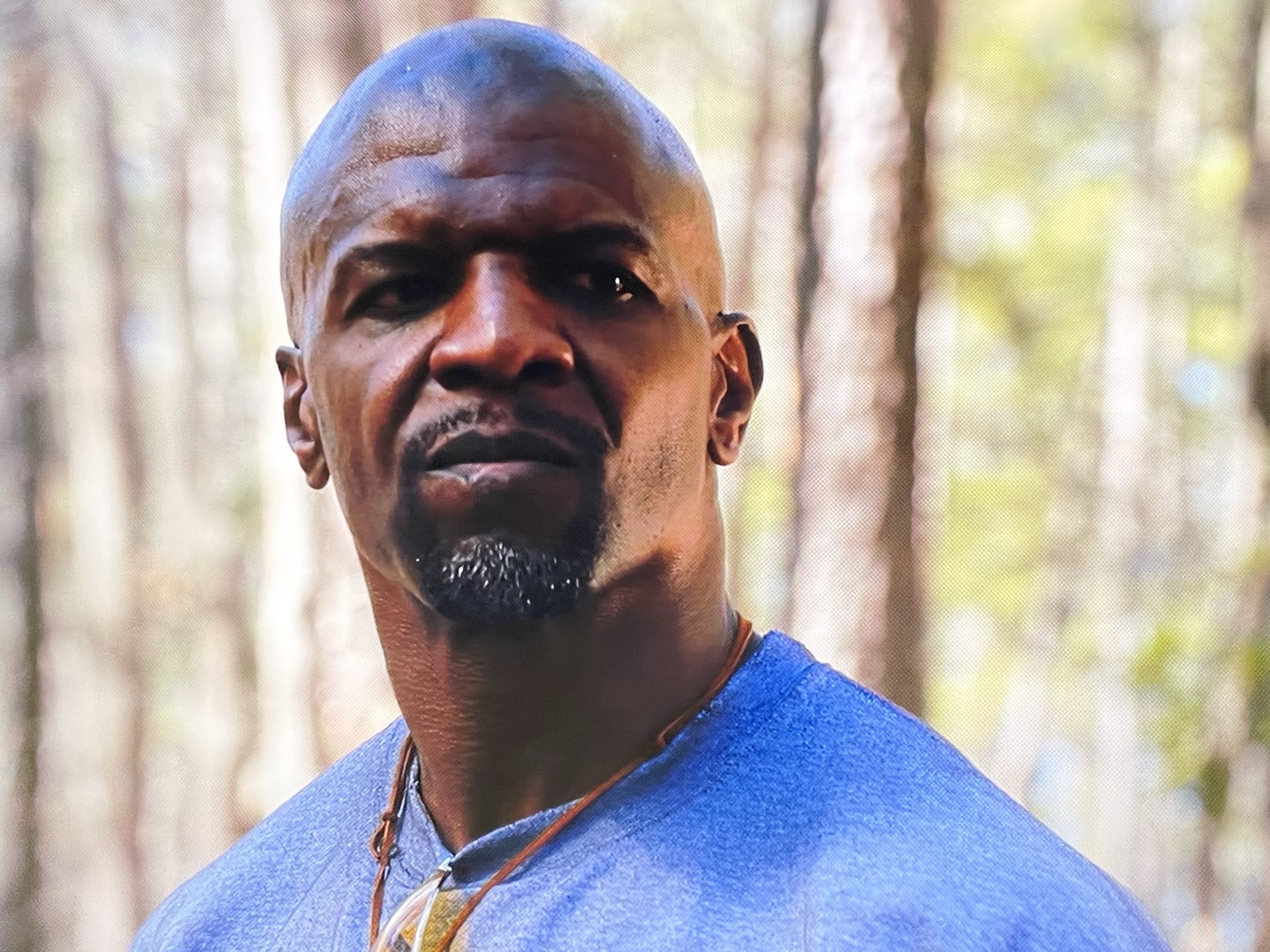
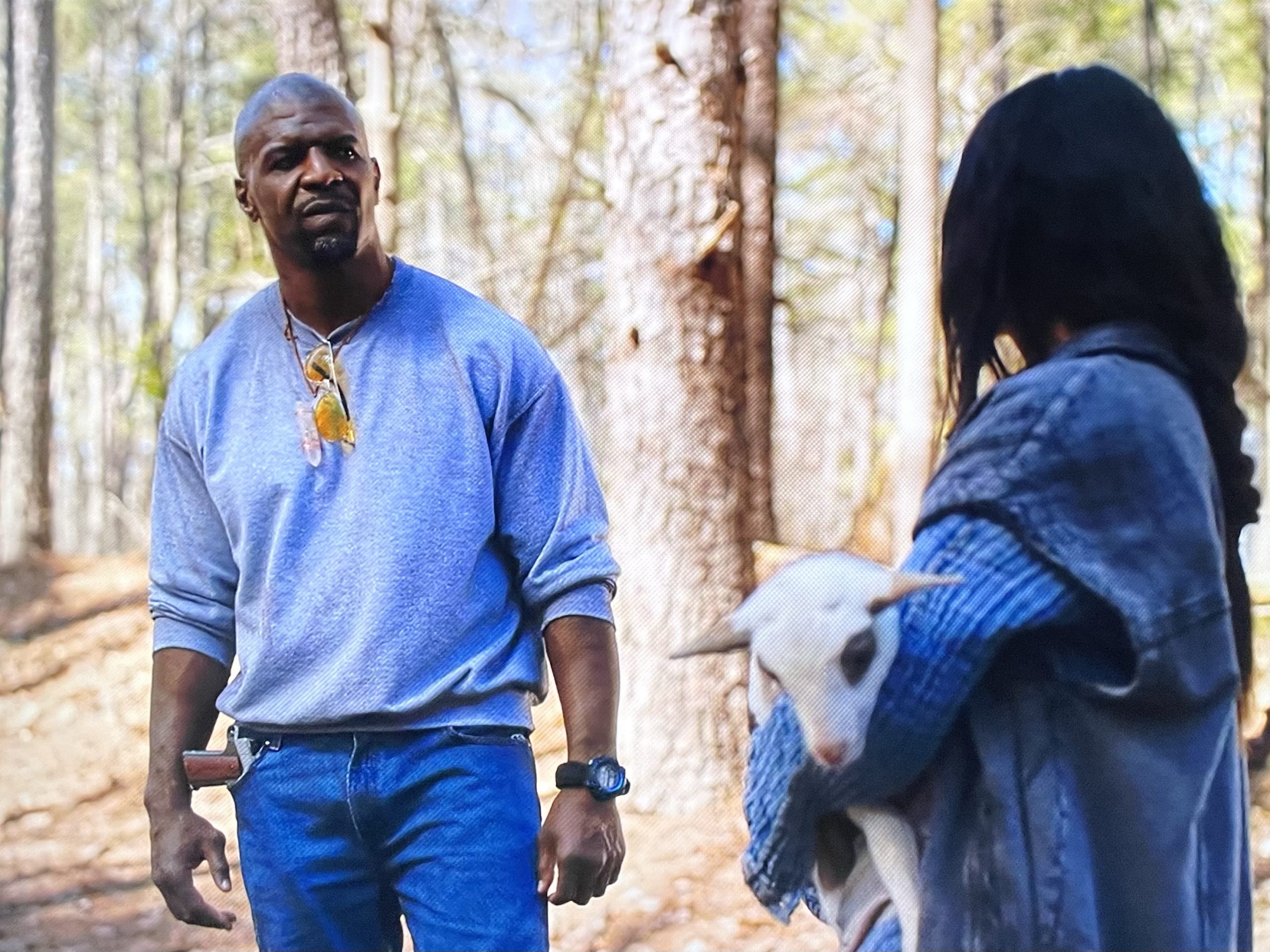
EVIE/JOE is first installment of The Walking Dead’s anthology series: Tales of the Walking Dead. Basically all of these tales will be in short-form, focusing on different characters each time, contained in one 45ish minute episode. EVIE/JOE is set in The Walking Dead universe which means there is a lot of gore, so consider this a PG-13 or R-rated flick. It’s not for everyone! You can watch this for free on Amazon Prime and possibly YouTube TV…still figuring that out.
I loved this short, but I love zombie films/stories and maintain a special fondness for The Walking Dead version of a post-zombie reality. Why might you want to watch?
- Believable and likeable characters (played by actors, Olivia Munn and Terry Crews)
- Well-done shorts like this must be targeted in its “one thing” it tries to do well and this short succeeded in doing that
- A familiar world, where context needs not be explained
- Decent tension and a surprising twist in the end
The Longer Review
First, I’ll say a little about the short form. There are a few reasons I appreciate shorts like EVIE/JOE. One is that I find it pleasurable to see a story, beginning, middle and end in one sitting. As a kid I loved The Twilight Zone for this reason. Second, the short form forces the story-teller to focus. My family members have heard me complain many times about a number of the more recent Marvel Universe films when there are way too many characters to properly give them all meaningful story arcs with the overall effect feeling flat and superficial (and for me, unsatisfying). There are three characters in this story. Four, if you count the dog. Third, the short form draws in amazing actors who want the chance to play a different/unique character but without the huge commitment of the series actor, who has to put the rest of his/her acting career on hold while the series is ongoing. This was an issue for Andrew Lincoln (Rick Grimes of The Walking Dead).
You could say the same about “guest” directors/writers. One short attracts very interesting directors and writers. I’m assuming some of these artists are fans of TWD universe but see room to add to that universe. Their vision can be surprising and wonderful.
EVIE/JOE begins with Joe, a survivalist living alone with his beloved Doberman. When the story opens, Joe is rewatching a football game. Civilization as we know it disappeared over a year before (see the carefully placed whiteboard in the first scene). Joe lives underground and seems to have enough electricity and food to stay happy and alive, but when his dog becomes lame, he must carry him up to the ground to go the bathroom and eventually, a group of zombies attack. The pup is bitten, dies and is buried by Joe. The subsequent flashes of Joe become increasingly depressing. A new level of suffering has entered into his life. Grief around his dog’s death and the reality that there is no one and nothing to really live for pushes him to venture out of his hole and seek another survivalist, someone he had contacted at a date when communication outside his hole was possible. That is when he meets Evie.

Their relationship becomes the focal point and draws out the true characters of them both. Both are lonely. Both are searching. There is a question about whether or not they will trust each other and whether or not they will succeed in finding what they most hope for. Evie is a hippy, who learned how to survive. Joe is a true survivalist. Their banter is funny and revealing.
It’s pleasurable to see a new setting here as well (in regards to The Walking Dead). This is the Upper Midwest, primarily Ohio and Michigan. There is evidence of survivors and evidence of death. The zombies aren’t the primary threat, but they’re around. As the audience learns pretty quickly in The Walking Dead universe, the zombies are way less scary than the hyper-terrified humans. This story is consistent on that front.
Eventually, there is an ultimate choice…choosing sides, choosing to trust or not trust and there is a moment of facing death. EVIE/JOE will not disappoint if this is the humanity you’re looking for.
FOR ALL MANKIND, A No Spoiler Review
Apple Plus released its third season of FOR ALL MANKIND this month. I have not viewed any of the 3rd season but I did watch all of 1 and 2 and loved them. What follows will be the short review and a longer review of season 1 and 2. If you’re convinced by the short review…start watching now. If you need a little more data, the longer review will give you a better idea of why this many hours of consumption might be worth your time. The show is rated R for a few racy sex scenes, but if your young person can handle that, the education piece is interesting. A bit of history can be etched out or explained as some of the “alternative” version comes across the screen. It’s portrayal of communist USSR rings true. It also captures something of the spirit of the age for each decade, especially the urgency around the space race of the 1960s.

The Short Review: 6 Reasons I Recommend FOR ALL MANKIND
- If you love alternative history narratives like The Man in the High Castle, you will appreciate this story
- If you love nostalgia settings and music, think Stranger Things, you will love being immersed in this story-world, which starts in the 1960s, but spans decades.
- Most of us appreciate great casting. FOR ALL MANKIND will not disappoint
- Top-notch production value, this includes the writing, the special effects and the acting
- Good pacing. A lot of action, drama and tension throughout
- A thoughtful story. A sprinkling of social commentary for our current time…some of that commentary I liked, some I felt was contrived, but the ideas are worthy of our attention
The Longer Review: (this review contains a couple of small spoilers)
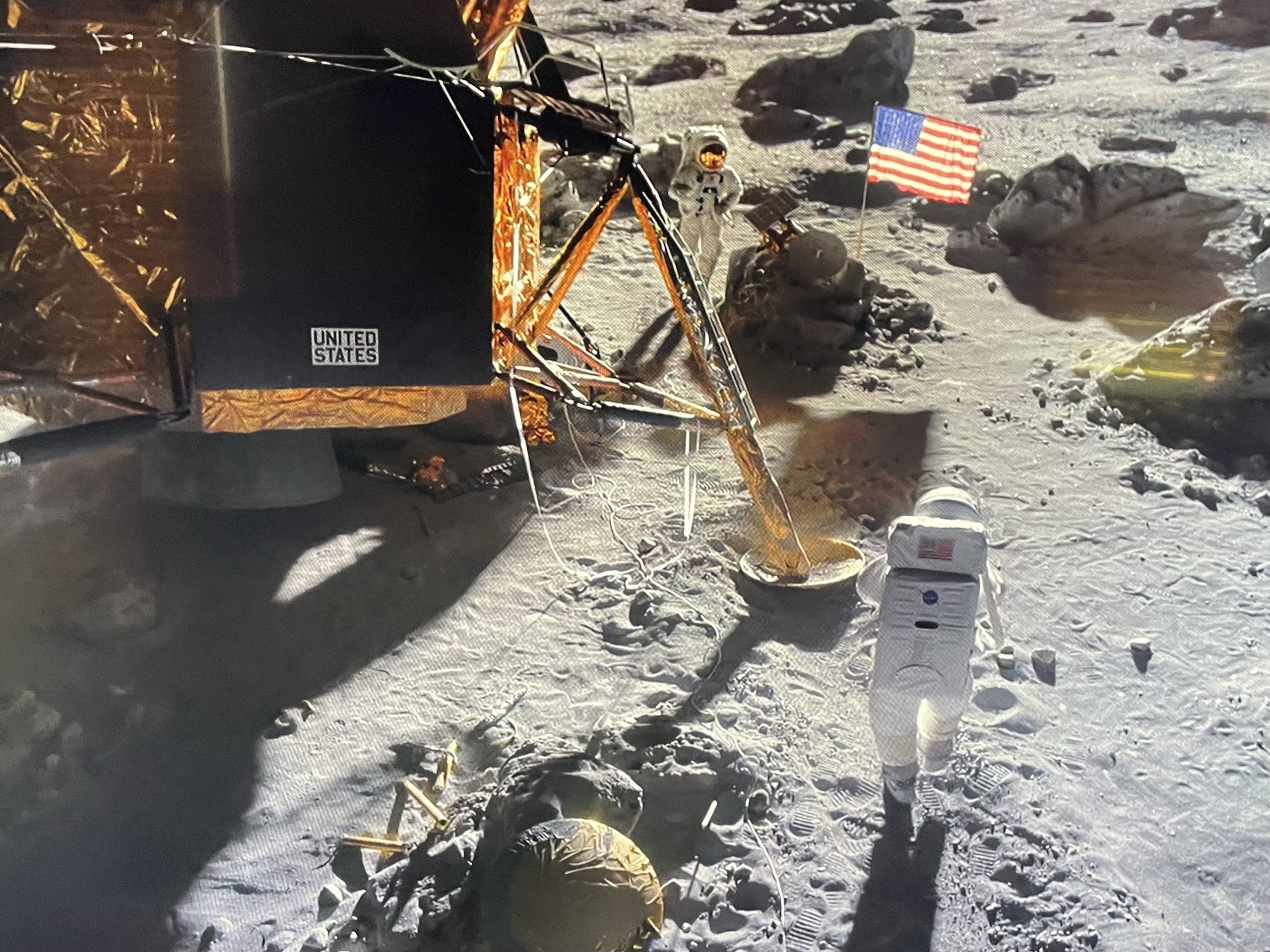
The USSR and the US are in a space race in this alternative history, set during the cold war. The USSR has landed on the moon first, claimed it as territory, and has aims to build a military compound. This traumatizes the US as a nation. The first episode captures the feeling well as it feels like a gut-punch watching the Soviet flag raised on the moon and hearing the first words of the Russian Cosmonaut as he takes the first steps…The Walter Cronkite figure on the television news reports as follows:
The first man to set foot on the moon spoke just moments ago. “I take this step for my country, for my people, and for the Marxist-Leninist way of life. Knowing that today is but one small step on a journey that someday will take us all to the stars.”
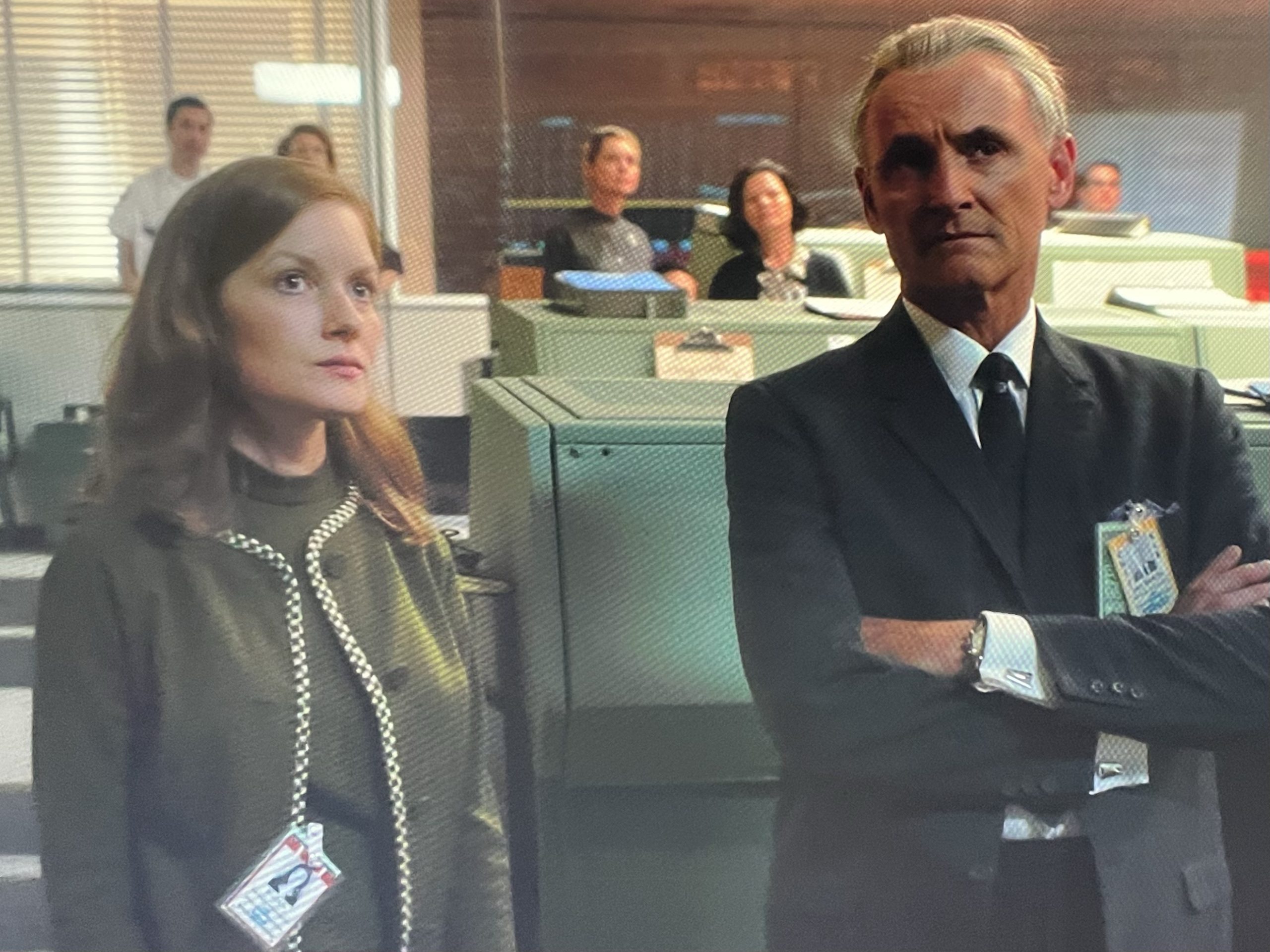
FOR ALL MANKIND was created by Ronald D. Moore (Battlestar Galactica, Star Trek and Outlander), Matt Wolpert and Ben Nedivi. They take the “what if Russia had landed on the moon before we did” scenario and create a similar history to our own, but with differences that intrigue. The writers, I surmise, are progressive in their leanings because progressive values make their way into the script and into a historically white male dominated NASA long before reality. Sometimes, it feels heavy-handed, like the writers are checking the boxes of gender and racial diversity. However, the results do make for a delightfully diverse cast.
In episode 1, the audience meets Margo Madison (pictured above, played by Wrenn Schmidt) at the beginning point of her NASA career where she is the only woman in the male dominated control center. By season 2, she emerges as NASA’s head.
By the finale of season 2, women, a couple of non-binary individuals (though they keep their gender preferences a secret), African Americans and even a Mexican female immigrant who came over the border illegally as a child, are recruited by the NASA of FOR ALL MANKIND. And who can say it might not have been this way had the US felt the pressure of its failure to land first on the moon? Also, the Soviets promote the first female astronaut, shaming the US for its lack of representation.

Joel Kinnaman as Ed Baldwin
All the characters are well-drawn and most are courageous and longsuffering in various ways. Joel Kinnaman (The Killing, Hanna and Altered Carbon) plays Ed Baldwin, an astronaut with a big mouth who in a drunken state reveals to a reporter how NASA lost the space race because of an aversion to risk. He is punished for the reveal (taken off astronaut duty and given a desk job), but his words capture NASA’s very real dilemma. In order to stay equal to, or to get ahead of the USSR, risks will have to be taken. Many characters of significance will lose their lives to achieve the elusive prize of space dominance.
This is where the series gives commentary on current society as it poses the questions that plague our century…Who will dominate the future? US and free societies (in general) have dominated the global order since WWII, but that prize came at a great cost to many of our ancestors. We have inherited something hard fought, but that inheritance is being challenged and chipped away by those who see themselves as more deserving of dominance…and perhaps they are, but some moments in history, even national failures, have the capacity to motivate a new generation of warriors. That message shines through in FOR ALL MANKIND.
THE SILENT SEA, More Brilliance From the Korean Film Industry, A No-Spoiler Review of the Netflix Miniseries
First, the Short Review
6 Reasons I Recommend THE SILENT SEA
- Beautiful production overall, including visuals that underlie the creepy vibe
- Featured a number of my favorite Korean actors, a few you might recognize if Squid Game was on your watch list this past year
- Plenty tension and surprises/frights
- A number of science fiction and haunted house tropes embedded in the story and various characters (see more in longer review)
- The relationships and particularly, the relationship to authority feel authentically Korean. (also, see longer review)
- You know I love the miniseries genre, 1-hour installments of great storytelling that comes to a conclusion without an agonizing cliffhanger
Longer Review
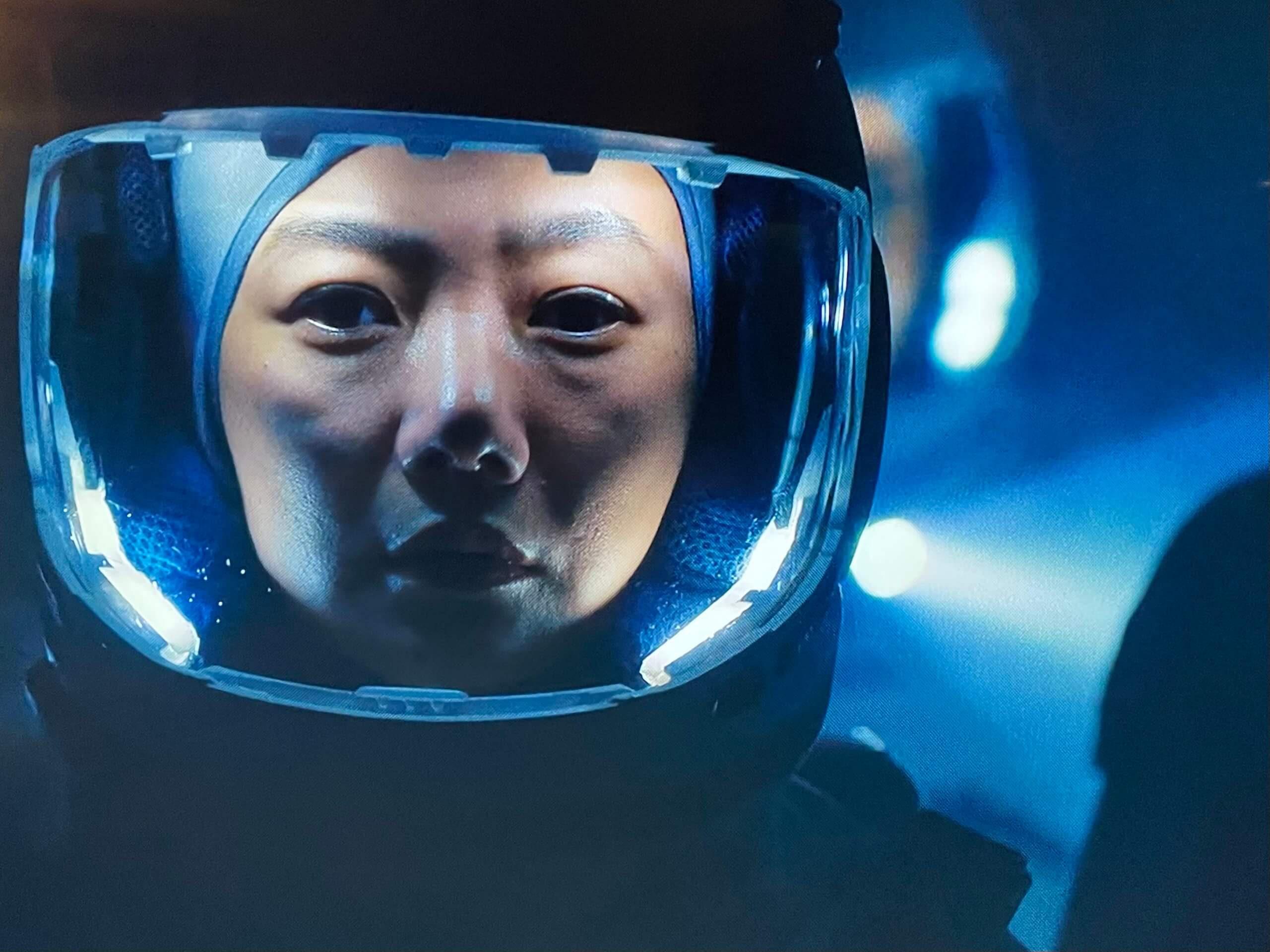
SILENT SEA is the story about a mission to the moon to find water. I rate this series PG-13. No sexual content in this production, but there are dead bodies, and some gore. Family-friendly if your teens are mature. It’s a fun, suspenseful ride.
The first episode quickly gives the viewer the high stakes for this mission. Drought has plagued the Earth. Water is the resource most valuable and due to its scarcity, the planet has become a wasteland. Water is rationed to such a degree, many have suffered physically, billions have died. The wealthy nations have gone into space to find a water source. Most abandoned the idea of finding water on the moon after searching, but the South Korean government kept snooping. There has been a top-secret program at a large moon station that was believed to have borne fruit, but suddenly…the experiment falters. Everyone dies all at once on the moon station. The earthbound directors, including Heo Sung-tae (pictured near end of review) initiate another mission to go to the station and investigate the truth, but secrets pulse underneath the surface of this mission and become one aspect of tension in the story. The authorities hold their cards close and the military and science leaders do not push back, though they suspect something fishy. This may or may not be an aspect of Korean-specific deference to authority, but the screenwriter exploits what I understand as deference in a way that serves the story. Also, this is where the nuanced acting plays such a powerful role in the unfolding of the narrative. The audience can see in the face of Bae Doona, the slight suggestion of twitch, a blink, a stern jaw…we see it, but barely and it helps us know that she understands that she is being deceived. Yet, in most of the outward behavior, she acts the true soldier. Doona is great at this nuanced acting, but she’s just one, among a number of these performers, who pull off such nuance. In my mind, THE SILENT SEA showcases superb writing and better acting than Squid Game. Click for a review of Squid Game

Once the mission lands on the moon, what unfolds reminded me of Ridley Scott’s Alien, in all the best ways. Yes, there will be corpses, tunnels, darkness, betrayals, a terrible and contagious sickness, but there will be one character who keeps her eyes on the prize. Dr. Song (Bae Doona) is intent on discovering the truth. In part, she seeks the truth because her sister is one of the corpses and the holder of many of the secrets. Doona as Dr. Song, pictured above, is a female lead in the Korean zombie series, Kingdom. To see my review of Kingdom, click here

I beat this drum a lot but I do feel that Netflix streaming continues to find the best international productions and when it comes to science fiction, the Korean film/media community is putting out a lot of great product. Produced by Jung Woo-sung, directed by Choi Hang-Yong, who deftly handles the brilliant storytelling of screenwriter, Eun-Kyoi Park. Honestly, I think I could teach a five-hour course on writing with this series, moving scene by scene through the screenplay, in terms of a classic sci-fi thriller. Fun fact, this story (as did Scott’s Alien), closely follows the haunted house template. That means there are a few predictable tropes. The audience knows that the mission is doomed (at least the mission as it was originally conceived) as one by one, the team gets whittled down. Who will remain in the end…that is what the audience wonders. Regarding the various characters, the majority of them hold their own, each having his/her own arc, including the wise-cracking military scrub who just wants to go home…a longing the audience suspects will not be realized.

I highly recommend. THE SILENT SEA, and suspect that Netflix now has me pegged in its algorithm as a person who loves Korean-produced thrillers/sci-fi. I might need to give the Koreans their own category on my site. The product is so good, I can’t stop watching and when I watch, I always review.
STATION ELEVEN, A No-Spoiler Review

Himesh Patel as Jeeven
Last week, a few members of my family watched all ten episodes of STATION ELEVEN. This HBO Max miniseries is based on a novel by Canadian author, Emily St. John Mandel.
As a dystopian story, this series pleased all of us, different generations and genders. I rate it PG or PG13. The topic is challenging, but the people in STATION ELEVEN are not vile or overly violent…not much gore or explicit sexual content to worry parents…however, the subject matter is sophisticated, a web of relationships. It’s family-friendly with mature teens and if your kid is a drama-geek, they will LOVE this show.
First, My Short Review: 6 Reasons I recommend STATION ELEVEN
- The storyteller uses a familiar trope, a world destroyed by a deadly and contagious flu, but delivers an unexpected cast of characters, as well as a post apocalyptic vision of hope
- The angle on “life-after-the-fall-of-civilization” captures something both historic and literary in how human beings find meaning in the broken world they inhabit
- The characters shine and fail, change and surprise
- A fun cast as ethnically diverse as it comes, and without stereotyping
- The city of Chicago or the wilds around Lake Michigan are featured in just about every episode…and that felt refreshing. Granted, I now live in the Upper Midwest, but new settings other than NY and LA are a welcome television treat
- STATION ELEVEN is self contained as a miniseries. Watch all 10 episodes and you have a complete experience…I like that.

Mackenzie Davis as Adult Kirsten
The Longer Review
STATION ELEVEN, the miniseries, is based on a novel I have not read. One scifi-reader friend told me he found that novel difficult to “get into” as a book. He felt impatient with it, complaining how it took too long to get to the dystopian world scenario. He was bored by all of the setup and character development that took place before the prime action. That feedback makes me curious to read the novel and then analyze how Peter Sommerville’s screenplay adaptation made adjustments because I did not feel this while watching STATION ELEVEN. The first episode features the unraveling of the world and the tensions inherent in societal breakdown. It focuses on two main characters: Kirsten and Jeeven, a young actress and the man who winds up becoming her caretaker. The subsequent episodes put forward backstory that help build the world and the complex web of relationships. But…I cannot say that the initial story in episode 1 bored me in any way.
Following a traumatic event at a Chicago theater performance of King Lear, Jeeven (an audience member at the theater) is warned by his sister, a doctor on the front lines of the flu pandemic, to get to a market, buy food and make his way to their brother’s high rise apartment. Kirsten, who is a young actress in the play, tags along with him. Jeeven tries to take her home but is unable to locate her parents, so he takes her with him to a market and buys six grocery carts full of food. Together, they push those carts to Frank’s apartment complex, load them on the utility elevator and end up safe with Frank (for a while) as the rest of society crumbles around them. Technology fails, little by little, including their electricity. There is little contact with the outside world. Kirsten entertains herself by disappearing into the world of a graphic novel called Station Eleven. She begins to write a play based on the novel…a book written by Miranda Carroll (Danielle Deadwyler) the ex-wife of Kirsten’s acting mentor, Arthur Leander (played by Gael García Bernal). Leander is a key character in the threads of this story, despite the fact that he is one who collapses and dies on stage while playing Lear in the first minutes of the series.
Jeeven, Frank and Kirsten do not fall to the flu. They stay safe and relatively well-fed in the apartment despite freezing temperatures. However, their haven doesn’t last forever and eventually, the author exploits this trope; the survivors must leave their haven and brave the outside world.

Matilda Lawler plays the Young Kirsten
In this next section of the story, Kirsten finds her way to a shakespearean acting troupe. They become her new family. The drama troupe travels around Lake Michigan in the warmer months, performing among other plays, Hamlet. This is one of the surprising twists in the post-pandemic dystopia, to put forward the idea that the arts will continue and be celebrated by many despite how raw life has become for survivors. You will have to watch to find out what happens to Jeeven and Frank. The two brothers are wonderful characters…memorable and complicated.
There is another storyline that enters the series at this point, still somewhat connected relationally and geographically. It’s a surprise, but not an unwelcome one and adds to much of the backstory. Still, the audience does not know how this new storyline will connect to Kirsten’s. It does and it did not disappoint me.
What is woven through STATION ELEVEN is how the connective tissue of our friendships and relationships emerge even in a time of trauma and loss. The storyteller takes us to a place that might seem contrived, yet captures a potential truth, reminding the audience that connections matter and that the truths underlying relationships, like those put on the stage by William Shakespeare, are universal and relevant (especially relevant) to the human experience post pandemic.
ALL SYSTEMS RED, by Martha Wells, A No-Spoiler Review of the first novella in the Murderbot Diaries Series
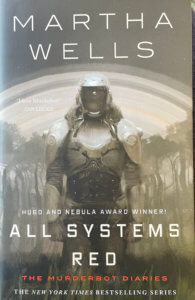 A novella. Hey, what’s that? Well…it’s shorter than a novel. And…as with all printed matter, it’s a pleasure to read when it’s entertaining and well written.
ALL SYSTEMS RED is a story, entertaining and well-written, that one can read in about 4 hours. Rated PG-13 for adult themes. I read this novella on a flight from Minneapolis to Seattle. I flew on Delta and none of the airline’s tv/film options seemed very thrilling to me. I often try to see HBO or Showtime options when on a flight because I don’t subscribe to either of those services in real life. Thank goodness I had taken this book with me, hardback, but thin, lightweight and easy to pack because it’s only 127 pages.
And now, for my Short, No-Spoiler Review
I highly recommend ALL SYSTEMS RED for these 5 reasons.
- Original voice…the narrator has the appeal of an innocent, he/she is like a child, yet holds the capacity to narrate a futuristic society inhabited by humans and AI living and working together
- Genre bending…science fiction merged with mystery…in other words, a page-turner
- Thought-provoking ideas about AI and how future humans might understand morality/humanity in regards to AI
- Interesting world-building and a great set-up for subsequent stories
- ALL SYSTEMS RED would make a great audiobook. See the longer review for more
Longer Review:
Martha Wells has created a fascinating universe of humanity working and living off Earth, in space, in places that can only be reached via light-speed travel. She doesn’t fixate on the physics of the issue (regarding traveling across vast distances) but focuses on the gritty work life of humans and their bots. In the author’s futuristic world, full AI exist as sex workers and security units (SecUnits) and other helps in life. Also, some humans adopt robotic parts (augmented humans). So, there is a mix of how humans have integrated with tech and within the story world, there is little “judgment” about these realities.
While this is all true, the AI mind that narrates this story has a judgment about itself and humans. The view is not completely skewed toward disgust for humans, though there is some leaning in this direction. Granted, I’ve only read the first 1.5 novellas. But what works in the narrative is that Wells has put forward a more dispassionate, yet charming view of the world the way it is. I highly recommend these novellas as entertainment and am slowly discovering how they speak into deeper moral questions around humanity’s race toward the future, a future in which robots and artificial intelligence will be embedded. These books might appeal to the YA reader because the narrator is endearing and “young” feeling. The value in their education would be the discussion around tech and humanity’s future.
Regarding the narrator. The voice is absolutely charming. I did not listen to the book, but can imagine the voice. This book would be a pleasure to listen to.
To buy the first book, click on All Systems Red
Four of the series in hardback can be bought together. Click on Murderbot Diaries
For the least expensive version to try out novella #1, click on Kindle version: All Systems Red
For the audio version of novella #1, click on Audio of All Systems Red