Writing
Writing Facial/Body/Clothing Descriptions, A Study of PD James and a Few Other Literary Giants
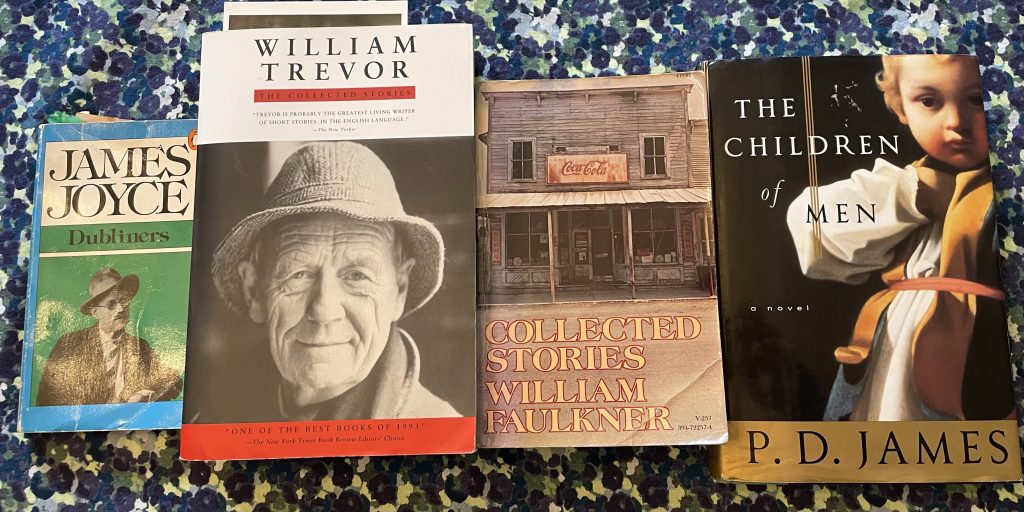
Click if you’re looking to read a review of PD James’ The Children of Men.
PD James was a great and popular writer. She was fluent in a particularly upper crusty British style, but could also write gritty stuff (one has to when writing about murder). She also knew how to tell a great story. She used facial descriptions in The Children of Men to transport the reader into her created dystopian world, relying heavily on them to reveal character. Descriptions carried two loads in the novel.
First load carried, character description gives a visual of the character being described. A description of a new character aids the reader as he/she enters the scene and tries to make sense of person being drawn. The reader needs to see the people and the place. Second load carried, character descriptions give the reader a sense of the narrator’s personality. The reader makes judgments about a narrator’s reliability, his/her fairness or prejudices because what details are notable to one person, are not necessarily notable to another. We all know this instinctively. You and I can sit on a park bench and observe the same person for three minutes, go on to describe completely different details about that person. By far, the best way to think about this in writing is to look at how the masters do it.
I took this project on because PD James caught my attention with her colorful and interesting character descriptions.
These are just a handful of examples. All James’ examples are from The Children of Men, the final four will be from Faulkner, Joyce and Trevor.
Theo is the narrator, also the main character in James’ novel, The Children of Men.
After each example, see if you can answer the question:
- What do you learn about this character being described?
- What do you learn about Theo?
Jasper (minor character, one of Theo’s older colleagues, a mentor of sorts): He was the caricature of the popular idea of an Oxford don: high forehead, receding hairline, thin, slightly hooked nose, tight-lipped. He walked with his chin jutting forward as if confronting a strong gale, shoulders hunched, his faded gown billowing. One expected to see him pictured, high-collared as a Vanity Fair creation, holding one of his own books with slender-tipped fingers.
Sir George (minor character, Theo’s uncle and father to the current leader of Britian): But Sir George puzzled my mother. I can still hear her peevish complaint: “He doesn’t look like a baronet to me.” He was the only baronet either of us had met and I wondered what private image she was conjuring up—a pale romantic Van Dyck portrait stepping down from its frame; sulky Byronic arrogance, a red-faced swashbuckling squire, loud of voice, hard rider to hounds. But I knew what she meant; he didn’t look like a baronet to me either. Certainly he didn’t look like the owner of Woolcombe. He had a spade-shaped face, mottled red, with a small, moist mouth under the moustache which looked both ridiculous and artificial, the ruddy hair which Xan had inherited, faded to the drab colour of dried straw, and eyes which gazed over his acres with an expression of puzzled sadness. But he was a good shot—my mother would have approved of that.
Julian (major character and love interest): But at the end of the row was a figure he suddenly recognized. She was sitting motionless, her head thrown back, her eyes fixed on the rib vaulting of the roof, so that all he could see was the candle-lit curve of her neck.
Her hair, dark and luscious, a rich brown with flecks of gold, was brushed back and disciplined into a short, thick pleat. A fringe fell over a high, freckled forehead. She was light-skinned for someone so dark-haired, a honey-colored woman, long-necked with high cheekbones, wide-set eyes whose colour he couldn’t determine under strong straight brows, a long narrow nose, slightly humped, and a wide, beautifully shaped mouth. It was a pre-Raphaelite face. Rossetti would have liked to have painted her.
Old Martindale (minor character/colleague of Theo’s): who had been an English fellow on the eve of retirement when he himself was in his first year. Now he sat perfectly still, his old face uplifted, the candlelight glinting on the tears which ran down his cheeks in a stream so that the deep furrows looked as if they were hung with pearls.
The old priest at St. Frideswide (minor character): He came close and glared at Theo with fierce paranoid eyes. Theo thought that he had never seen anyone so old, the skull stretching the paper-thin, mottled skin of his face as if death couldn’t wait to claim him.
Rolf (major character, Julian’s husband): He had no doubt which one was Julian’s husband and their leader even before he came forward and, it seemed, deliberately confronted him. They stood facing each other like two adversaries weighing each other up. Neither smiled nor put out a hand.
He was dark, with a handsome, rather sulky face, the restless suspicious eyes bright and deep-set, the brows strong and straight as brush strokes accentuating the jutting cheekbones. The heavy eyelids were spiked with a few black hairs so that the lashes and eyebrows looked joined. The ears were large and prominent, the lobes pointed, pixie ears at odds with the uncompromising set of the mouth and the strong clenched jaw. It was not the face of a man at peace with himself or his world, but why should he be, missing by only a few years the distinction and privileges of being an Omega? His generation, like theirs had been observed, studied, cosseted, indulged, preserved for that moment when they would be male adults and produce the hoped-for fertile sperm. It was a generation programmed for failure, the ultimate disappointment to the parents who had bred them and the race which had invested in them so much careful nurturing and so much hope.
When he spoke his voice was higher than Theo had expected, harsh-toned and with a trace of an accent which he couldn’t identify.
Miriam (major character, the midwife): The woman was the only one to come forward and grasp Theo’s hand. She was black, probably Jamaican, and the oldest of the group, older than himself, Theo guessed, perhaps in her mid- or late fifties. Her high bush of short, tightly curled hair was dusted with white. The contrast between the black and white was so stark that the head looked powdered, giving her a look both hieratic and decorative. She was tall and gracefully built with a long, fine-featured face, the coffee-coloured face hardly lined, denying the whiteness of the hair. She was wearing trousers tucked into boots, a high-necked brown jersey and sheepskin jerkin, an elegant, almost exotic contrast to the rough serviceable country clothes of the three men. She greeted Theo with a firm handshake and a speculative, half-humorous colluding glance, as if they were already conspirators.
Gascoigne (minor character): At first sight there was nothing remarkable about the boy—he looked like a boy although he couldn’t be younger than thirty-one—whom they called Gascoigne. He was short, almost tubby, crop-haired and with a round, amiable face, wide-eyed, snub-nosed—a child’s face which had grown with age but not essentially altered since he had first looked out of his pram at a world which his air of puzzled innocence suggested he still found odd but not unfriendly.
Luke (major character, father to the child):The man called Luke, whom he remembered Julian too had described as a priest, was older than Gascoigne, probably over forty. He was tall with a pale, sensitive face and atiolated body, the large knobbled hands drooping from delicate wrists, as if in childhood he had outgrown his strength and had never managed to achieve robust adulthood. He fair hair lay like a silk fringe on the high forehead; his grey eyes were widely spaced and gentle. He looked an unlikely conspirator, his obvious frailty in stark contrast to Rolf’s dark masculinity. He gave Theo a brief smile which transformed his slightly melancholy face, but did not speak.
The old innkeeper (minor character): She was older than he expected, with a round, windburned face, gently creased like a balloon from which the air has been expelled, bright beady eyes and a small mouth, delicately shaped and once pretty but now, as he looked down on her, restlessly munching as if still relishing the after-taste of her last meal.
Carl Inglebach (minor character): He looked—was probably tired of being told so—like a benign edition of Lenin, with his domed polished head and black bright eyes. He disliked the constriction of ties and collars and the resemblance was accentuated by the fawn linen suit he always wore, beautifully tailored, high-nicked and buttoned on the left shoulder. But now he was dreadfully different. Theo had seen at first glance that he was mortally ill, perhaps even close to death. The head was a skull with a membrane of skin stretched taut over the jutting bones, the scrawny neck stuck out tortoise-like from his shirt and his mottled skin was jaundiced. Theo had seen that look before. Only the eyes were unchanged, blazing from the sockets with small pinpoints of light. But when he spoke his voice was as strong as ever. It was as if all the strength left to him was concentrated in his mind and in the voice, beautiful and resonant, which gave that mind its utterance.
Officer Rawlings (minor character): Rawlings, thick-set, a little clumsy in his movements, had a disciplined thatch of thick grey-white hair, which looked as if it had been expensively cut to emphasize the crimped waves at the side and back. His face was strong-featured with narrow eyes, so deep-set that the irises were invisible, and a long mouth with the upper lip arrow-shaped, sharp as a beak.
Aren’t these descriptions delicious? Some might feel PD James goes overboard, but I found myself drawn in and fascinated by the language and the visuals. Each person held a unique place in my mind as the story grew toward its climax.
Just to get a small taste of a few other masters…consider Faulkner, Joyce and Trevor
A Rose for Emily from Collected Stories by William Faulkner
“They rose when she entered—a small, fat woman in black, with a thin gold chain descending to her waist and vanishing into her belt, leaning on an ebony cane with a tarnished gold head. Her skeleton was small and spare; perhaps that was why what would have been merely plumpness in another was obesity in her. She looked bloated, like a body long submerged in motionless water, and of that pallid hue. Her eyes, lost in the fatty ridges of her face, looked like two small pieces of coal pressed into a lump of dough as they moved from one face to another while the visitors stated their errand.”
Lo! From Collected Stories by William Faulkner
“And now the President and the Secretary sat behind the cleared table and looked at the man who stood as though framed by the opened doors through which he had entered, holding his nephew by the hand like an uncle conducting for the first time a youthful provincial kinsman into a metropolitan museum of wax figures.
Immobile, they contemplated the soft, paunchy man facing them with his soft, bland inscrutable face—the long, monk-like nose, the slumbrous lids, the flabby, café-au-lait-colored jowls above a froth of soiled lace of an elegance fifty years outmoded and vanished; the mouth was full, small, and very red. Yet somewhere behind the face’s expression of flaccid and weary disillusion, as behind the bland voice and the almost feminine mannerisms, there lurked something else: something willful, shrewd, unpredictable and despotic.”
Two Gallants, in James Joyce’s Dubliners, a short story collection.
“Corley was the son of an inspector of police and had inherited his father’s frame and gait. He walked with his hands by his sides, holding himself erect and swaying his head from side to side. His head was large, globular and oily; it sweated in all weathers; and his large round hat, set upon it sideways, looked like a bulb which had grown out of another. He always stared straight before him as if he were on parade and, when he wished to gaze after someone in the street, it was necessary for him to move his body from the hips.”
Kinkies, from William Trevor: The Collected Stories.
“In the police station the colours were harsh and ugly, not at all like the colours there’d been in Mr Belhatchet’s flat. And the faces of the desk sergeant and the policewoman were unpleasant also: the pores of their skin were large, like the cells of a honeycomb. There was something the matter with their mouths and their hands, and the uniforms they wore, and the book in front of the desk sergeant were torn and grubby, the air stank of stale cigarette smoke. The man and the woman were regarding her as skeletons might, their teeth bared at her, their fingers predatory, like animals’ claws. She hated their eyes. She couldn’t drink the tea they’d given her because it caused nausea in her stomach.”
There is no perfect way to describe a character, but one learns from the greats. In the case of Faulkner’s A Rose for Emily, one gets a sense of the character being observed, but also a certain judgment by the narrator, a disdain for Emily. And physically, the reader can “see” Emily…her age, weight and height, the fact she is (or was) a person of means.
In the story Lo, one sees the shabbily dressed visitor to the President, but he is a man not to be pitied, as the description closes with the more sinister. This story is fiction, but based in history. George Washington and his aide are the narrators. The quirky man they are describing is Native American, who is requesting a trial for his nephew for the murder of a white man on Chickasaw land. It’s an interesting story, not what you might expect.
In Two Gallants, one sees Joyce’s fluency with language and characterization. To describe any human as having a large, oily and globular head is startling. In fact, it’s almost inhumane the way he continues to describe the hat looking like a bulb growing out of a bulb. This narrator either holds Corly in utter disdain, or the details are meant to hint to the reader that Corly is an unkempt, yet arrogant (given his tendency to “parade”) loser.
In William Trevor’s story Kinkies, can you tell this character has been drugged? There is a sharp paranoia in her descriptions of everything and everyone she sees. Clearly, she is not well and potentially needing help, but the reader can’t imagine her receiving that help in her state of mind.
As a writing exercise, take an image of someone you do not know…an online image is fine…and pen a paragraph about this person. Use these words to steer your description and see how different the observations flow from your pen.
Arrogant:
Grieving:
Insecure:
Cagey:
Expectant:
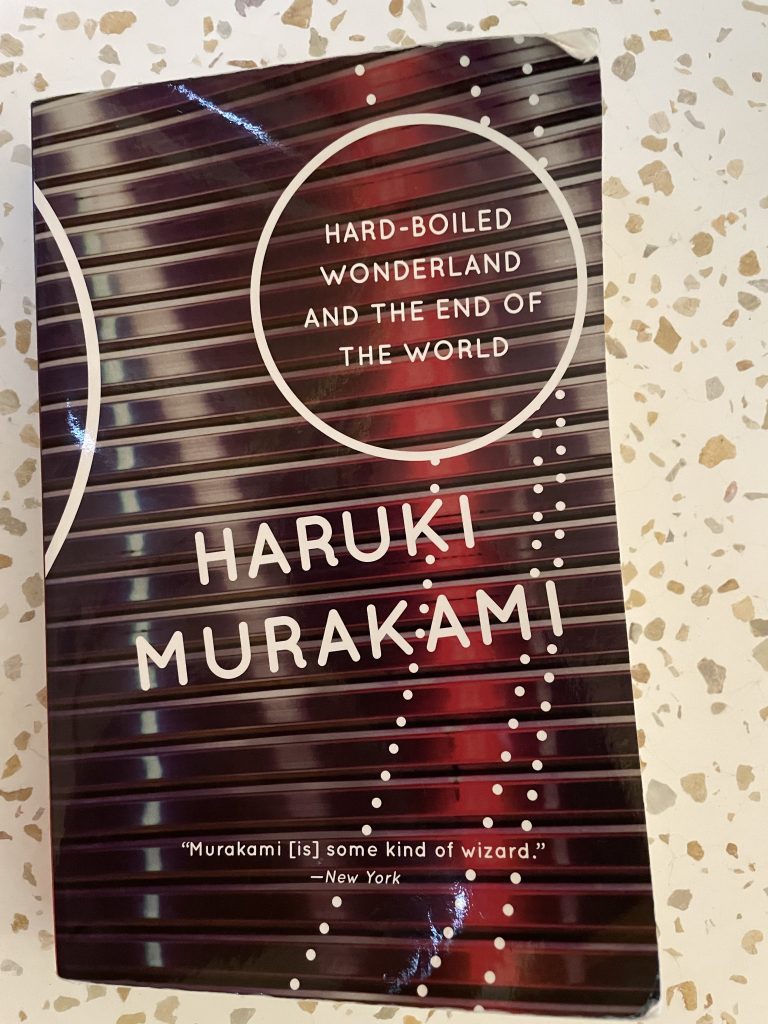
HARD-BOILED WONDERLAND AND THE END OF THE WORLD. A No-Spoiler Review
Murakami. Ah Murakami.
I took up this science fiction novel because having read so much mainstream scifi in the last few years, I found myself pining for beautiful prose. Haruki Murakami did not disappoint and HARD-BOILED WONDERLAND AND THE END OF THE WORLD is not only an imaginative story that passes the muster of science fiction, but had me laughing out loud at various points.
This story is rated R for sexual content.
First, the short review.

6 Reasons I recommend HARD-BOILED
- Masterful storytelling, including a full-blown mystery embedded in the structure of the novel
- Beautifully drawn characters who not only feel true, but are likeable in their quirkiness
- An imaginative world where scifi touches magical realism
- Humor
- Gorgeous prose and great writing in general
- Unicorns

2 Reasons to Avoid HARD-BOILED
- If you only read sciency science fiction and could care less about prose…this book might not be for you
- If you need a straight-forward ending, this story does not have that
The Longer Review
Step into the world of Murakami, his imagination and his Japanese way of looking at life. In this novel, he alternates point of view chapter by chapter. He does not explain how the two POV’s are connected until close to the end. Both storylines are told in first person. Both protagonists are male in midlife. His easy prose and everyman protagonist give the fictional world not just shape and beauty, but allow for emotional access. This hero is not someone extraordinary and with super powers. He is any one of us caught in a dilemma. The story meanders through a Tokyo imagined, not exactly futuristic on the surface. People drive cars, listen to Bob Dylan cassette tapes, and drink Miller High Life, but the city is run by two rival factions, the Factory and the System. A third group, the INKlings, folktale creatures that rule an underground society, live beneath the city. One character summarizes this way:
“Is Japan a total monopoly state or what? The System monopolizes everything under the info sun, the Factory monopolizes everything in the shadows. They don’t know the meaning of competition.”
“Inklings? A sharp guy like you don’t know about Inkling? A.k.a. infra-Nocturnal kappa. You thought kappa were folktales? They live underground. They hole up in the subways and sewers, eat the city’s garbage, and drink graywater. They don’t bother with human beings. Except for a few subway workmen who disappear, that is, he he.”
As for Murakami’s prose, an excerpt:
Something has summoned me here. Something intractable. And for this, I have forfeited my shadow and my memory. The River murmurs at my feet. There is the sandbar midstream, and on it the willows sway as they trail their long branches in the current. The water is beautifully clear. I can see fish playing among the rocks. Gazing at the River soothes me. Steps lead down from the bridge to the sandbar. A bend waits under the willows, a few beasts lay nearby. Often have I descended to the sandbar and offered crusts of bread to the beasts. At first they hesitated, but now the old and the very young eat from my hand. As the autumn deepens, the fathomless lakes of their eyes assume an ever more sorrowful hue. The leaves turn color, the grasses wither; the beasts sense the advance of a long hungry season and bowing to their vision, I too know a sadness.
Ah, Murakami and the magic of his prose.
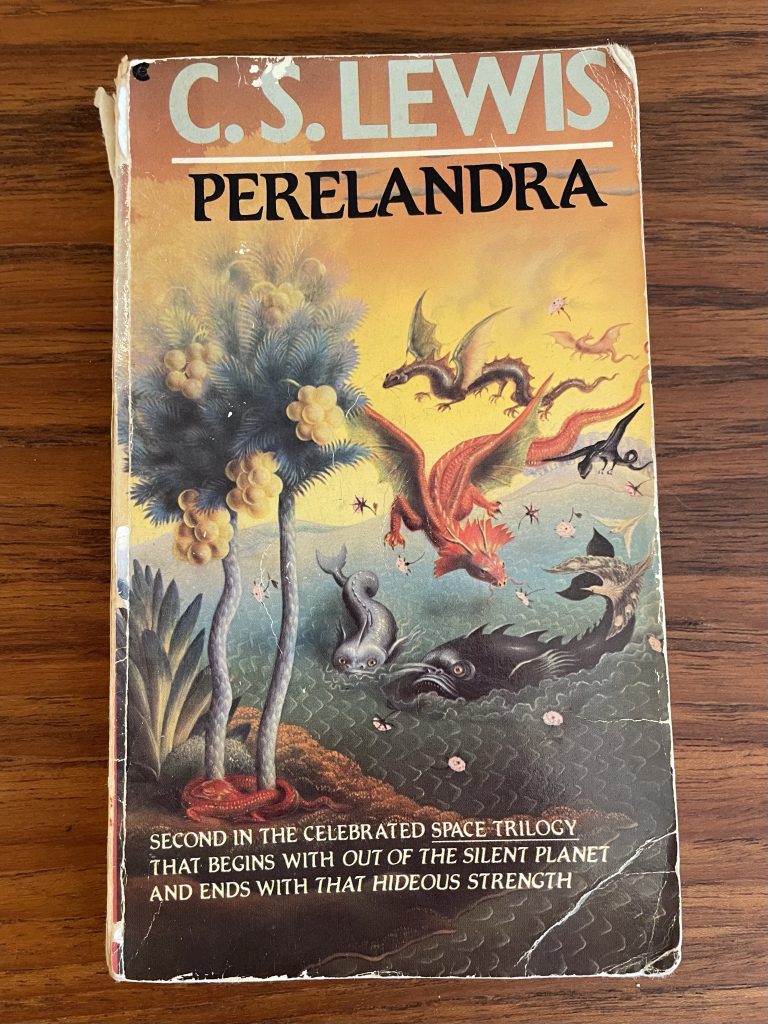
PERELANDRA, A Review
PERELANDRA is the second installment in CS Lewis’ space trilogy. Below is my no-spoiler short review, but the longer review that follows the image of PERELANDRA’s cover, will contain spoilers…beware. This is not a children’s book, but I recommend this novel to all ages who like the story. For all readers, taking the time to discuss after or along the way will deepen philosophical and theological understanding.
Link to OUT OF THE SILENT PLANET for a review of the first book in the trilogy.
5 Reasons to Read PERELANDRA, A Classic Science Fiction Story
- One of the more unique portrayals in literature of paradise and/or a pre-fallen world
- Beautiful CS Lewis prose
- The ideas are put forward clearly and by someone well acquainted with 20th century ideas
- Finally…a strong female character (there were none in the first novel)
- Read all three to make sense of what Lewis was trying to accomplish in the longer narrative arc
3 Reasons PERELANDRA is My Least Favorite of the Trilogy
- There are so few characters and the villain does not arrive until about 1/3 of the way into the book
- Not a lot of drama…there is a slow build and eventually, high drama, but it takes the novel a while to arrive (see #1)
- A lot of speech-making in the final pages. Interesting ideas, but coming at me in my least favorite non-dramatic package
The Longer Review (With Spoilers)
While PERELANDRA is my least favorite of the three books Lewis wrote in the scifi genre, it does have its merits.
For one, anyone who has read his Narnia books, knows how well CS Lewis puts his imagination on the page. He has the ability to create a world both strange and fabulous and took on a bold task to put before the reader a paradise, a pre-civilization and pre-fallen planet with only two human-like people. Basically, he created an Eden. And how would one write this in a convincing way?
This excerpt, one of many examples…just gorgeous.
Now he had come to a part of the wood where great globes of yellow fruit hung from the trees–clustered as toy-balloons are clustered on the back of a balloon-man and about the same size. He picked one of them and turned it over and over. The rind was smooth and firm and seemed impossible to tear open. Then by accident, one of his fingers punctured it and went through into coldness. After a moment’s hesitation, he put the little aperture to his lips. He had meant to extract the smallest experimental sip, but the first taste put his caution all to flight. It was, of course, a taste, just as his thirst and hunger had been thirst and hunger. But then it was so different than any other taste that it seemed a mere pedantry to call it taste at all. It was like the discovery of a totally new genus of pleasure, something unheard of among men, out of all reckoning, beyond all covenant. For one draught of this on earth wars would be fought and nations betrayed.
Elwin Ransom, a professor of philology, is the narrator here. He was also the protagonist in Out of the Silent Planet. In this excerpt, he is telling his tale to a fictionalized version of CS Lewis after returning from his mission to the planet Perelandra. Ransom was sent to Perelandra by the angelic ruler of Mars (Malacandra). The reader is acquainted with this ruler from the previous book. In Out of the Silent Planet, Ransom is kidnapped and brought to Malacandra. That is where he meets Oyarsa, the ruler of Mars. Oyarsa does make an appearance in this novel, as does Weston, one of the academics who kidnapped Ransom in the first story. Weston, the primary rival to Ransom, acts as the tempter in this narrative. He does this not by his own cleverness and strength, but by something more frightening. Weston has given himself over to the bent angelic ruler of Earth, Satan. After Weston arrives on Perelandra in his space vessel, Ransom comes to understand his mission, that he has been sent to thwart the bent Oyarsa by thwarting Weston.
In the story, Weston is an academic with the worst intellectual vices; hubris combined with a flamboyant humanism that borders on narcissism. Tragically, he falls under a true evil in his search of spiritual answers to the mysteries he experienced on Malacandra. Weston’s journey into evil reads like something out of a horror novel (or the Bible).
“Idiot,” said Weston. His voice was almost a howl and he had risen to his feet. “Idiot,” he repeated. “Can you understand nothing?…This is the old accursed dualism in another form. There is no possible distinction in concrete thought between me and the universe. In so far as I am the conductor of the central forward pressure of the universe, I am it. Do you see, you timid, scruple-mongering fool? I am the Universe. I, Weston, am your God and your Devil. I call the Force into me completely…”
Then horrible things began happening. A spasm like that preceding a deadly vomit twisted Weston’s face out of recognition. As it passed, for one second something like the old Weston reappeared–the Old Weston, staring with eyes of horror and howling, “Ransom, Ransom! For Christ’s sake don’t let them—” and instantly his whole body spun round as if he had been hit by a revolver-bullet and he fell to the earth, and was there rolling at Ransom’s feet, slavering and chattering and tearing up the moss by the handfuls…
I was in my thirties the last time I read PERELANDRA and I did not remember how clearly this Weston character gives himself over to evil. Nor did I remember that Ransom comes to the realization that he will have to destroy Weston in hand to hand combat if he is to defeat him.
That Ransom believes he must assassinate his rival provoked my horror. Moreover, the scenes of his battle with Weston are brutal. Lewis does not hold back on that reality, but the idea of this existential battle brought to mind Dietrich Bonhoeffer. Lewis might never have known Bonhoeffer personally, but the ideas Bonhoeffer was writing about and preaching about (in Hitler’s Germany) were likely familiar to him…as they were to every thinking Christian of the time.
Bonhoeffer, while struggling to be a faithful clergy member under Nazi rule in Germany, came to terms with the idea that it was in fact a righteous or just act to kill a man who had fully given himself over to evil. That is why Bonhoeffer was executed in the end, as he played a role in an assassination attempt against Hitler. Below is an excerpt of a sermon on Colossians 3:1-4, a sermon he gave most likely after he had made the decision to collaborate with a part of the resistance determined to assassinate the Fürher.
“Instead, and precisely because our minds are set on things above, we are that much more stubborn and purposeful in protesting here on earth… Does it have to be so that Christianity, which began as immensely revolutionary, now has to remain conservative for all time? That every new movement has to blaze its path without the church, and that the church always takes twenty years to see what has actually happened? If it really must be so, then we must not be surprised when, for our church as well, times come when the blood of martyrs will be demanded. But this blood, if we truly have the courage and honour and loyalty to shed it, will not be so innocent and shining as that of the first witnesses. Our blood will be overlaid with our own great guilt.” (DBW 11, 446) (Schlingensiepen, Kindle Location 2427)
Bonhoeffer’s words evoke the idea that a conservative church is potentially an anemic one. His mention of our great guilt in the sermon I took two ways. One, the church is guilty when it does not act (or waits too long) to stand up to evil. Two, if it does join the revolutionaries, it potentially falls under the guilt of questionable acts. When evil can only be defeated by an act that lays outside of the norm of Christian ethics, there is plenty of guilt to go around. However, Bonhoeffer did not shrink back from taking on that guilt for what he (and history) thought to be the greater good. Moreover, his writings on this remain strong pillars in just-war theory and the Christian struggle with realism versus pacifism.
Lewis travels a similar line of reasoning in this novel and it should not surprise the reader that when the character Ransom leaves the planet Perelandra, he leaves having accomplished his task, but with a wound on his foot that refuses to heal this side of heaven.
THE HOBBIT, Chapter 1…A Study on Craft
 The following is a post about the craft of storytelling. Posts like this are somewhat unusual for me on my author website. Most of time I am reviewing science fiction for the average consumer, not just for the writer. In this post, I am poking my nose into craft. I don’t want to just taste the stew…I want to know how it is made. This post is for the writer and beware…contains spoilers.
For educators: This post and others like it are appropriate for a student who wants to improve in storytelling and/or writing stories. However, most of my writing posts contain spoilers. I recommend the student read the book first.
This is my second installment on first chapters. A few days ago, I analyzed chapter 1 of DUNE. To read that post, click here. Today, I analyze chapter 1 of THE HOBBIT.
This first chapter
–introduces the reader to the world and the main characters
–evokes reader empathy for Bilbo by showing Bilbo’s inner conflict
–presents the choice that will change Bilbo’s life forever
–introduces the reader to the fantastical possibilities that lie ahead, but also the dangers
In a hole in the ground there lived a hobbit. Not a nasty, dirty wet hole, filled with the ends of worms and an oozy smell, nor yet a dry, bare, sandy hole with nothing in it to sit down on or to eat: it was a hobbit-hole, and that means comfort.
Thus begins THE HOBBIT, by J.R.R. Tolkien, but really this sentence begins the longer saga that so many have come to know and love, THE LORD OF THE RINGS. Notice what it accomplishes.
- Sentence #1 introduces a new creature, the hobbit. This creature will inhabit the long saga. Bilbo first will be the unlikely hero (later his nephew, Frodo takes over the hero’s mantle). The audience will come to admire, adore and identify with Bilbo and Frodo.
- This sentence begins to describe the culture of hobbits. They are earthy, living in holes, but absolutely committed to cleanliness and comfort. These creatures are civilized…they just happen to like holes as their place of abode.
- In this first sentence, Tolkien begins to evoke our empathy for Bilbo, who will soon trade in his life of comfort for a wild and magical adventure.
Paragraph #2 of THE HOBBIT describes Bilbo’s home in detail, which will be the place where all the action takes place in the remainder of the chapter, including the entertaining of a wizard and a large group of dwarves, but even more than that, this home represents the comfortable life of a gentleman. Later in the story, Bilbo often longs for home (as does Frodo in the LOtR saga) as a place of rest, comfort and peace. It is a place to return to.
Paragraph #3 and #4 describe Bilbo’s ancestry, posing the curious conflict he bears within himself. There is a debate between the Baggins and the Took within Bilbo. The Took side of his family (Bilbo’s mother’s side) is prone to adventure and risk-taking. The Baggins side of the family (Bilbo’s father’s side) is conservative and would reject adventure and any controversy at all. The reader doesn’t have to wonder for very long which side will win out. Without that Tookish spirit, Bilbo might never have walked away from his comfortable hobbit hole.
Both impulses inhabit Bilbo and most readers can relate. It might be said that opposing impulses, such as what Bilbo experiences, are a part of every person. Thus, Tolkien evokes our empathy for Bilbo in chapter 1. Much as Bilbo leaves the comfort of his hobbit hole to journey with the dwarves, the reader leaves his/her comfort to embark with them in the story world.
Now for the rest of chapter one: Bilbo, because he values hospitality, entertains Gandalf (a wizard who believes Bilbo will be a key member of the adventure) and a group of dwarves who demand food, drink, then compel him to travel with them to a place where a dragon guards a great treasure. The adventure, as it is presented, is magnificent, romantic and promises great wealth. Bilbo is taken in, though it is touch and go for a while whether or not he can bring himself to leave his hobbit hole. Despite his willingness to leave home, it could be said Bilbo is bewitched by the romantic notion of a grand adventure.
As they sang the hobbit felt the love of beautiful things made by hands and by cunning and by magic moving through him, a fierce and jealous love, the desire of the hearts of dwarves. Then something Tookish woke up inside him, and he wished to go and see the great mountains, and hear the pine-trees and the waterfalls, and explore the caves, and wear a sword instead of a walking-stick.
Yet, Thorin, the lead dwarf, does not mince words about the dangers they might face.
We shall soon before the break of day start on our long journey, a journey from which some of us, or perhaps all of us (except our friend and counsellor, the ingenious wizard Gandalf) may never return. It is a solemn moment.
What is Bilbo’s reaction to this sobering news?
Poor Bilbo couldn’t bear it any longer. At may never return he began to feel a shriek coming up inside, and very soon it burst out like the whistle of an engine coming out of a tunnel. All the dwarves sprang up, knocking over the table.
The stage has been set. The semi-cowardly and ill-prepared Bilbo Baggins will reluctantly leave his comfortable hobbit hole and venture with these new friends, the dwarves and Gandalf. When he finally returns, he will be completely changed and so will Middle Earth.
For over the misty mountains cold
To dungeons deep and caverns old
We must away ere break of day
To find our long-forgotten gold.
Bilbo went to sleep with that in his ears, and it gave him very uncomfortable dreams. It was long after the break of day when he woke up.
This stanza, when one reflects on THE HOBBIT and THE LORD of the RINGS speaks of long-forgotten gold. The dwarves believe this to be part of their hoard, that which is guarded by the dragon, Smaug. The reader understands a deeper meaning. Long-forgotten gold is the one ring to rule them all, found by Bilbo…later passed on to Frodo, becoming the impetus for the Lord of the Rings Saga.
The reader doesn’t understand at this point the profundity of the dwarves’ song, but it is there, imbedded in that first chapter of the very first book.
DUNE, Chapter 1. A Study on Craft
 Spoilers below. If you want to read a review of the novel without spoilers, click here.
For educators: This post is appropriate for teens who have read Dune and might want to to improve their storytelling/writing skills.
I happen to be in a writing critique group that started up this past week. A couple of the folks in this group are writing novels and sent in first chapters for a swipe at getting feedback. So, I read a few first chapters yesterday and in the course of my reading, I began to wonder…Do these seem like first chapters to me? How do I feel as a reader as I am taking in the narrative for the first time? Do I begin to have a strong sense about the story, the characters and about the writing style? Absolutely. I did and do have feelings and ideas. Some of those made me want to keep reading. Others did not.
That led me to the question: How does a novelist write a brilliant chapter one that makes you want to keep reading?
I wonder about my own first chapter, the beginning of my novel that is undergoing an extensive edit. What is it accomplishing and what is it not accomplishing? Have I done the necessary work to hook my reader, keep them interested and engaged, settle them into the world I am creating?
All writers of any genre ponder this question when they sit down before the blank page because the possibilities are endless, as endless as stories themselves. However, I do think there are ways to understand first chapters, to critique and edit them for the purpose of making them better.
Therefore, I begin a series of posts devoted to the question of beginnings. My focus will be on science fiction and fantasy novels and the hope is not to be prescriptive. Telling the writer what to do or not do detracts from originality and art. However, paying attention to how great authors craft a narrative is worthwhile. We learn from the greats. Study enough greats and we begin to see common threads.
So, my goal in this series of posts is to plunder first chapters and see what I can glean about my own writing and will record my findings for the sake of other writers.
A Look at DUNE, Chapter 1
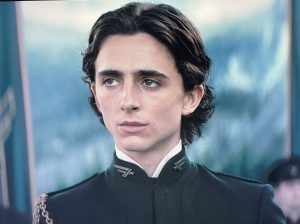
Frank Herbert is a great writer and though the novel DUNE isn’t perfect, it’s very close to perfect. How does that first chapter set us up for a marvelous journey?
I see it accomplishing four things.
Chapter 1…
-Gives us a sense of the setting in which the story will take place
-Introduces the primary characters, even putting the main character through a first test
-Hints at the coming conflict
-Tantalizes the reader with compelling mysteries that make you want to keep reading
Chapter 1 of DUNE give us a sense of the setting.
Here is the first sentence of the novel.
In the week before the departure to Arrakis, when all the final scurrying about had reached a nearly unbearable frenzy, an old crone came to visit the mother of the boy, Paul.
Most of us have experienced moving houses, cities, states. We know what it feels like to change locations. In this first sentence of DUNE, the reader is alerted immediately to the fact that a change in location is taking place for this particular family, for this particular person, Paul. Moving is disruption. Paul’s family is about to be disrupted. He will soon be leaving Caladan for a planet called Arrakis, sometimes called Dune.
Soon after, in the early paragraphs, Herbert repeats this series of words three times as paragraphs. They jump out on the page like a refrain. They are written in italics, which in Herbert’s style, represents thought. Paul, the main character continues to mull over this reality.
Arrakis—Dune—Desert Planet
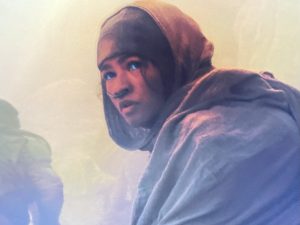
So, not only will Paul be leaving his current location, but the new location is harsh. There is a sense of foreboding about this desert planet. Paul will move from Caladan, a land where water is plentiful to Arrakis, where water is scarce. Caladan is known, comfortable, secure, a virtual paradise. Arrakis is mysterious, uncomfortable in so many ways, in part because of its climate. Climate will be a large issue in the rest of the novel. Herbert wants the reader to begin thinking about ecology and its importance to a planet and a people.
Here is the second sentence of DUNE.
It was a warm night at Castle Caladan, and the ancient pile of stone that had served the Atreides family as home for twenty-six generations bore that cooled-sweat feeling it acquired before a change in the weather.
When Paul’s family leaves Caladan, they are not only leaving their current comfortable home/castle, but they are leaving their home of twenty-six generations. This move is an epic move. The reader is left asking…why? Why leave this lovely planet and this home of so many years? We get a few clues as to why this move takes place. Power and political maneuvering are introduced, both profound themes in DUNE.
Thufir Hawat, his father’s Master of Assassins, had explained it: their mortal enemies, the Harkonnens, had been on Arrakis eighty years, holding the planet in quasi-fief under a CHOAM Company contract to mine the geriatric spice, mélange. Now the Harkonnens were leaving to be replaced by the House of Atreides in fief-complete—an apparent victory for the Duke Leto. Yet, Hawat had said, their appearance contained the deadliest peril, for the Duke Leto was popular among the Great Houses of the Landsraad.
Arrakis is the place where the empire derives its most important resource: Melange, or spice, as it is sometimes called. Melange is the secret to space travel in this particular universe.
We can already see now how the chess pieces are stacking up, a sense of the conflict.
This brings us to the second accomplishment of Herbert’s chapter one, the introduction of most of the main characters.
Paul is mentioned in the first sentence. So is his mother. Paul’s mother and Paul are on the stage for the final scene of the novel. In fact, his mother gives voice to the final paragraph/speech.
Not only that, but the crone mentioned in that first sentence, the one who will test Paul later in the chapter, will also be on that stage at the finale. This is great writing.
Add to the list the Bene Gesserit, the Fremen, House Harkonnen…all are mentioned, Thufir Hawat, (who will be present in the final scene) and Dr. Yueh, important as the one who betrays House Atreides…all are introduced in chapter 1.
Note this paragraph early in the chapter.
Paul awoke to feel himself in the warmth of his bed—thinking…thinking. This world of Castle Caladan, without play or companions his own age, perhaps did not deserve sadness in farewell. Dr. Yueh, his teacher, had hinted that the faufreluches class system was not rigidly guarded on Arrakis. The planet sheltered people who lived at the desert edge without caid or bashar to command them: will-o’-the-sand people called Fremen, marked down on no census of the Imperial Regate.
The Fremen will become important to the story, of primary importance, but the reader is simply introduced here. There is mystery surrounding these people. I am curious. I want to learn more and Herbert will plunge me into Fremen culture before too long.
It’s interesting to note who is left out of chapter 1.
 The Duke Leto, Paul’s father, does not get a speaking part until chapter 4. Even the emperor, the most powerful political person in the Landsraad, receives little attention. These are important omissions. It says something about how the story will be focused, that despite the powerful political figures on the scene, Paul and his mother, the two of them in particular, will take center stage.
Chapter 1 hints also at future conflict.
As Paul is undergoing the test, the gom jabbar, here is what the Reverend Mother, the crone says to him.
The old woman said: “You’ve heard of animals chewing off a leg to escape a trap? There’s an animal kind of trick. A human would remain in the trap, endure the pain, feigning death that he might kill the trapper and remove a threat to his kind.”
As I was re-reading the chapter last night, this nugget stopped me in my tracks. I had not realized, not seen how this Reverend mother foretells the remainder of the story.
Paul does feign death on Arrakis, so that he might kill the trapper and remove the threat to his family. That is, in essence, a summary of the novel. These two sentences are so brilliantly placed, subtle in all the best ways. We don’t understand consciously upon first reading, but Herbert has just given us a synopsis of the novel.
Lastly, chapter 1 teases the reader with mysteries.
This is an odd world, a mysterious one in which a mother of an only son, will give him up to a religious figure, knowing he might die.
Jessica stepped into the room, closed the door and stood with her back to it. My son lives, she thought. My son lives and is…human. I knew he was…but…he lives. Now, I can go on living.
This we absorb and I, at least, want to find out more about this bizarre world where such a thing would happen. In order to know more, I must keep reading.
Then, there is the planet Arrakis and the Fremen. In chapter one, we learn very little about them, but we wonder about them as Paul does. The planet is a desert and the Fremen seem to live off the grid. They are wild and uncounted by the empire. Who are they? We are meant to wonder, and to find out, I have to keep reading.
And lastly, in Chapter 1, Herbert introduces the reader to the idea of the Kwisatz Haderach, a messianic figure. Is Paul the Messiah? The reader suspects he is, though Paul himself struggles with this identity throughout the novel, mysterious even to him. We will have to keep reading if we want to figure out the true identity of the Kwisatz Haderach.
All of this in Chapter 1. I am wowed and I am hooked. I am also set up well in the world to take in more of the details as they unfold. Moreover, I have enough sense of the main characters to be able to navigate this complex world where many more characters will soon be introduced. It makes me wonder how many times Herbert went back to edit and perfect his beginning because I don’t think he could have written a better version of chapter one than that which we read today.
DUNE, A Review of the Novel
This is my second time reading DUNE, with probably about twenty years in between readings. My first took place as a fan, consuming for pleasure. This time, I re-read DUNE as a writer of science fiction. It was still a thrilling ride.
DUNE, the novel holds up well to post-modern scrutiny and the writing is mostly perfect.
This is a PG-13 story, for sexual and violent themes, although those scenes are not explicit in this novel.
The Short Review
5 Reasons the Science Fiction Fan Needs to Read this Book Now
- DUNE, the film will be released in 2021…at least the first film of two will be released…unless pandemic interferes. In this case as in most, I recommend reading before viewing
- Compelling villain and compelling hero, with complex motives for each
- Dynamic characters around the main character, including a number of strong females
- Among the best world-building you will find in science fiction
- Without simplifying the complexity of good versus evil, this story gives the reader a vision of truth, goodness and honor
The Longer Review (mini spoilers below):
When George Herbert created the character Paul Atriedes, he stumbled upon a savior-type, a hero, a character who could embody a kind of leadership that most of humanity longs for. Hero stories are nothing new, certainly not new to the science fiction audience, but great ones are to be treasured.
In the case of DUNE, Paul is not the only treasure. The people of the planet Arrakis, the Fremen, also embody an ideal. They are oppressed, but intelligent, pushed to the margins of society, but resourceful and willing to sacrifice for the cause. Their discipline is akin to the greatest armies of literature and history. They are as creative as tenacious as a Roman legion, as fierce as Khan’s Mongols and as disciplined as the Spartans.
(Spoiler here) So what is supposed to get under our skin about DUNE? How can one argue with a story where the overly confident and utterly powerful Emperor is outsmarted, out-gunned and defeated by an honorable and humble tribal people? That feels so right and good.
But there are complexities that go along with this storyline. Paul is not as pure a hero as he might seem. His role as Messiah is an idea that plagues him throughout the novel because he knows he is not simply fighting for the Fremen. He is also motivated by vengeance and honor. He uses the Fremen to avenge his father, so his victory is an uneasy one. Even as he negotiates a marriage to the Emperor’s daughter for status and honor, but keeps his Fremen lover as concubine, the audience sees the inherent politics that will inhabit Paul’s governing. How Paul will rule the Empire is a story for later books, but the seeds of the struggle are sown well and deep in the original novel. So, even as the audience breathes relief at the victory over injustice, there is more to ponder.
To purchase the novel, click DUNE
There is also an amazing graphic novel version which is being released book by book. Dune is made up of three sections, called books. The first installment in graphic novel form is available here. To purchase, click DUNE, Graphic Novel The second installment will be released in the Spring of 2022. No date yet on the third and final.
Lastly, the 2021 theatrical trailer is out and worth a view, perhaps best seen after reading the novel…but then, maybe not.
Click here to see DUNE, film trailer
So, You Just Finished Writing a 70K Word Sci-Fi Novel…Advice to the Young Writer
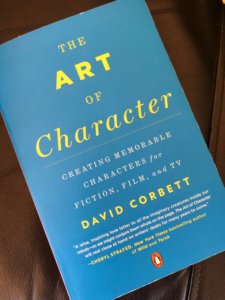 Periodically, a friend tells me that he or she knows someone who is writing or has written a novel. It happened last week as I’m sure it happens to most writers. Not that I’m the expert on all things writing, but I’ve navigated the writing world long enough to have an opinion.
So, I had the phone conversation with a young man (son of an old friend) yesterday. I decided to write him a follow up email with a few resources I have appreciated and it made sense to put it into a post. Next time, I can just send the link. Actually…I wouldn’t do that. I would still take the phone call, but it helps to have the information written down in one place.
For the new writer…Here’s my advice:
First, congratulate yourself that you just wrote a novel. That.Is.Amazing. Celebrate and then think like a critic and move on. Try to figure out if this book is what you really want to publish and to the best of your ability, think about whether or not you’re addicted to writing. If you’re not, the road is too hard and very long (for most of us). Don’t keep going unless you know you really LOVE it.
Social Media. You might hate it, but every author has to be on social media. If you want to start somewhere, try Twitter.
On Twitter, connect with and start following folks from the #WritingCommunity. Other hashtags you could check out: #amwritingsciencefiction, #amwritingspeculativefiction, #amwriting, #amwritingfiction. While you’re there you’ll find links to various author websites. Some are way more amazing than mine, others are just a page with a photo and the book cover, with minimal links if any. Begin thinking about your author website. How do you want it to feel? What content, if any, do you want to regularly produce on it?
Find a Critique Group:
It’s great to have beta readers, but it’s even better to find a group of writers, like-minded souls who write and will be willing to read your stuff and give you feedback. I’ve started a number of groups over the years. What I have found is that the most important trait for those in the group is work ethic. If the people aren’t actually writing, then it’s probably not worth your time because A. they won’t submit anything to the group and B. They will be the weakest when it comes to critique. Find people who write and be willing to put in the work for them by being a thorough and honest critic. Work for them and they will work for you. (That’s ideal…always exceptions, but be careful about those exceptions).

Cosplay Ariel
Go to Cons (like Emerald City Comic Con or WisCon) and get to know people. You will meet fans and you will meet writers and small publishers. You will make connections and you will have fun. (Photo of Ariel is my daughter, who goes to Cons and always dresses up, mostly not in Disney costumes, but this was the best photo I could find today…plus, it’s bright and cute.)
Books on writing and why I like them:
Story: Structure, Substance, Style and the Principles of Screenwriting by Robert McKee
If you buy one book, I would make it this one. I’ve taken McKee’s class twice (weekend course) and everyone from Pixar would attend in the Bay Area (where I used to live). Screenwriters would fly up from LA to take it in case they had missed the weekend in Southern California. I knew writers who would take it every other year during the time he was touring. He traveled all over the world teaching his course in the 90s and early 2000s. Why? I think he had/has a way of distilling what it takes to tell a great story. It’s less literary and more about structure, the architecture of good storytelling. I refer to this book all the time, also because this was the stuff I never learned in college. For whatever reason, my writing program de-emphasized story structure. Maybe they thought we were smart enough to pick it up, sniff it out and do it ourselves.
*Why don’t I have a photo of this book cover? I have loaned it out…which so many of us writers inevitably do and then regret. That book has escaped my shelves. I have no idea who has it now, so I will probably have to buy it again. DRAT! It’s not cheap!
Steering the Craft by Ursula K. le Guin
 This is a short book, but really helpful. UK le Guin is a scifi/fantasy writer, so it’s wonderful to get practical advice from someone who knows the genres we are writing in. She may have the most concise and best definition of point of view and tense that I have read. I highly recommend it and it also comes with exercises.
le Guin has written a wonderful series, 5 fantasy books (long before Harry Potter) about a wizarding school, called
If you don’t want to buy all five, try out the first one.
UK le Guin is one of my heroes. Here is my review of her science fiction book, THE LEFT HAND OF DARKNESS, A Book Review

The UKLG book you want to read first
The ART of Character by David Corbett
This book (pictured on the top of post) drives home the kinds of techniques that make characters eternal/memorable. It too is practical. The chapter on Protagonist Problems is spot on and one of the best things you can read as a young writer. Corbett captures key mistakes many writers make when crafting characters, especially main characters.
Revising Fiction, by David Madden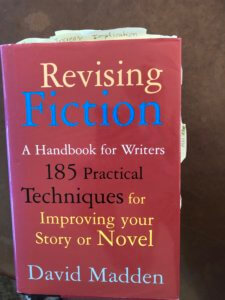
Best Science Fiction and Fantasy of 2019. Worthy of a Post. Worthy of Purchase.
 Good friend, LaShawn Wanak, wrote a lyrical, dreamy story that was picked up for the BEST OF anthology (see link below…it was first featured in APEX magazine).
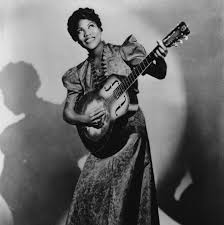
Writes editor John Joseph Adams…”The BEST AMERICAN SERIES is the premier annual showcase for the country’s finest short fiction and nonfiction. Each volume’s series editor selects notable works from hundreds of magazines, journals, and websites. A special guest editor—a leading writer in the field—then chooses the best twenty or so pieces to publish. This unique system has made the Best American series the most respected—and most popular—of its kind.”
To order this anthology, click Best of SFF 2019.
LaShawn’s story was first featured here…but why just read hers…there are so many great stories in this anthology.
https://www.apex-magazine.com/sister-rosetta-tharpe-and-memphis-minnie-sing-the-stumps-down-good/
KINDRED, A No Spoiler Review

KINDRED, perhaps the most admired novel written by the late, great Octavia Butler is nearly perfect.
I rate this novel PG-13 for the violence that is shown, though not celebrated, against black slaves.
I plan to write a separate post for educators after this general review of the novel.
Short Review…3 Reasons to Read
- KINDRED is a page-turner. As a novelist, I so admire this book. It ain’t easy to keep your audience on edge. Butler does it with genius.
- KINDRED humanizes slaves and slaveholders…In my mind, KINDRED is a literary narrative because it does not simplify the incredibly complex story of slavery in US history/society.
- KINDRED is literary, yet it is also an adventure story…Read the book to gain empathy, knowledge and understanding, but count on being entertained and in suspense while you learn.
Longer Review
Octavia Butler did write great science fiction, like The Xenogenesis Trilogy, but KINDRED falls into a different category. It’s a time-travel fantasy with fewer of the typical time travel tropes. We all know those tropes, how tension builds as the reader/audience wonders whether a character who impacts past will change the future. In KINDRED, that tension (changing the future by impacting the past) stays in the background. It is a worry, but not the primary worry. What creates the tension in KINDRED is the survival of the main character.
The story premise is brilliant.
Dana, whom the reader affixes to early in the novel, is an African American woman, married to a white man living in the 1970s. She is living her life in the present as a happy, seemingly normal person. Suddenly, she finds herself yanked back into history. It takes her a while to figure out why, but eventually, she and the reader understand that every time one of her ancestors (a white slave owner) finds his life in danger, Dana is summoned to the past. This happens multiple times.
In the past, Dana is a compelling character because she has experienced some degree of liberty in the 1970s as a black woman. Out of that experience, she becomes a guide and a conscience to those she encounters, to slaves and to slaveholders. Dana is also a threat, including the slaves she will try to help, because her agency upends the social norms in such a significant way.
Dana comes back into real time when she finds herself in danger of being severly injured or killed. The going back and forth is painful and a brilliant narrative device. The reader, who empathizes with Dana, finds these short respites back in the modern era as hopeful and yet terrifying, knowing, as Dana does, that she will be yanked back in time within minutes, hours or days. The oasis in the modern era gives Dana and the reader a chance to catch a breath and process the dark reality of slavery, but the tension remains.
At least in part, our society has grown out of the horrors of slavery, even the novel puts forward this idea. Yet, the African Slave trade is an historical reality which cannot be denied. Butler brings the audience close to the horror. She makes her reader think and feel the impact of slavery and does it disarmingly, through story. It’s a powerful way to teach.
Regarding KINDRED’s captivating narrative, I challenge you to read the first twenty pages of this book and be able to put it down.
Regarding KINDRED’s story, I challenge you to read something of greater substance that falls into the category of “time travel narrative”. I doubt you will find one.
To buy this masterpiece, click KINDRED
To buy the first of Butler’s science fiction the Xenogenesis trilogy, click DAWN
To buy the whole trilogy, click The Xenogenesis Trilogy
10 Reasons You Want to Watch BLADE RUNNER, The Original
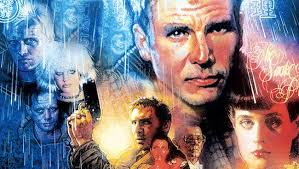
Blade Runner, The Original
I rewatched BLADE RUNNER last night in a friend’s home-theater with a group of folks in their 20s and 30s. For some, it was their first time viewing the film.
I consider myself one of the lucky ones to have seen the original BLADE RUNNER on the big screen during its first weekend release. I was a young highschooler at the time, a huge sci-fi fan and living in Burbank, California. I remember my older brother and I driving west over the Hollywood Hills, as we did often in that era, to make sure we were getting the biggest bang for our buck. Our theater of choice that night was The Egyptian Theater on Hollywood Boulevard.
It’s not easy to describe to a new generation of filmgoers how important this film was at that time. Most folks in the film industry, especially directors point to BLADE RUNNER as ground-breaking. Ridley Scott made BLADE RUNNER after finishing the film, ALIEN. He also made it after his brother had died of cancer. The dark setting of BLADE RUNNER reflects a dark state of mind. Don’t expect cheerfulness here.
YET…you don’t have to be a filmmaker to appreciate BLADE RUNNER.
Here are 10 Reasons Every Sci-Fi Fan Ought to Watch BLADE RUNNER
Oh, and watch the FINAL CUT. 2007 version. There are seven versions of this film. Kind of crazy, I know.
- Cult classics happen for a reason. Following its meh release in 1982, a slow-building respect, awe and cult following emerged.
- BLADE RUNNER influenced the next generation of filmmakers, especially dystopian and sci-fi writers/directors.
- This is a brilliant screenplay (especially once R.Scott took out the clunky voice-over narration), though many fans adore that version of the film.
- Take pleasure in watching a young Harrison Ford perfectly embody the main character, Richard Deckard.
- You like The Man in the High Castle? Philip K. Dick wrote that novel. BLADE RUNNER is an adaptation of his classic novela, Do Androids Dream of Electric Sheep?
- You’re a Battlestar Galactica fan? Here is a chance to see Edward James Olmos (Captain Adama) in a role you would not expect.
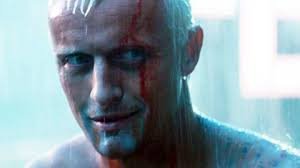
- Complicated villain. Rutger Hauer…what a performance!
Hauer as Roy Batty
- The sequel is excellent and makes a lot more sense if you watch the original first.
- This is not a movie for the weak, nor is it for the mindless. You will have to think and process the experience after viewing.
- Because of number 9, it’s a great film to see with a group of friends. At the very least, the post-film discussion won’t be boring.
To buy Dick’s novel, click this link Do Androids Dream of Electric Sheep
If you want to totally nerd out on BLADE RUNNER, I recommend this very long and thorough article in Cinephilia & Beyond