Posts by Susi Jensen
ACCEPTANCE, A No-Spoiler Review
The Short Review. Why or Why not Read ACCEPTANCE?
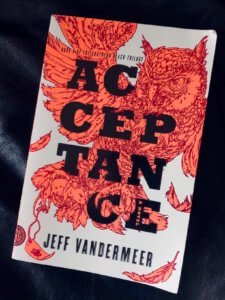
Why read?
- I already consumed the first two in the trilogy and like to finish things
- I wanted to understand more of the mystery that is Area X. There was definitely more backstory to absorb in this volume
- I enjoyed the deeply flawed, but thoughtful characters
- I wanted to spend more time in the imaginative world of Area X
- The writing style was unique and often beautiful
Why avoid reading?
- Because the point of view was shifting all the time, it was a challenge to attach to any one character
- Disappointing ending
- The writing style grew stale after a while…lots of interior musings and struggles without enough plot or even conflict (the conflict is underlying, but too diffuse for my tastes)
- Not only does VanderMeer shift points of view with every chapter, he also moves back and forth between past and present
- I started this book on audio, but switched to print about a 1/3 of the way through because POV and time switching was too confusing
To buy ACCEPTANCE, click here.
To buy the SOUTHERN REACH TRILOGY, click here.
The Longer Review of ACCEPTANCE
This longer review, may contain spoilers for the first two novels in the trilogy. For those reviews, click Annihilation, A Book Review and/or Authority, A Book Review.
If you read my earlier reviews, you understand that I started out a big fan of Annihilation. Not only was the main character, compelling, but the mysteries that unfolded in the narrative created the perfect amount of tension to keep me engaged. I’m guessing this was true for many other readers interested in the interior life of this quietly observant biologist as she ventures into Area X. The biologist (she is never named in the book) is at the heart a true scientist and in certain respects more attuned to flora and fauna than to people, but she observes people with a scientific eye. She is spooky, highly intelligent and trustworthy as a narrator in surprising and interesting ways. I really loved this character. I loved that she was introverted and anti-social. She also had clear motivation to act because her husband had been on a previous mission into Area X and returned damaged before succumbing to death She is a worthy rival to the various human and monster challengers that get in her way. In fact, she is such a great character that Alex Garland (screenwriter) took the story and created a feature-length film around her, that character played wonderfully by Natalie Portman. I loved the film, but it is not the same story told in the trilogy, nor is it the same story told in the novel after which it is named. The film narrative diverges in significant ways. I will post my review of the film tomorrow. I ought not say more unless I spoil the story.
What to say about VanderMeer’s style? Be prepared for words like ziggurat to be on the page. His writing is lovely and intellectually gratifying if you’re interested in imaginative metaphors and curious juxtapositions. This language mimics the beauty and strangeness of Area X. Here is an excerpt:
In Control’s imagination, the entrance to the topographical anomaly was enormous, mixed with the biologist’s vast bulk in his thoughts so that he had expected a kind of immense ziggurat upside down in the earth. But no, it was what it had always been: a little over sixty feet in diameter, circular, located in the middle of a small clearing. The entrance lay there open for them, as it had for so many others. No soldiers here, nothing more unusual than the thing itself.
I’m not opposed to imaginative language, but the extensive descriptions did sometime bog down the story for me, especially when I was trying to consume the book via audio. With a passage like above, I would sometimes have to rewind…What did he just say? Did he say ziggurat?
Finally, my reticence to fully praise this trilogy is that the mystery is not explained to my satisfaction. Too many unanswered questions. I guess VanderMeer has another novel called Area X, but given this group of books, Annihilation, Authority and ACCEPTANCE are presented to the world as a trilogy…I want satisfaction by the end of the third book. I don’t want to have to pick up another novel to figure out the answers I need.
Regarding the audio experience. For whatever reason, my brain struggles to follow an audio narrative that jumps around in point of view and in the timeline like this novel did. I struggled with this same issue when I listened to The Three Body Problem. Annihilation as an audio book was easier to listen to. It was straightforward, narrated by one character in the first person and unfolded more or less in a linear timeline (with a few memories/backstory as a part of filling out the character). That narration works well for me. I’m curious for those of you who consume a lot of audio books if you have these same struggles? Drop me a line and let me know.
SNOW CRASH, A Review Without Spoilers
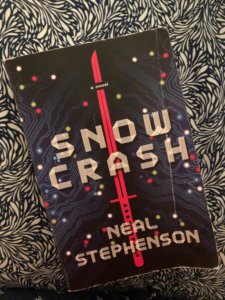
SNOW CRASH, by Neal Stephenson.
SNOW CRASH, by Neal Stephenson was put before me by a member of my sci-fi book group. It’s my second exposure to cyber punk and I enjoyed the ride (in part). This novel, if turned into film, would likely be rated R. I recommend SNOW CRASH with reservations.
My Review in Two Parts
Why read SNOW CRASH?… 4 Reasons for YES!
- The world-building is remarkable and for many sci-fi fans Neal Stephenson is a must-read author in the cyberpunk sub-genre. I absolutely loved the beginning. The entry into this world felt fresh and dynamic. The first 50 pages (at least) will have you riveted.
- The action scenes are numerous and mostly well-timed and well-written. The action begins on the first page and sets the tone for the rest of the story.
- The intersection of virtual reality (Stephenson calls VR the Metaverse…he claims to be the originator of this term) and physical reality feels fluid and actually not that weird now (though it was a genuinely futuristic concept when he published the novel in 1992).
- Stephenson unearths some original and fantastical ideas. Some folks will love the philosophical bent of the story, having to do with ancient and current religions, computer coding, language as code and viruses that cross from virtual reality into the physical world.
Why avoid SNOW CRASH?…4 Reasons for No!
- Shallow characters inhabit this book. The world-building went deep, but the emotional depth and intelligence of the characters bored me.
- (related to reservation #1) The characters, especially the primary characters, did not have any real physical or mental weaknesses. They were superheroes. In fact, the protagonist is called Hiro Protagonist. By naming the main character Hiro, Stephenson is channeling the comic book/superhero genre. Having read about the development of the novel, that enlightens my critique. Stephenson began this book hoping to make it a graphic novel. He envisioned superhero-like characters, but even Superman must have his longing (Lois), his vulnerability (kryptonite) and face a villain who understands how to use these vulnerabilities to press the hero to the point of making a moral choice about his/her power. Though Stephenson’s characters get banged up here and there, I never felt they might actually be in danger or that they feared for their own lives. They took their beatings in stride. Moreover, I never felt there were emotional stakes for either of them (the secondary character is called YT…she is a skateboard delivery person). Hiro’s and YT’s motivations for putting everything on the line to save the world did not seem to connect to any ounce of characterization that I understood.
- Stephenson’s bad/shallow theology was disappointing for me. I will assume that Stephenson did his homework in regard to Sumerian religion and philosophy. (I deduce this from reading his acknowledgments). However, I hang out with a number of Christian thinkers because I’m married to one, and Stephenson’s characterization of Biblical theology is weak and ill informed. I don’t mind critiques of my religion, I even enjoy them if they are well thought out. Stephenson’s were not.
- The info-dump sections were enormous, boring and preachy. A cyber librarian is the character in the Metaverse who does the explaining to Hiro Protagonist, therefore to us. It’s a clever idea to use the librarian, but his information still comes in large chunks and disrupts the drama. Info-dumps are a huge temptation for sci-fi writers. I struggle with it myself. It’s difficult to build the world, explain the conflict, the problem that will drive the narrative and incorporate all your own ideas/themes without taking up scores of pages explaining stuff to your audience, but great writers tell us that the info dump method is lazy writing. There are other ways to do it! See an earlier post on allscifi that discusses Jemisin’s chosen method for handling backstory in the narrative. Good friend and fellow sci-fi writer, Lit Prof Liam Corley is a Jemisin fan and wrote this post a couple of weeks ago.
In short. If you’re a sci-fi nut/nerd, YES…read SNOW CRASH, but if you’re a literary person wandering around in sci-fi…read Octavia Butler, Jemisin, Le Guin, Vandermeer, Scalzi…almost anyone, but Stephenson.
To buy SNOW CRASH…click here.
Battle Star Galactica, Check Out This Podcast
 My husband and I are watching Battle Star Galactica (BSG) for the second time in our married lives. The first time we watched, our kids were always in bed. It was just-for-parents entertainment…Our daughter was a middle schooler, our son, a couple of years behind her. They’re both out of college now. So it was a while ago.
BSG was created for the SyFy channel by Glen A. Larson and Ronald D. Moore.
There is much pleasure in the re-watching for me. Last night, we viewed The Hand of God, episode 10, one of many amazing episodes in that first season. Our re-watch has me reflecting on what makes BSG so good?
- The writing is absolutely spot on. No-nonsense story-telling that provides the audience with a solid long-term arc of purpose and meaning: humanity, betrayed by A.I. known as Cylons, must leave their home and find another habitable planet. An epic journey in a space ship. Grafted onto the journey narrative are countless subplots that will draw in scifi and non scifi fans. How do the writers do this? That leads me to my second point…
- This story is inhabited by heroic, but flawed characters most of us can relate to.
- The production value is superb. Even in the 2019s, the set, special effects and costumes create a believable fictional world.
- The actors embody their characters well, extra dramatic heft carried by the Commander of the fleet, William Adama and President of the survivors, Laura Roslin (played by Edward James Olmos and Mary McDonnel respectively).
- The themes around protecting a way of life, more specifically, a democratic society in the midst of battle, are extremely poignant in our current political environment.
- Ethnically diverse cast of characters and women in key leadership roles.
If this will be your first time viewing the series, or if you’re re-watching like me, consider this podcast aptly named Galacticast to augment the full depth of each episode. It’s a fun and easy way to be extra nerdy about BSG. Click below for the link up.
A Podcast Discussing Each and Every Episode
As an aside, I find myself wishing The Expanse would produce an episode by episode podcast…Sometimes, I feel like I’m not quite getting it. Maybe in the re-watch, I will.
To watch the entire series, click here.
THE BROKEN EARTH TRILOGY: Five Reasons You’ll Be Glad You Read N.K. Jemisin
I am delighted to introduce this third guest post. Professor Liam Corley, an old friend from my early years as a University pastor at UC Berkeley, writes on Jemisin.
First, Professor Corley will show us why Jemisin is worth reading. Second, he will comment on Jemisin’s deft handling of the story-telling craft. The latter part of the post contains spoilers, but for anyone who cares about writing great characters in epic novels, the professor’s sharp analysis will be incredibly helpful. Enjoy!
Five Reasons…(no spoilers)
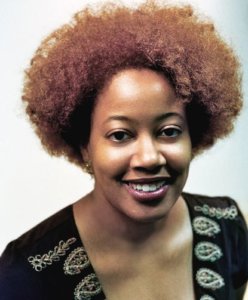
N.K. Jemisin
Sure, N.K. Jemisin has won all of the top prizes in the industry, and every one of the books in The Broken Earth trilogy has won the Hugo. But you’re a discerning reader. You don’t follow trends or hype. Why will you be glad you read Jemisin’s amazing novels?
- You’re a mom, and you have fought with your daughter. Maybe been mean. Apologized. Did it again. Jemisin’s work is all about the woman protagonist, especially mothers, and the tangled relationships she depicts will have you thinking about YOUR relationships in a new way.
- You know Black Lives Matter, but you don’t know how to talk about it without bursting into flames or tears. Jemisin’s work is a treasure trove of insight into how to confront, live through, and go beyond racial injustice and all of the horrors it has inflicted. From lynching to the casual use of the N-word, it’s all there, in sci fi clothing.
- You care about the environment–really care–and wonder what humanity is doing to its survival prospects by destroying our home.The Broken Earth faces up to the end of the world. Again and again and again. Why are we destroying the world? Because we’re greedy and hate each other. Yup, that’s pretty broken. But Jemisin also shows people learning how to survive in the aftermath and figuring out how to make things right.
- You think Toni Morrison is the best writer ever. Hands down. Ever. If Octavia Butler and Toni Morrison had a love child, it would be N.K. Jemisin. If you can remember reading Beloved in college or watching the movie with Oprah and bawling your eyes out because it was all just so wrong, so beautiful, and so painfully wrong and beautiful, you’ll want to read The Broken Earth.
- You love great science fiction and fantasy world-building and character-driven plots. If you are an avid sci-fi reader and especially if you write it, you’ll want to immerse yourself in Jemisin’s Broken Earth trilogy. For more on this point, see my longer review on Craft and Culture in Jemisin’s work below.
Click here to buy the first book of The Broken Earth trilogy. Click here if you want to buy all three.

The Broken Earth Trilogy
Warning: there are spoilers below, so in case you haven’t read Jemisin yet, you may want to stop reading and pick up the first book of the trilogy.
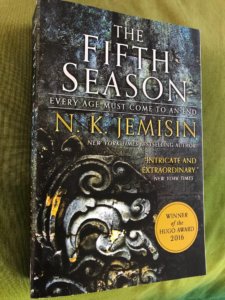
The Fifth Season, first book of the Broken Earth trilogy
Craft and Culture:
Notes on N.K. Jemisin’s The Broken Earth Trilogy
(spoilers below)
Readers of SFF (science fiction and fantasy) have embraced N.K. Jemisin’s acclaimed Broken Earth trilogy, and every installment of the series has won the coveted Hugo Award. Consequently, this post is not meant to introduce new readers to the series. Instead, I will be pointing out elements of Jemisin’s writing that contribute to the magic of the reading experience. Other SFF writers will find this of interest, but so will readers who want to understand why the novels affected them as they did. I’ll touch briefly on how Jemisin weaves her alternating timelines into a narrative fabric that turns flashbacks into a strength, not a weakness, on Jemisin’s incorporation of racial politics that are already part of her reader’s core emotional lives, and on the genres novels’ connections to more literary traditions.
I found myself reflecting on Jemisin’s woven chronologies when I was trying to think through the best ways to incorporate character backstories in my SF work-in-progress. Writers know that flat characters live only in the moment, and their motivations tend to have more to do with survival or accomplishment than working out emotional consequences of their past. Yet providing a character’s past can be a distraction from engaging readers in the drama of the story’s “now” time. How then can authors deepen their characters without losing narrative engagement? Jemisin’s solution is brilliant.
In the first book of the trilogy, Jemisin takes her main character’s timeline and slices it into three parts—childhood, adulthood, and post-apocalyptic adulthood. The character has different names in these time periods and acts in much different geographies and societies, so it takes a while before most readers realize that the chapters which alternate between these three perspectives are actually all the same character at different times of her life. What this allows Jemisin to do is to provide the entire scope of her main character’s life in a nonlinear fashion that is as engaging as it is emotionally excruciating. Getting to know the main character at three very different stages of life gives readers a clear view of the character’s depth, journey, change, and motivation.
This technique shouldn’t simply be adopted wholesale by authors wishing to provide an engaging saga, but it makes evident a point that could be adopted more broadly: backstory needs to be as engaging as the main story or it shouldn’t be indulged in beyond broad strokes and hints. All narrative is a dance between scenes and interludes, scenes and interludes, scenes and . . . Flashbacks, to be compelling and to maintain the hooks of engagement, should be fully realized scenes and not inert paragraphs of backstory.
The Broken Earth series is almost entirely a story about race-based injustice and the ways that civilizations built on exploitation create systems and stories to obscure or recast their dependence on a despised underclass. Jemisin is incredibly effective in evoking readers’ feelings about American racial politics by incorporating parallel dynamics in her fictional world. The first, and probably most overt, instance is her use of a racial epithet, “Rogga,” to indicate orogenes, the enslaved and exploited earth magicians. The sonic similarity of the epithet to the N-word is obvious and intentional. Indeed, even the complex ways the term is used in the series—as slur, as indictment of injustice, as insider labeling—mirror the many ways the N-word is debated in our society. This instance of labeling leaves no questions in the readers’ minds about the allegorical nature of racial politics in Jemisin’s world.
What makes Jemisin’s evocation of contemporary race so powerful is precisely such correspondences that, despite their overt nature when reflected upon, fit so well within plot of the novel that readers can escape the sorts of mental coping mechanisms they have for engaging racial issues in their non-reading lives. Edgar Allan Poe was a master of this technique. His tales of the grotesque and macabre are set far distant in time and geography from the slave-owning Southern states where he lived, but their depictions of torture, fear, guilt, and sadism draw indirectly on the repressed experience of those dynamics on plantations. Jemisin’s incorporation of lynchings, segregation, dehumanization, and other tools used by racist societies to subjugate their victims both draw on and make explicit the prevalence of these practices in our own world.
I’ll pivot here to Jemisin’s relationship to African American literature because the series has numerous plot points and characterizations that evoke masterworks by Toni Morrison, one of the most important American writers of the last century. Morrison has won both the Pulitzer and Nobel Prize in a distinguished career that exploded into prominence with the publication of Beloved in 1988. Morrison’s novels often focus on a strong African American woman character, something Jemisin also does through her allegorical association of orogenic ability with African American identity. [spoiler alert] Several key plot points in The Broken Earth draw on Sethe’s world in Beloved, most notably when Sethe murders her own child to prevent her from being taken back into slavery.
There are at least a dozen other correspondences between Morrison and Jemisin that occurred to me as I read The Broken Earth, but I won’t spoil your reading pleasure by listing them all. Suffice it to say, SFF editors and agents interested in fostering more #ownstories in the genre should expect to see more explicit borrowing from more established traditions in the future. Most importantly, I think that editors and agents should take note of what Morrison and Jemisin already have expressed through their work: #ownstories aren’t niche or sideline stories; they are central to the human condition, and in the case of the United States, foundational to our national identity and culture.
Related to the issue of a society’s foundations in racial injustice, i.e. SLAVERY, is how Jemisin draws on another classic of SFF literature, Ursula K. Le Guin’s immensely powerful and well-known story, “The Ones Who Walk Away from Omelas.” The story poses a philosophical question about injustice and the related phenomenon of scapegoating: would I live in a society that seemed perfect if I knew its perfection depended upon the suffering a single nameless child? The Broken Earth stages this epiphany and existential crisis time and time again throughout the series, with the added element of the unmerited scapegoating being race-based.
On the whole, I’ve become quite a fanboy of Ms. Jemisin’s work, and I hope someday to assign it in one of my classes on American literature

Liam Corley
Liam Corley is a professor of American literature at California State Polytechnic University, Pomona. He is also a Navy Reserve officer, and he returned to creative writing as a way of understanding the world after his deployment to Afghanistan in 2008-2009. His work on literature and war can be found in Badlands, Chautauqua, College English, First Things, The Wrath-Bearing Tree, and War, Literature, & the Arts. He is currently at work on a science fiction manuscript about genetics, time travel, and humanity’s irreligious future. He lives in Riverside, CA, with his wife and four children.
Five Female Science Fiction Authors You Need to Read ASAP
I write this post in honor of International Women’s Day and I hope it might spur you to pick up a novel or download an audiobook that you might not have read without a little urging. You won’t be disappointed!
With that said, here’s the list:
- Octavia Butler
- Ursula K. Le Guin
- Margaret Atwood
- N.K. Jemisin
- Julian May

Octavia Butler
Octavia Butler, author of KINDRED, passed away in 2006. She was one of a handful of women to win multiple Nebula and Hugo Awards, as well as the Arthur C. Clarke Award. If you’re starting out and want a great taste of Butler’s writing, order or pickup BLOOD CHILD AND OTHER STORIES The novelette, BLOOD CHILD, won both the Nebula and the Hugo. If you’re a fan of graphic novels, try this version of KINDRED: GRAPHIC NOVEL

Ursula K. Le Guin
Ursula K. Le Guin, author of THE LEFT HAND OF DARKNESS passed away last year. Many love her for her fantasy, but she is perhaps chief among our mothers in the pantheon of many fathers who have written the most important science fiction in the last 40 years. She was the first woman to win a Nebula award and a Hugo, for THE LEFT HAND OF DARKNESS. My review of the novel is here. Much adored by her fans is the THE EARTHSEA CYCLE novels that were intentionally targeted at the young adult audience (Le Guin was encouraged by her publisher to do so.)
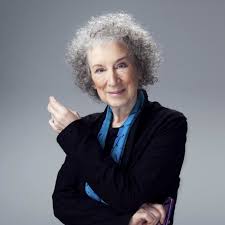
Margaret Atwood
Margaret Atwood, author of THE HANDMAID’S TALE, for which she won a Nebula award, The Arthur C. Clarke Award and the Booker Prize, has a contemporary fan base since her novel was adapted to television by HBO. That novel is worthy of your attention, but so are many of her others, like ORYX AND CRAKE, the first in the The MaddAddam Trilogy.
N.K. Jemisin
N.K. Jemisin is blowing the socks off the scifi community with her brilliant story-telling and characters that breathe prophetic. The Broken Earth Trilogy belongs on every scifi fan’s shelf. She is the first author in the history of the Nebula to win three awards in three consecutive years. For a dip into her writing, try some of her short stories, many of which are award-winning and/or brilliant in their own right. This collection is what you need. HOW LONG ‘TIL BLACK FUTURE MONTH: STORIES

Julian May
Julian May passed away last year and will be the most obscure recommendation I make. I do so because I recently discovered her and feel her scifi to be completely wonderful, different and imaginative in a way I had not expected. She’s written a series called The Saga of Pliocene Exile which is a riveting tale with fantastic and memorable characters. I reviewed THE MANY COLORED LAND in the Fall. You can read the review here.
Women bring a unique voice to the science fiction landscape and they have mostly been welcomed by those who love the genre. They are still out-numbered on the shelves of your local bookstore and it’s good to be reminded of the best.
Who are your favorite female authors within the genre? I’d love to hear who you love.
COLONY, Season 2: A Review Without Spoilers
High praise for COLONY, Season 2. In case you have not seen the first season, this review will contain a few spoilers for those first episodes, but none for season 2. You can read my review of Colony, Season 1 here
There is a third season of this show that will come to Netflix sometime this year (a few fan blogs predict as early as April 2019), having already aired on USA Network. Beware of going onto the USA Network site. You might stumble upon a few spoilers. USA Network features a number of still shots from season 3 in their promotion of COLONY.
Short Review…
The main reasons I recommend watching Season 2 is for the superb story and the characters. The writing is spot-on, a continuation of Season 1. Let me elaborate…
- The characters, whom the viewer has come to admire, love and/or mistrust in Season 1, develop and continue to feel real and relatable
- The mystery of the invasion is explained a bit more, but the story still holds plenty of tension
- The narrative continues to raise important moral questions around living under occupation…The moral conflict goes deep and is unique for each character. The show highlights this well.
Long Review…
I loved all of season 2, but found the early episodes incredibly fun to watch because they are a goldmine of backstory.
Season 1 of COLONY drops the viewer into an already occupied, alien-invaded planet. The viewer attaches to the characters first and then begins watching for clues to explain what is taking place. Even the characters living through the ordeal don’t know much. Some mysteries are explained, but many remain.
What is wonderful about season 2…Three key backstory events are provided.
- First contact with the aliens
- What took place on the actual day of the invasion
- How the invading aliens strategized with an early group of collaborating humans
Episode 1 of season 2 begins with another day in the life of the Bowman family, but in this case, it is the day of the invasion, hours before the wall comes down, isolating the LA Bloc from the rest of Southern California. (During season 1, the audience slowly learns that similar events have taken place in cities across the globe)
Packed into this episode is a window into how Snyder was chosen to rule over the masses.

Snyder: Proxy Governor of the LA Bloc for most of season 1
Two men in suits, collaborators who know that the invasion is imminent, recruit him. They recruit him because he has embezzled from an educational institute for which he works. They recruit him not in spite of, but because his integrity is compromised.
“Even great men make two or three mistakes in their lives,” Snyder says, when confronted.
The men in suits answer: “It’s the choices you make today that will determine your future. All you have to do is say yes.”
Snyder says yes to this Faustian bargain. We already know he is an important character. The audience has followed his career, his successes and failures and the ways he has and continues to intersect with the Bowmans. His presence is constantly a tension, but always interesting.
Episode 2 is delightful as it gives a few interesting point of view shifts via some clever cinematography
- A view of what the Raptor’s see, those are the robotic drones (if they are truly robotic) that rule the skies on occupied Earth.
- A view of what lies outside the LA Bloc, including Santa Monica, but also beyond, outside of the Urban landscape
- A peek into the alien mindset and culture…I can’t say more without a spoiler
I’m looking forward to season 3, which might come to Netflix as early as April, but sad because USA Network has confirmed its end. Three seasons of COLONY and no more. That’s the bad news…the good new is…
Season 3 of COLONY is being touted as outstanding and possibly better than both the first and second. I look forward to watching it and following my binge watching, I’ll be sure to post a review here.
AUTHORITY, Book Review
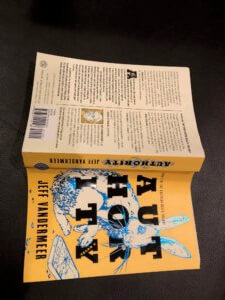
Book 2 of The Southern Reach Trilogy
AUTHORITY, by Jeff VanderMeer, A Book Review Without Spoilers.
First, A Little Data About this Book Review
- I listened to the novel via Audible and felt it was difficult to follow and a little boring, this after loving the Audible version of ANNIHILATION.
- AUTHORITY is the second book in the Southern Reach Trilogy. ANNIHILATION being the first, ACCEPTANCE is the third
- I have not yet read ACCEPTANCE, but have been told by a trusted scifi-reading friend that the trilogy is worth reading overall
The Short Review.
I Give this Book a Semi-Enthusiastic yes. Read AUTHORITY for these reasons:
- The story maintains the overall tension as introduced in the first novel.
- It may not resolve completely, but the novel reveals enough enticing details to make the reading worthwhile.
- The narrator character is the protagonist and insists on being called Control. Though I’m not fond of him, he establishes a relevant relationship to someone who has survived Area X.
- The writing itself, as is consistent with ANNIHILATION, has lovely moments.
Longer Review
So…if AUTHORITY was a stand alone novel, I might not write a stellar review and I would give up on reading any other VanderMeer novels, but since I loved ANNIHILATION so much, I will read on. If you’re curious about my review of the first Southern Reach novel, click here for the ANNIHILATION REVIEW
In AUTHORITY, the narrator is a male who calls himself Control. His birth name is John Rodriguez. He is the new director of the Southern Reach. In an early introduction, he insists that his colleagues call him Control. I realize the title of this novel is AUTHORITY and that the book is much about who has authority in the confusing situation that is taking place in and around Area X. This was another reason I was annoyed by John Rodriguez’s moniker. It felt like the author was trying to make me think in a certain direction and less about a person. I didn’t like that.
Control seems like a weirdo, socially. I was not fond of his narrative voice, nor his behaviors or leadership. Control does not compel me. I feel a distance from this character that I think I’m supposed to feel compassion for. Since the story is being told by him, in the first person, I can’t get away from him. I would have stopped listening had I not been told by a friend that the final book and the whole arc of the three books make sense when you finish them.
Despite me not feeling a connection to this narrator character, I can see why author, VanderMeer, changes perspective in this book. He wants the reader to receive another view into Area X. That which is mysterious and difficult to describe, much less understand in Area X, is seen from another angle in this novel. Control provides the US military/intelligence/bureaucratic angle as well as some recent history.
Given that the reader knows the content of ANNIHILATION, that Area X has consumed a number military and government expeditions, the background is helpful to the larger story.
But, for me, the main silver lining around this new narrator was that the reader finally received a physical description of the narrator and protagonist from the previous book.
“The biologist’s hair had been long and dark brown, almost black, before they’d shaved it off. She had dark, thick eyebrows, green eyes, a slight, slightly off-center nose (broken once, falling on rocks), and high cheekbones that spoke to the strong Asian heritage on one side of her family…”
This description does make me bummed about the filmmakers of ANNIHILATION casting the biologist for the cinematic story as a white woman (Natalie Portman) with zero (or near zero) Asian heritage. Bummed for many mixed-race actresses out there who did not get this part.
I will listen to the next book, AUTHORITY, on Audible. I hope to enjoy it more than this middle novel.
Click here to buy ANNIHILATION, Bk 1 of The Southern Reach Trilogy
Click here to buy AUTHORITY, Bk 2 of the Southern Reach Trilogy
Click here to buy ACCEPTANCE, Bk 3 of The Southern Reach Trilogy
THE EXPANSE Fans: Take Notice! You Can Stream (Free) All Three Seasons on Amazon Prime, Starting Friday
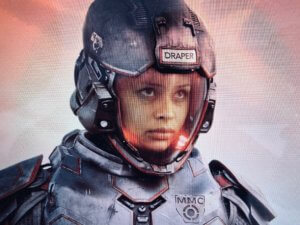
Frankie Adams as Marine, Roberta, “Bobbie” Draper
In two days, Amazon Prime makes three seasons of THE EXPANSE available to members. This comes in advance of their release of season 4 and fans of the show, across the globe, are celebrating. This series almost came to a bitter and premature end. Firefly fans know exactly what I’m talking about.
THE EXPANSE (based on books by James S.A. Corey) had been canceled by NBCUniversal’s Syfy channel after season 3. Fans exploded in fury and came out of the woodwork to figure out how they could keep this series going.
The story of how the EXPANSE survived is one worth reading. It includes fans hiring a plane to fly a Save THE EXPANSE banner over the Amazon headquarters as well as George RR Martin and Craig Newmark (founder of Craig’s List), writing emails to Bezos. Bezos and his Amazon studio head, Jennifer Salke, paid attention. Season 4 went into production last year and will be released sometime in 2019. I’ll post the release date when announced.
If you are a scifi nut or you just love great characters, epic story telling and the casting of strong men and women, including a number of kickass women of color and you haven’t already stuck your nose into this series, I highly recommend. For a no spoiler review, see this guest post of THE EXPANSE written earlier this Fall by friend and math professor, John Mayberry.
DESCENDER by Jeff Lemire and Dustin Nguyen, A Review of Volume 6, THE MACHINE WAR
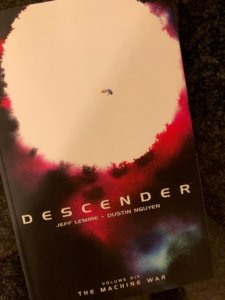
THE MACHINE WAR
The 6th and final post of a 6-day reading fest. I’m excited to recommend this series…all 6 volumes. I would rate DESCENDER as PG-13. This comic series is pretty mild compared to some of the stuff your kids are exposed to. Parents might want to view volume 4 to get a sense (regarding the one sex scene). Overall, the language was extremely tame. The violence was not graphic…not as graphic as many other comic series.
Also…FYI…don’t piss off you machines, those very helpful robots that make your life easier.
Today, I want to acknowledge my dishwasher, for all the hard work and quality service it does every other day or so…also, my robot vacuum machine. Also…the electric toothbrush, and much much more. Thanks to you, machines…I have more time to read amazing comics/stories like DESCENDER, THE MACHINE WAR.
Really, though, I have continued praise for the story. You can view my previous reviews on allscifi I’ve written a review for each volume. As a novel-writer, I am intrigued by the strengths and weaknesses of the comics genre. The visuals in this epic are so gorgeous and add so much to the understanding and the feeling the story. However, I did find myself missing lovely passages of linguistic poetry and the interior monologue that takes place in some novels and short stories.
THE MACHINE WAR does close with a longer interior monologue. A character the reader has not yet met, but one who makes sense in the story overall, she begins to narrate the post-story of DESCENDER, the pre-story of the coming series. This is the bridge character who will take center stage in the sequel to DESCENDER. The next series will be called ASCENDER.
Final word on the review. If you love comics…you will absolutely LOVE this series. The art and the writing are top notch. Furthermore, if you’re a scifi fan…you ought to read this tome. The narrative adds so much to our morality around how we understand ourselves, our machines, our planet and those who work in the shadows to make our lives easier. Let us no forget that real work has to be done by someone. More and more of that is done by machines…but much of it is still done by humans, people who we can easily marginalize and treat as less than human. This is important for all of us to remember. The best scifi stories teach us to be better humans. DESCENDER does exactly that.
Click here to buy this final in the series: DESCENDER, Volume 6 The Machine War
Click here to buy the first installment of the sequel to the DESCENCER, series ASCENDER, Vol. 1, The Haunted Galaxy
DESCENDER by Jeff Lemire and Dustin Nguyen, A Review of Volume 5, RISE OF THE ROBOTS
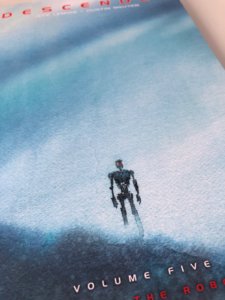
RISE OF THE ROBOTS
Six reviews in 6 days. Today marks the 5th day and review of volume 5 of DESCENDER. No spoilers for this volume, but beware of spoilers if you haven’t already read the first 4 volumes. You can see my first review of volume 1 here in case you stumbled upon this review as a first exposure to my website.
In RISE OF THE ROBOTS, Lemire delivers a number of answers to mysteries within the story world…not all of them, but enough to open up the possibility of some sort of redemptive ending to the saga. By the way, I don’t know the ending, so this is not a spoiler. I’m reading volume 6, the finale of DESCENDER tomorrow. In this volume, the planet Mata, an aquatic world, takes center stage. Mata itself is a mysterious place. It is less known by the UGC and there are early allusions in the first volumes of DESCENDER to the ruins of a great city in the water’s depths. Water is often a symbol in literature, so I look forward to seeing how Lemire works that thematic angle. You’ll also notice that the cover of this volume is a robot in a hazy blue environment…I’m interpreting that blue as an underwater world.
The unique (in the volumes so far) and fun surprise in volume 5 is a double page fold out. Lemire and Nguyen chose to dramatize the culmination of the RISE OF THE ROBOTS as it takes place across the UGC through the art.  You’ll notice as you turn toward the final pages of volume 5 that a couple feel thicker than the rest. Be careful when you fold them out, so they don’t tear. This is the third reading of our copies of DESCENDER and so far, we’ve only had one issue with the binding (loose pages). I want these beauties to last a long time, so I am reading them carefully. I also love loaning out great books and I’m sure I will loan these out in the future, but I’ll ask my reader friends to read them gently.
Tomorrow, the final review of DESCENDER.
Click here to buy your copy of DESCENDER, Volume 5 Rise of the Robots