Audiobooks
ACCEPTANCE, A No-Spoiler Review
The Short Review. Why or Why not Read ACCEPTANCE?
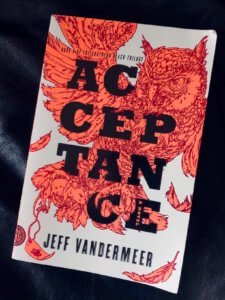
Why read?
- I already consumed the first two in the trilogy and like to finish things
- I wanted to understand more of the mystery that is Area X. There was definitely more backstory to absorb in this volume
- I enjoyed the deeply flawed, but thoughtful characters
- I wanted to spend more time in the imaginative world of Area X
- The writing style was unique and often beautiful
Why avoid reading?
- Because the point of view was shifting all the time, it was a challenge to attach to any one character
- Disappointing ending
- The writing style grew stale after a while…lots of interior musings and struggles without enough plot or even conflict (the conflict is underlying, but too diffuse for my tastes)
- Not only does VanderMeer shift points of view with every chapter, he also moves back and forth between past and present
- I started this book on audio, but switched to print about a 1/3 of the way through because POV and time switching was too confusing
To buy ACCEPTANCE, click here.
To buy the SOUTHERN REACH TRILOGY, click here.
The Longer Review of ACCEPTANCE
This longer review, may contain spoilers for the first two novels in the trilogy. For those reviews, click Annihilation, A Book Review and/or Authority, A Book Review.
If you read my earlier reviews, you understand that I started out a big fan of Annihilation. Not only was the main character, compelling, but the mysteries that unfolded in the narrative created the perfect amount of tension to keep me engaged. I’m guessing this was true for many other readers interested in the interior life of this quietly observant biologist as she ventures into Area X. The biologist (she is never named in the book) is at the heart a true scientist and in certain respects more attuned to flora and fauna than to people, but she observes people with a scientific eye. She is spooky, highly intelligent and trustworthy as a narrator in surprising and interesting ways. I really loved this character. I loved that she was introverted and anti-social. She also had clear motivation to act because her husband had been on a previous mission into Area X and returned damaged before succumbing to death She is a worthy rival to the various human and monster challengers that get in her way. In fact, she is such a great character that Alex Garland (screenwriter) took the story and created a feature-length film around her, that character played wonderfully by Natalie Portman. I loved the film, but it is not the same story told in the trilogy, nor is it the same story told in the novel after which it is named. The film narrative diverges in significant ways. I will post my review of the film tomorrow. I ought not say more unless I spoil the story.
What to say about VanderMeer’s style? Be prepared for words like ziggurat to be on the page. His writing is lovely and intellectually gratifying if you’re interested in imaginative metaphors and curious juxtapositions. This language mimics the beauty and strangeness of Area X. Here is an excerpt:
In Control’s imagination, the entrance to the topographical anomaly was enormous, mixed with the biologist’s vast bulk in his thoughts so that he had expected a kind of immense ziggurat upside down in the earth. But no, it was what it had always been: a little over sixty feet in diameter, circular, located in the middle of a small clearing. The entrance lay there open for them, as it had for so many others. No soldiers here, nothing more unusual than the thing itself.
I’m not opposed to imaginative language, but the extensive descriptions did sometime bog down the story for me, especially when I was trying to consume the book via audio. With a passage like above, I would sometimes have to rewind…What did he just say? Did he say ziggurat?
Finally, my reticence to fully praise this trilogy is that the mystery is not explained to my satisfaction. Too many unanswered questions. I guess VanderMeer has another novel called Area X, but given this group of books, Annihilation, Authority and ACCEPTANCE are presented to the world as a trilogy…I want satisfaction by the end of the third book. I don’t want to have to pick up another novel to figure out the answers I need.
Regarding the audio experience. For whatever reason, my brain struggles to follow an audio narrative that jumps around in point of view and in the timeline like this novel did. I struggled with this same issue when I listened to The Three Body Problem. Annihilation as an audio book was easier to listen to. It was straightforward, narrated by one character in the first person and unfolded more or less in a linear timeline (with a few memories/backstory as a part of filling out the character). That narration works well for me. I’m curious for those of you who consume a lot of audio books if you have these same struggles? Drop me a line and let me know.
Five Female Science Fiction Authors You Need to Read ASAP
I write this post in honor of International Women’s Day and I hope it might spur you to pick up a novel or download an audiobook that you might not have read without a little urging. You won’t be disappointed!
With that said, here’s the list:
- Octavia Butler
- Ursula K. Le Guin
- Margaret Atwood
- N.K. Jemisin
- Julian May

Octavia Butler
Octavia Butler, author of KINDRED, passed away in 2006. She was one of a handful of women to win multiple Nebula and Hugo Awards, as well as the Arthur C. Clarke Award. If you’re starting out and want a great taste of Butler’s writing, order or pickup BLOOD CHILD AND OTHER STORIES The novelette, BLOOD CHILD, won both the Nebula and the Hugo. If you’re a fan of graphic novels, try this version of KINDRED: GRAPHIC NOVEL

Ursula K. Le Guin
Ursula K. Le Guin, author of THE LEFT HAND OF DARKNESS passed away last year. Many love her for her fantasy, but she is perhaps chief among our mothers in the pantheon of many fathers who have written the most important science fiction in the last 40 years. She was the first woman to win a Nebula award and a Hugo, for THE LEFT HAND OF DARKNESS. My review of the novel is here. Much adored by her fans is the THE EARTHSEA CYCLE novels that were intentionally targeted at the young adult audience (Le Guin was encouraged by her publisher to do so.)
Margaret Atwood
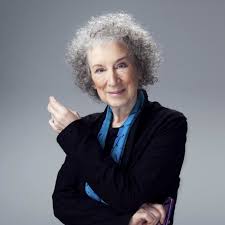
Margaret Atwood, author of THE HANDMAID’S TALE, for which she won a Nebula award, The Arthur C. Clarke Award and the Booker Prize, has a contemporary fan base since her novel was adapted to television by HBO. That novel is worthy of your attention, but so are many of her others, like ORYX AND CRAKE, the first in the The MaddAddam Trilogy.
N.K. Jemisin
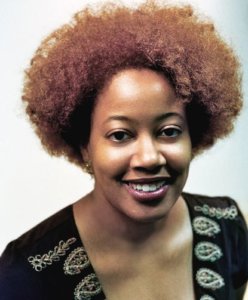
N.K. Jemisin is blowing the socks off the scifi community with her brilliant story-telling and characters that breathe prophetic. The Broken Earth Trilogy belongs on every scifi fan’s shelf. She is the first author in the history of the Nebula to win three awards in three consecutive years. For a dip into her writing, try some of her short stories, many of which are award-winning and/or brilliant in their own right. This collection is what you need. HOW LONG ‘TIL BLACK FUTURE MONTH: STORIES

Julian May
Julian May passed away last year and will be the most obscure recommendation I make. I do so because I recently discovered her and feel her scifi to be completely wonderful, different and imaginative in a way I had not expected. She’s written a series called The Saga of Pliocene Exile which is a riveting tale with fantastic and memorable characters. I reviewed THE MANY COLORED LAND in the Fall. You can read the review here.
Women bring a unique voice to the science fiction landscape and they have mostly been welcomed by those who love the genre. They are still out-numbered on the shelves of your local bookstore and it’s good to be reminded of the best.
Who are your favorite female authors within the genre? I’d love to hear who you love.
AUTHORITY, Book Review
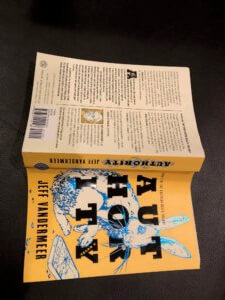
Book 2 of The Southern Reach Trilogy
AUTHORITY, by Jeff VanderMeer, A Book Review Without Spoilers.
First, A Little Data About this Book Review
- I listened to the novel via Audible and felt it was difficult to follow and a little boring, this after loving the Audible version of ANNIHILATION.
- AUTHORITY is the second book in the Southern Reach Trilogy. ANNIHILATION being the first, ACCEPTANCE is the third
- I have not yet read ACCEPTANCE, but have been told by a trusted scifi-reading friend that the trilogy is worth reading overall
The Short Review.
I Give this Book a Semi-Enthusiastic yes. Read AUTHORITY for these reasons:
- The story maintains the overall tension as introduced in the first novel.
- It may not resolve completely, but the novel reveals enough enticing details to make the reading worthwhile.
- The narrator character is the protagonist and insists on being called Control. Though I’m not fond of him, he establishes a relevant relationship to someone who has survived Area X.
- The writing itself, as is consistent with ANNIHILATION, has lovely moments.
Longer Review
So…if AUTHORITY was a stand alone novel, I might not write a stellar review and I would give up on reading any other VanderMeer novels, but since I loved ANNIHILATION so much, I will read on. If you’re curious about my review of the first Southern Reach novel, click here for the ANNIHILATION REVIEW
In AUTHORITY, the narrator is a male who calls himself Control. His birth name is John Rodriguez. He is the new director of the Southern Reach. In an early introduction, he insists that his colleagues call him Control. I realize the title of this novel is AUTHORITY and that the book is much about who has authority in the confusing situation that is taking place in and around Area X. This was another reason I was annoyed by John Rodriguez’s moniker. It felt like the author was trying to make me think in a certain direction and less about a person. I didn’t like that.
Control seems like a weirdo, socially. I was not fond of his narrative voice, nor his behaviors or leadership. Control does not compel me. I feel a distance from this character that I think I’m supposed to feel compassion for. Since the story is being told by him, in the first person, I can’t get away from him. I would have stopped listening had I not been told by a friend that the final book and the whole arc of the three books make sense when you finish them.
Despite me not feeling a connection to this narrator character, I can see why author, VanderMeer, changes perspective in this book. He wants the reader to receive another view into Area X. That which is mysterious and difficult to describe, much less understand in Area X, is seen from another angle in this novel. Control provides the US military/intelligence/bureaucratic angle as well as some recent history.
Given that the reader knows the content of ANNIHILATION, that Area X has consumed a number military and government expeditions, the background is helpful to the larger story.
But, for me, the main silver lining around this new narrator was that the reader finally received a physical description of the narrator and protagonist from the previous book.
“The biologist’s hair had been long and dark brown, almost black, before they’d shaved it off. She had dark, thick eyebrows, green eyes, a slight, slightly off-center nose (broken once, falling on rocks), and high cheekbones that spoke to the strong Asian heritage on one side of her family…”
This description does make me bummed about the filmmakers of ANNIHILATION casting the biologist for the cinematic story as a white woman (Natalie Portman) with zero (or near zero) Asian heritage. Bummed for many mixed-race actresses out there who did not get this part.
I will listen to the next book, AUTHORITY, on Audible. I hope to enjoy it more than this middle novel.
Click here to buy ANNIHILATION, Bk 1 of The Southern Reach Trilogy
Click here to buy AUTHORITY, Bk 2 of the Southern Reach Trilogy
Click here to buy ACCEPTANCE, Bk 3 of The Southern Reach Trilogy
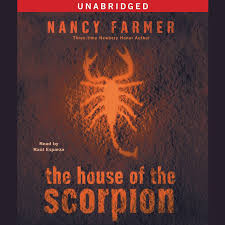
The House of the Scorpion, An Audiobook Review
Roadtrip Listen
Audiobook Rating
THE HOUSE OF THE SCORPION
by Nancy Farmer
read by Raúl Esparza
8 out of 10
Highly Recommend! This listen is perfect for a family road trip because the novel is well written and engaging enough to capture the interest of a variety of story-lovers, young and old. The audio voices are well-performed by actor, Raúl Esparza (Ferdinand, Law & Order: Special Victim’s unit) and the story lends itself easily to the listening ear.
5 Reasons for such a strong review:
1. Initially, there are few characters to follow and as new ones are introduced, the listener can maintain a grip on who everyone is…including, there are a number of characters with accents and very distinct voices (performed well by Esparza).
2. The point of view is third person, it stays close to Matt. It does not jump around from character to character.
3. The repetition of little stories told mostly by El Patrón, work like anchors for the listening brain. I write about this in my review of the novel, THE HOUSE OF THE SCORPION Repetition is a common story-telling technique, much like songwriters or poets will use a chorus or a repeated stanza to drive a point home.
4. The writing is top notch, which means, the dialogue is well written. The dialogue feels authentic, like real people talking.
5. Description of Opium takes place slowly and organically. The listener doesn’t have to absorb a huge amount of exposition, the describing of places, houses, rooms, plants, animals, people etc..takes place incrementally. Matt’s life starts out small and his view of Opium is narrow, but little by little, as he learns, the listener learns. Details are added that are important, but not all at once. It makes the audio format easy to follow.
For more on how to choose a good audiobook, see Part II The Rise of the Audio Book
The Rise of the Audio Book. Part II
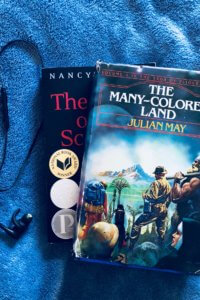
A Tale Worthy of a Listen
What to look for when choosing a book, especially if you’re a novice audiobook consumer…
Today, as I was having my teeth cleaned, my dental hygienist told me she is NOT a reader these days because of having two little girls to whom she reads all the time (a 4-year-old and a 2-year-old), but has found herself addicted to Audible when she drives, cooks and does other chores. She tells me while I am flat on my back, my mouth opened as wide as it will go,
“I fall asleep when I pick up a book to read right before bed, but during the day, I’m finding it so much fun to listen to a romance novel. I’m a sucker for a good love story.”
Audiobook listeners are coming out of the woodwork to talk to me when I indicate that I am writing this post. I don’t have enough data to know if this is a true cultural phenomena, but something is definitely percolating among us.
Like our ancestors of old, we still LOVE listening to stories. If you’re not an audio book-o-phile, consider this…
- More and more, writers and publishers are thinking about the audio platform and their customers who like to hear a story. They are organizing books to cater to our ear, for example, making chapter titles to anchor the listening ear and investing in professional actors as readers.
- You can download many audiobooks from your library for free…right at your fingertips, no subscription necessary…just a library card.
- If you need more choice, try Scribd’s free 30-day trial.
- You can do the same with Audible.
But, how will you know what will be a satisfying listening experience? Here are a few tips, my opinions on the best audio books and the ones to be wary of…
Say YES to these audiobooks…
- Theatrical Productions. Great if you’re listening to a play and can be fun for multi-character stories. Back in the cassette tape era, our family listened to a version of THE HOBBIT, produced by a company of actors under the label Mindspring. The production was originally done for radio and I say version of THE HOBBIT because I believe they edited out/streamlined some of the longer descriptive portions of the novel. My children often listened while they took baths (sometimes for an hour or more…getting extra clean). They begged to hear and re-hear the Bilbo/Gollum dialogue and the Smaug/Bilbo interactions. The varied voices captivated their imaginations.
- Well-reviewed Professional Actors Reading Fiction…Those able to perform the various voices are sought after. The best are employed to read best sellers…like…Harry Potter. There exists (believe me…I found out as I wrote this post…the debate is rabid) an epic debate about who voiced the characters better between two readers, Stephen Fry or Jim Vale…both brilliant in their own right, Fry reads the British version of HP and Dale reads the American version. I am not picky! I recommend both versions! This link to the very real debate reveals how nerdy the listening audience can be…and how nerdy Harry Potter fans often are:
- Any Compelling Story told in First Person. This means, as a listener, you get to stick with one point of view for all of the tale (or, at least most of the tale). HUCKLEBERRY FINN is a good example, so is HUNGER GAMES and one of my recent favs, ANNIHILATION. The first person narration puts the listener in the head of one person, usually the main character, and the main character only. Many find it easier to follow one voice as a listener because you become acquainted with that narrator, the sound, mood and tone of the voice, the opinions held by him/her. You don’t always have to trust the narrator’s opinions, but at least you know him/her and maintain that point of view as an anchor when navigating the story universe in your imagination. At the end of this article I will post a few more science fiction first person narrations I recommend.
- Tried and Tested Non Fiction Authors. Writers like Malcolm Gladwell and Michael Lewis are a great fit for the beginner audio consumer simply because they are such great communicators in writing and in speaking (they read their own audio versions). And, as always, you can also read reviews at Audible or ScribD’s online stores or google the information like the bestselling non-fiction audio books A list like this will point you in the right direction.
What to avoid if you’re unused to listening to stories…
- A Novel with Many Characters and Storylines. I enjoyed the novel, THE THREE BODY PROBLEM, but there were two things made that book a challenging listen…one was the vast number of character, some with semi-similar names. Since the book was originally written in Mandarin Chinese and my ear is not used to listening to the sounds and hearing the distinction regarding names, I was mixing up characters for a while before I got them straight. If I had had the physical book in front of me, I could have used the handy character list at the beginning of the book to keep myself straight. This story also jumps point of view, so anchoring in one mind and one voice were not an option.
- A Novel with Long Descriptive Passages. Tolkien fits into this mold. It’s not that you can’t listen to his books, but they might be challenging for beginners. I’m an audio learner and even my mind wanders when listening to Tolkien, especially portions of THE TWO TOWERS, as the vast landscape around Rohan is described for page after page.
- Poorly Written Anything with Poorly Constructed Characters. I might be a snob here, but certain novels that are written by men in particular who write “their fantasy” of a man (a super brilliant spy or detective, for example) and stereotype women as needy or pseudo-independent, but are really dependent on the super spy dude and the writer denigrates all the main character’s rivals and writes dialogue that is cliché or just terrible to listen to…um…I don’t like those books in any form, not in audio, not in print, not on the screen. My husband and I listened to a book like this for a few hours until I could stomach it no further. We never finished it.
- Beware of the Textbook. Unless that textbook writer is a master storyteller, don’t start with this genre. Not that you can’t work your way up to it, but the kind of info that is dumped onto the page of a textbook is often so dense, it’s better to read with highlighter in hand and in shorter spurts.
And now for THE LIST
Recent audiobooks I loved:
ANNIHILATION by Jeff Vandermeer (scifi), first person narration
EMBASSY TOWN by China Miéville (scifi), first person narration
THE MARTIAN by Andy Weir (scifi), mostly first person narration
The first ¾ of THE POWER OF HABIT by Charles Duhigg (non fiction) compelling subject matter for anyone
THE HOUSE OF THE SCORPION by Nancy Farmer (YA speculative fiction), great story, few characters
Audiobooks that were a challenge to listen to:
THE THREE BODY PROBLEM, by Liu Cixin (scifi) for me, too many storylines and characters
the last ¼ of THE POWER OF HABIT by Charles Duhigg (non fiction)…it felt redundant and repetitive by the end. I quit before finishing, but I’m glad I listened to the first ¾.
THE GANGSTER by Clive Cussler, Okay…he’s a NYTimes bestseller, but I found it difficult to stomach the characters and dialogue, dominated by cliché speeches and stereotypical males/females…maybe his other writing is better?
The Rise of the Audio Book, Part I

Do you listen to audio books? I do (and my family does) and word on the street is, there are a lot of book-listeners out there.
Here’s what Forbes’ Media and Entertainment writer, Adam Rowe reported last year:
“In 2017, digital content subscription service Scribd’s fastest-growing segment was audiobooks. Primary audiobook subscriber numbers for Scribd grew by more than 20% in 2016. The rise isn’t unique to Scribd: Audiobooks are also up about 20% year over year across the publishing industry for the first eight months of 2017, according to the Association of American Publishers’ data reports from 1,200 publishers. In the same time period, print books rose just 1.5%, and e-books dropped by 5.4 %.”
Who is listening to audio books?
Commuters, the home parent who is cooking a meal each night, families on a road trip, dog walkers, endurance athletes who have to train for hours at a time, the gym rat with a literary bent…many are listening. There is evidence to suggest that those who listen to audio books are also avid readers and audio books simply allow these readers to consume more books than their average number, but I suspect, some folks who don’t like to sit still in order to read are consuming books anew, like they haven’t since college or high school.
Where do you fall on the spectrum?
I confess, I don’t often listen to audio books while walking my dog, but use it as a time to be quiet and enjoy nature, but on a long road trip, whether alone or with family, I’m huge fan of audio entertainment, books and podcasts. I live in the Western US, where getting places often requires a long car voyage. A visit to my parents and brother, 12 hours. A visit to my son at the university he attends, 8 to 10 hours depending on traffic. If my daughter decides to go to grad school, we will drive 15 hours to help her move. These are all one-way trips I’ve delineated, so double the car time and I end up with a whopping number of hours spent in a car.
That’s a lot of productive time…or entertainment time…or time to check one or two books off your to read list. You will find that the hours it takes to get through a book vary, but on average, 12 hours will get you to the final chapter. The roundtrip to my daughter and back, for example, is at least 30 hours of drive time, that is about a 2-novel voyage…or we could take on something very long, like Herbert’s DUNE.
That’s the math for the road tripper, but what about the gym rat?
For the gym rat: 5 hours per week, for 4 weeks…that is about one extra book per month.
For the commuter in urban America, the average car time or train time to work is 30 minutes. That is 1 hour per day, 20 hours per month, about 1 to 2 extra books consumed per month.
If you are a business person, imagine reading one dynamic leadership book per month for a year and how that might impact your career. This becomes a fairly compelling model when one thinks about taking in new information that could improve your life coupled with entertainment.
I’m usually buying a science fiction audio book when I listen, but every now and then, a great non fiction book like THE POWER OF HABIT, gets onto the listening list. It turns out, habits do impact a writer like me, sort of a no-brainer, but the book lays out what happens in the body and brain when we establish positive (or negative) habits of life and work. I’m glad I listened to that book. I listened with a group that was on a road trip. My husband, a couple of college-aged kids and I were driving down to pick up my son from college. We ended up engaging in great discussions around the topic of habit that lasted the entire weekend…all while picking up a kid from college and helping him move back home for the summer…a time when college kids can fall into habits, good or bad. Am I a scheming parent to have thought of this? No…We really just stumbled upon the book.
So…it’s important, if you are choosing a book for the driving/riding community, to think about the character of the group that will be listening. Do aim for a book pleasing to all, but also, provocative. Spur those discussions that will happen at In n Out Burger or Grandzella’s or wherever you end up pausing for a meal.
This is part I of a two-part post.
See my post, The Rise of the Audio Book. Part II where I explain the appeal of audiobooks and perhaps entice the skeptic to try them out.
ANNIHILATION, Book Review

Book 1 of the Southern Reach Trilogy
ANNIHILATION, Review of the novel
By Jeff VanderMeer
“When you see beauty in desolation it changes something in you. Desolation tries to colonize you.”
The above observation comes to the reader early in ANNIHILATION and is a good representation of the reflective narration of this creepy science fiction novel, a book I highly recommend to the scifi lover.
Here’s the short review on why I recommend the novel. If you want to read the longer review…it follows immediately after the list.
To buy this book, click here.
- This is an all-female cast for a change
- A Biology-centric alien mystery
- Eloquent narrator/main character. Gorgeous writing overall.
- Very creepy vibe and tension all the way through to keep you reading
- Short and sweet, but not too short. (Plus, if you love it, there are two novels that follow. See The Southern Reach Trilogy).
ANNIHILATION tells the story of an all-female expedition into an alien eco-system that has planted itself on a stretch of coastal Northeastern US. The reader learns quickly that most of the people within previous expeditions have disappeared into this anomaly, a place labeled by the government as Area X. Only a few have returned, including the protagonist’s husband, who was on the 11th expedition and died from cancer soon after his return.
The primary narrator, also the protagonist of the story, writes the account in her journal. She is the biologist and is never named. None of the primary characters are named, but exist in the story via their function. We see all of Area X through the biologist’s eyes. In addition to her, this 12th expedition into Area X is made up of a psychologist, a surveyor (former military) and an anthropologist. The story opens with the expedition already underway. The four women are hiking to a basecamp that had been established by previous expeditions.
There are two prominent story-lines woven together artfully by author, Jeff VanderMeer.
One is the slow-building and always tense journey into the center of Area X, where a tunnel (or as our protagonist insists on calling it, a tower) and a lighthouse need to be explored. Discoveries are made about both, as well as the environment which is filled with strange hybrid vegetation and creatures. Those discoveries deepen the mystery.
The second storyline, which gave me much pleasure, was the unveiling of the main character. As a narrator, the biologist’s observations are keen, and her attempt to understand what happened to her husband lends itself to a natural telling of her backstory. There is a love tale here, subtle, but steady. It progresses with the first storyline, marching toward the climax and a revelation on par with a religious epiphany.
In writing this review, I did want to understand the word itself, Annihilation. In part I kept looking it up because I was always misspelling it. (I was forgetting that second “n”).
Annihilate comes from two Latin roots: an and nihil, annihilare means: to bring to nothing. In Middle English and later within the church, you find the same roots in the word annulment. An annulment was a legal/religious term that ended a marriage (in essence, turned the marriage into nothing, as if it never existed).
However, the coolest definition of the word is found in physics. Annihilation is the reaction in which a particle and its antiparticle collide and disappear. Energy is then released. I’m not a physicist, so when I started reading articles on annihilation and saw the terms Higgs Boson and Quarks…I realized I was out of my league. However, it would be safe to say…that when the process of annihilation takes place there is destruction and creation. I’m assuming VanderMeer, the author of ANNIHILATION, knows exactly how this definition frames the narrative.
FEED, A No Spoiler Book Review
 Feed
Feed
By M.T. Anderson

A Book Review Without Spoilers
My daughter took a Dystopian Young Adult Literature class at her university a few years back. She took it for fun because though she was an architecture student, she loved to read fantasy, science or dystopian fiction. FEED was on the syllabus and after reading it for class, she handed it to me. “Mom, you have to read this book.”
When your kid hands you a book with that recommendation, you ought to respond, so I began to read…The first line of this novel grabbed me. It has to be one of the best EVER in the history of YA or scifi…
We went to the moon to have fun, but the moon turned out to completely suck.
However, after that first line, I almost didn’t make it past the first chapter. The narrator grated on me. The story is told from the first person point of view of a spoiled and entitled older teen male. Initially, I wasn’t sure I wanted to read his story, but I kept on, glancing a glimmer of hope for this character as I pushed through my angst. I saw how MT Anderson was using this vantage point to get under my skin…after all, much of the western world falls into the category of entitled, wealthy and spoiled. I decided that rather than distancing myself from this character, I ought to learn from his journey.
FEED is mostly a YA dystopian novel, but spills over into science fiction because of the futuristic tech and those initial scenes on the moon.
In recent months, I have recommended this story to more people than any other book I have read in the last 10 years. Why? FEED is good enough to hand over to a 13-year-old and a 52-year-old and if you are a parent, please read it and discuss it with your teen. Talk honestly about how we are connected to our devices.
FEED projects a future where children are connected to the web via the brain at a very early age. In the story world, the connection is called the feed. The practical science of how this takes place is never detailed, but it becomes clear that those with the feed maintain major economic, educational and social advantages. The story also shows the consequences of our planet devastated by greed and consumption. Oceans are dead, meat is genetically grown without the need for an actual animal and those who have money spend it on pure entertainment.
Titus, the teen protagonist and the narrator, lives at the top of this food chain. Initially, Titus seems utterly narcissistic. He and his friends battle boredom by pursuing short bursts of entertainment in whatever form available (almost always for purchase and provided by the feed). Titus slowly emerges as a deeper character, as someone hoping for authentic intimacy and friendship. Within his social class, it seems there are no guides to help him. Even his family is devoid of warmth and affection. For example, Titus never calls his little brother by his name, but refers to him throughout the story as Smellfactor. He treats his brother as an object of inconvenience, someone to ignore and avoid. Within Titus’ social circle, there is every indication that his family is normal.
While on the Moon, Titus meets Violet. Initially, physical attraction drives his desire to be with her, but when an event disconnects Titus, his group of his friends and Violet from the feed for a few hours, their bond takes on a deeper hue. Violet is not from his social class and was not connected to the feed at the earliest age possible. Her hippy, intellectual parents resisted putting the feed in her brain for as long as they were able, homeschooling her for a time (since education happens via the feed). As a result, Violet knows about the world in ways Titus and his friends don’t. She has developed critical thinking skills and keeps current on news, including the broad unrest that is taking place across the globe.
Violet isn’t lost without her feed like Titus. She asks questions, she makes observations, she opens Titus’ eyes to the way the feed manipulates, limits and traps those who are connected. Titus finds her views compelling and true, yet he resists her as well. Titus is less of a hero than we might hope, but he does attempt in his own way to move toward knowledge and depth. This makes for a potent story.
FEED poses so many questions that are worth asking. I won’t spoil the finale, but there is a poetic vision that lends itself to pondering and, as I said…a great discussion.
This book is a quick read. Do hand it out to your children and grandchildren. Do give it to your nieces and nephews. Do read it yourself, so you can draw out the conversation that needs to take place in our society…TODAY if not yesterday.
If you need questions for starting a discussion, see my post FEED, by M.T. Anderson Discussion Questions for Educators
To buy this amazing book, click here.